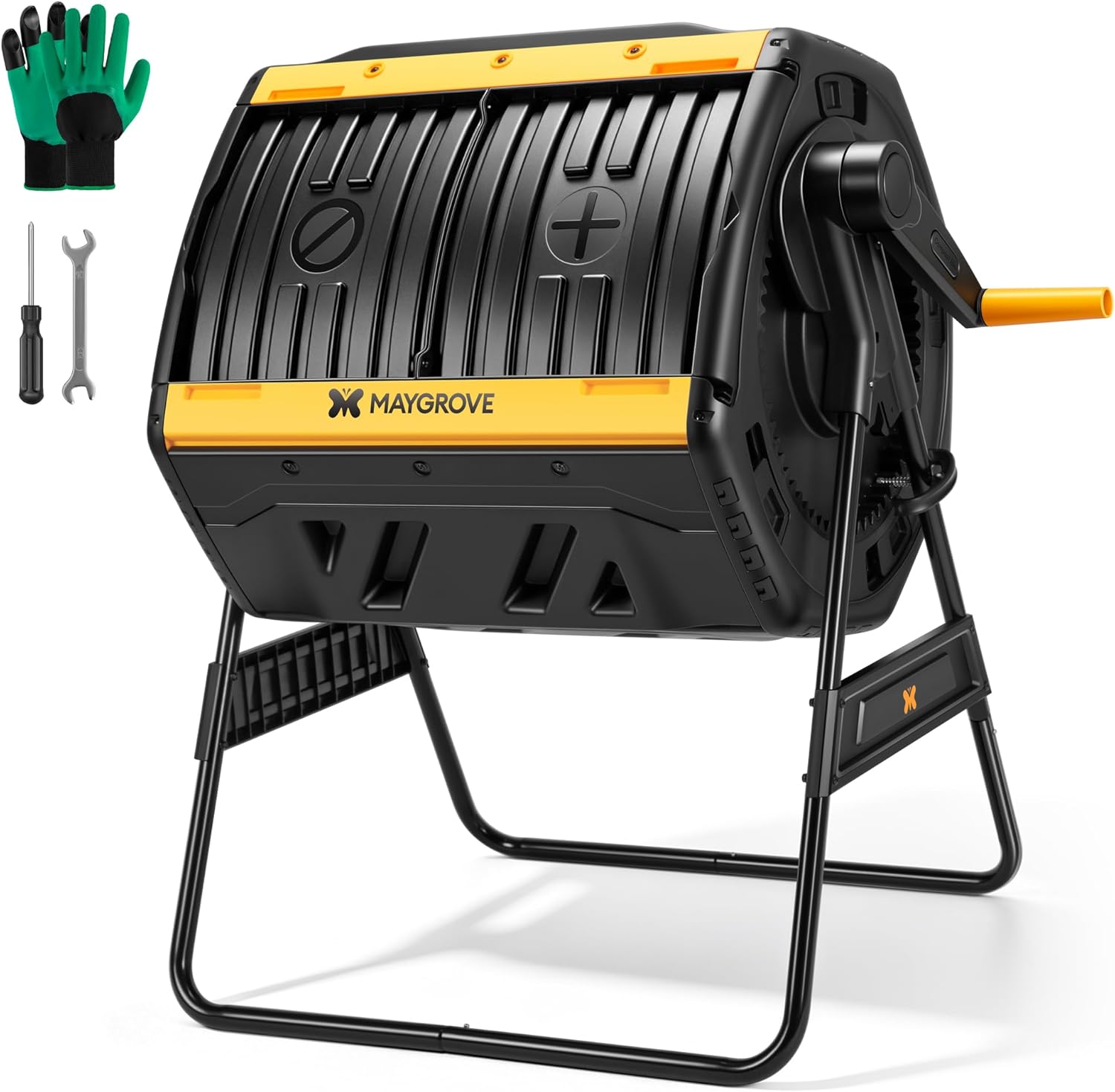
The best compost tumbler for pet waste isn’t the same as the one you’d use for kitchen scraps. Dog and cat droppings are high in nitrogen and carry pathogens like roundworms and E. coli, so they need a sealed, pest-resistant tumbler that reaches higher internal temperatures. I’ve tested several backyard composters, and most leak juice, attract flies, or simply can’t break down pet waste fast enough.
Below, I’ll walk through the top five tumblers actually built for this job, along with the key features that separate a safe pet-waste composter from a smelly bin. You’ll also see how to layer carbon-rich materials like sawdust and leaves to keep the pile hot without odors.
📌 Why Pet Owners Need a Dedicated Compost Tumbler for Pet Waste
Sending dog and cat waste to the landfill isn’t just unpleasant—it creates real environmental problems. Plastic bags trap waste in anaerobic conditions, which can release methane and allow pathogens to leach into groundwater. A dedicated compost tumbler keeps that waste out of the trash stream and turns it into usable compost for non-edible plants.
A well-run tumbler breaks down pet waste through aerobic decomposition. The sealed drum retains heat, which can reduce many common pathogens when internal temperatures stay high for several days. Tumbling every two to three days adds oxygen, and adding carbon sources like sawdust, shredded leaves, or straw keeps the mix from turning into a wet, stinking mess.
Odor control and pest resistance are the biggest daily wins. A raised, fully enclosed drum with a tight-fitting lid keeps flies, rodents, and raccoons out, while the tumbling action mixes fresh waste without you touching it. Dual-chamber tumblers take this a step further: you fill one side while the other side cures, so you always have a batch maturing and never have to stop adding waste.
For pet owners with small yards, this setup is far more convenient than a ground bin. No pitchfork turning, no direct contact with raw waste, and no need to dig a separate hole every week.
📌 Top 5 Compost Tumblers for Pet Waste in 2026
I ranked these five tumblers on odor control, capacity, turning ease, and seal quality. Pet waste needs a unit that can reach 140°F or higher internally, and a drum that won’t leak liquid or let pests in. None of the finished compost should go on vegetable gardens — use it on ornamentals only.
| Product | Best For | Capacity | Price Range | Check Price |
|---|---|---|---|---|
| FCMP Outdoor IM4000 | Best Overall | 37 gallons | $90–$110 | Check Price → |
| Miracle-Gro Small Composter | Best Budget | 27.7 gallons | $50–$70 | Check Price → |
| VIVOSUN Outdoor Tumbling Composter | Best Large-Capacity | 43 gallons | $80–$120 | Check Price → |
| EJWOX Compost Tumbler | Best Dual-Chamber | 43 gallons | $70–$100 | Check Price → |
| Jora Composter JK270 | Best Pest-Proof | 70 gallons | $350–$450 | Check Price → |
1. FCMP Outdoor IM4000 Dual Chamber Tumbling Composter – Best Overall
Dual 37-gallon chambers let you keep raw pet waste separate from nearly finished compost. The recycled plastic drum has deep fins for mixing and tight lids that trap odor. A smart pick for one or two dogs.
2. Miracle-Gro Small Composter – Best Budget
The 27.7-gallon single chamber is lightweight and easy to turn by hand. Since it has one drum, you’ll need a second bin for continuous pet waste processing. Best for small yards and one pet.
3. VIVOSUN Outdoor Tumbling Composter – Best Large-Capacity
43 gallons split across two chambers gives you room for multiple dogs’ waste plus yard clippings. The powder-coated steel frame stays stable, though assembly takes about 30 minutes.
4. EJWOX Compost Tumbler – Best Dual-Chamber
Twin sliding doors and 360-degree rotation make loading and mixing pet waste simple. The drum locks in place during turning, and the 43-gallon capacity handles a multi-dog household without eating your whole yard.
5. Jora Composter JK270 – Best Pest-Proof
The insulated steel drum on the 70-gallon Jora JK270 heats up faster, which helps break down pet waste efficiently. Its locking lid and sealed design keep raccoons and rodents out. Expensive, but built for serious pet waste composting.
🔍 Key Features to Look for in the Best Compost Tumbler
After a season of tumbling pet waste in my own backyard, here’s what separates a safe, low-odor composter from a stinky plastic drum.
- Capacity & batch size: For multiple pets, you’ll want 35–50 gallons or a dual-chamber design. Two medium dogs produce enough waste to fill a 35-gallon unit in about a week. Envirocycle Original – Check Price →
- Dual-chamber vs. single-chamber: Dual chambers let one side finish while you add to the other. That’s the cleanest setup for daily pet waste. Single chambers work only if you stop adding for 4–6 weeks.
- Pest-proof construction: Look for locking lids, tight seals, and metal or thick HDPE walls. Rats and raccoons can chew through thin plastic or pop loose snap lids.
- Aeration & tumbling: Internal mixing bars or fins break up clumps and keep oxygen flowing. That prevents the sour, anaerobic smell that attracts flies and angry neighbors.
- UV-resistant materials: Outside in full sun, cheap plastic gets brittle. Choose UV-stabilized HDPE or powder-coated steel rated for outdoor use. Expect to pay $120–$300 for a model that won’t crack in two years.
One more pick that nails all five features is the Mantis CT02001 – Check Price →. It’s a single-chamber, 37-gallon steel-frame tumbler built for big multi-dog batches.
🔑 How to Safely Compost Dog and Cat Waste in a Tumbler
Pet waste is almost pure nitrogen, so a tumbler will turn into a smelly, anaerobic mess unless you load it with carbon-rich browns. Aim for roughly 2–3 parts browns to 1 part waste by volume. Good options include sawdust, wood shavings, shredded newspaper, dry leaves, and straw.
You’ll need hot, active composting to reduce pathogens. Keep the pile in the 130–160°F (55–70°C) range for at least several days, turning every 2–3 days. Moisture should feel like a wrung-out sponge — not dripping, not dusty.
After the hot phase, let the compost cure for 6–12 months. That long rest allows beneficial microbes to finish breaking down residual pathogens. Always wear gloves, use dedicated tools, and wash your hands after handling pet-waste compost.
Never add clay-based or chemically treated cat litter. Clay clumps, smells, and won’t compost. Chemical additives can also kill the microbes your tumbler needs.
Finally, use finished pet-waste compost only on non-edible plants like ornamentals, trees, shrubs, and flower beds. It’s not safe for vegetable gardens, herbs, or anything you’ll eat.
⚡ Compost Tumbler vs. Traditional Compost Bin: Which Is Better for Pet Owners?
If you’re composting dog or cat waste, an enclosed tumbler wins almost every time. Open bins let odors escape, attract flies and rodents, and make hot composting nearly impossible for small pet waste batches.
| Factor | Compost Tumbler | Traditional Bin |
|---|---|---|
| Odor control | Sealed drum traps ammonia smells | Open top releases odors constantly |
| Composting speed | Typically 4-8 weeks with regular tumbling | 3-12 months, slower passive breakdown |
| Pest resistance | High — closed design keeps out flies, rats, dogs | Low — open access invites pests |
| Ease of use | Turn a handle, no digging or pitchforking | Manual turning and heavy lifting |
| Space needed | 2-4 square feet, self-contained | 3x3x3 ft pile or bin footprint |
For pet waste, the closed drum is the real difference-maker. Dog and cat feces can carry pathogens like roundworm and E. coli. A tumbler’s sealed chamber holds heat better, often reaching 130-150°F during active composting, which helps kill those pathogens. It also prevents curious dogs from snacking on half-finished waste.
A traditional bin still works fine for non-pet compost — leaves, grass clippings, and food scraps. You get more volume for less money, and passive piles eventually break down. Just never add pet waste to an open bin; runoff can contaminate soil and water.
Cost and upkeep differ, too. Tumblers run $80-$250, while bins cost $40-$100. Tumblers need occasional cleaning and gear lubrication but save hours of pitchforking. Bins are cheaper upfront yet demand more labor and pest control.
🔍 FAQ: Best Compost Tumbler for Pet Waste
Can I compost cat litter in a compost tumbler?
Only if it’s plant-based litter (wood, paper, wheat, or corn). Clay, silica, and clumping litters won’t break down and can gum up the drum. Remove solid waste first, and never mix cat waste with food scrap compost—cat feces can carry toxoplasmosis.
How long does pet waste take to compost safely?
Plan on 6–12 months at a sustained 131–150°F internal temperature. Without hot composting, let it sit for 12–18 months. Turn the drum every 2–3 days and keep the mix as moist as a wrung-out sponge.
Are compost tumblers completely smell-proof?
No. Tumblers reduce odor but won’t eliminate it completely. A heavy carbon layer (sawdust, wood shavings, shredded paper) and frequent turning keep smells manageable. Leave vents open—sealing them creates anaerobic stink.
Do I need a dual-chamber compost tumbler for pet waste?
Not strictly, but it helps. One side can actively fill while the other side cures. If you use a single-chamber tumbler, you’ll need to batch-fill and stop adding waste for several months while the pile finishes.
Can I use finished pet waste compost on vegetable gardens?
No. Use finished pet waste compost only on ornamental plants, lawns, shrubs, and trees. The risk of pathogens is too high for edible crops, especially root vegetables and leafy greens.
What is the best way to clean and maintain a compost tumbler?
Empty the drum, rinse it with a hose, scrub with mild soap, and let it dry in the sun. Avoid harsh chemicals that kill microbes. Check the axle and seals yearly, and lubricate moving parts with food-grade grease.
1 thought on “The Best Compost Tumbler for Pet Waste in 2026: Top Picks & Buying Guide”