The best garden sprayer for pet-friendly yards isn’t simply about spraying weeds—it’s about controlling drift, drips, and residue around dogs and cats. I’ve watched my own pup trot across a freshly treated lawn and immediately wondered what was clinging to his paws.
Cheap sprayers leak, clog, and send fine mist onto toys, water bowls, and fur. A well-designed sprayer can reduce that risk with better seals, adjustable nozzles, and targeted application. Let’s look at what actually matters when pets share the yard.
📌 Why Pet Owners Need a Specialized Garden Sprayer
Most standard garden sprayers do double duty—weed killer one week, foliar feed the next. For pet owners, that shared reservoir is the core problem. Trace amounts of common lawn chemicals like 2,4-D, glyphosate, dicamba, and synthetic fertilizers can cling to tank walls, hoses, and seals even after rinsing. Dogs and cats walk through treated grass, then lick their paws. A dedicated pet-safe sprayer limits that residue risk.
Cross-contamination is the bigger issue. If you spray a broadleaf herbicide with the same tank you later use for insecticidal soap or a mild pet-safe fungicide, you’re unintentionally mixing residues. Keeping one sprayer labeled “pet-safe only” means no accidental 2,4-D carryover onto turf where your dog rolls every afternoon.
Nozzle control also matters near play zones. A good sprayer should let you switch between a fine mist, a coarse fan, and a targeted stream. You want enough precision to spot-treat weeds around a fence line without creating drift that settles on a food bowl or water dish. Look for a wand with adjustable brass or polymer tips and a comfortable trigger lock.
- Dedicated tank: Use one sprayer only for pet-safe products, never for herbicides.
- Adjustable nozzle: Coarse droplets reduce drift into pet areas.
- Rinse protocol: Even a dedicated sprayer needs a triple rinse between applications.
That combination—separate tank, controlled spray pattern, and strict rinsing—keeps your yard routine safer for animals that sniff everything.
🔍 Top 5 Best Garden Sprayers for Pet-Friendly Yards in 2026
1. Field King Professional 190328 No Leak Pump Sprayer – Best Overall
This 2-gallon pump sprayer gives you precise control with a brass adjustable nozzle and an internal no-leak design. That matters when you’re applying pet-safe herbicides near water bowls, dog runs, or garden beds.
- Lockable shut-off for continuous spraying
- Viton seals handle organic treatments well
- Easy-pump handle reduces hand fatigue
- Requires manual pumping
- Wand can feel long on steep slopes
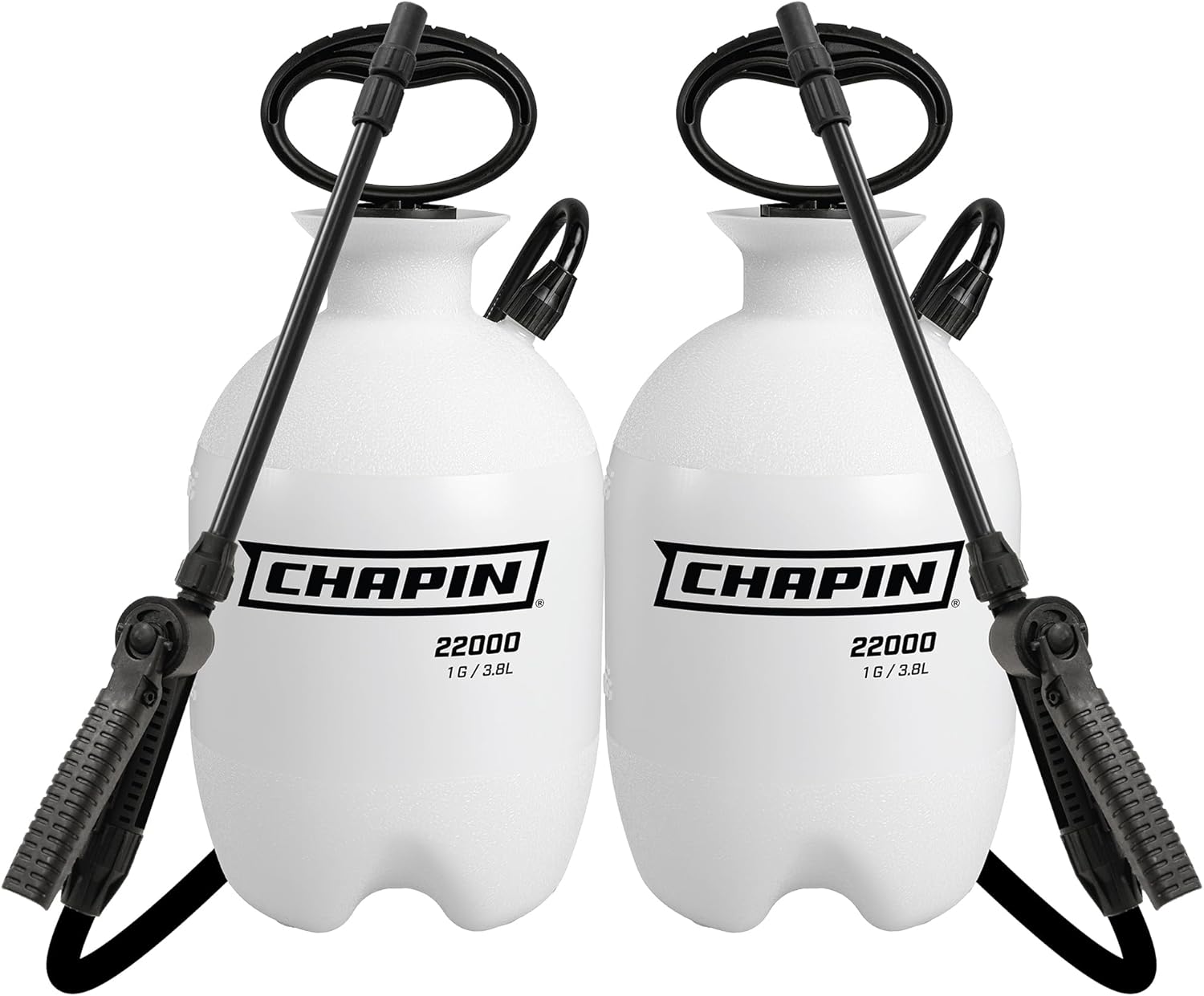
2. Chapin 20000 1-Gallon Lawn & Garden Sprayer – Best Budget
If you have a small pet-friendly lawn, this 1-gallon manual sprayer is hard to beat. The adjustable poly cone nozzle gives you a fine mist or a targeted stream, so you can spot-treat only where needed.
- Lightweight and easy to rinse clean
- Clear tank shows remaining liquid
- Inexpensive replacement parts
- Manual pumping required for every session
- Small capacity means frequent refills for larger areas
3. Scotts 190567 Lithium-Ion Battery Powered Sprayer – Best Battery-Powered
Pumping by hand can stress anxious dogs. This battery-powered sprayer delivers consistent pressure without the hiss-click rhythm of manual units. It runs on a rechargeable lithium-ion battery and sprays up to 1 gallon per charge.
- No manual pumping—just point and spray
- Consistent droplet size helps even coverage
- Three spray patterns for different jobs
- Battery needs recharging between large jobs
- Plastic wand feels less durable than brass options
4. PetraTools HD4000 4-Gallon Backpack Sprayer – Best for Large Yards
For yards over a quarter acre, this 4-gallon backpack sprayer saves you endless trips to the tap. The padded straps keep weight centered, and the 21-inch wand reaches under shrubs where pets like to dig or rest.
- Large capacity covers bigger lawns quickly
- Battery-powered with consistent flow rate
- Comfortable for extended use
- Heavier when full—takes getting used to
- Overkill for tiny urban yards
5. Ortho Dial N Spray Hose-End Sprayer – Best Hose-End Option
When you need to apply diluted, pet-safe treatment fast, this hose-end sprayer mixes concentrate automatically. Set the dial, attach the hose, and you’re done in minutes. Excellent for liquid fertilizers or natural weed preventers.
- No mixing or measuring mistakes
- Three spray patterns including a gentle shower
- Rinses clean easily after each use
- Requires a garden hose connection
- Less precise than wand sprayers for spot-treating
⚡ Quick Comparison: Top 5 Pet-Friendly Garden Sprayers
| Model | Type | Capacity | Best For | Check Price |
|---|---|---|---|---|
| Field King 190328 | Manual Pump | 2 gal | Precision spraying | Check Price → |
| Chapin 20000 | Manual Pump | 1 gal | Small lawns | Check Price → |
| Scotts 190567 | Battery | 1 gal | Low-stress spraying | Check Price → |
| PetraTools HD4000 | Backpack | 4 gal | Large yards | Check Price → |
| Ortho Dial N Spray | Hose-End | N/A | Quick, diluted treatments | Check Price → |
📌 Pet-Safe Garden Sprayer Features to Look For
Not every sprayer is safe around dogs, cats, or backyard wildlife. I look for four specific design details before using one near pets.
- Lockable or adjustable nozzle. A nozzle that locks in the “off” position prevents accidental misting when you set the sprayer down or a curious paw bumps it. Adjustable stream patterns also let you target weeds instead of broad-spraying areas pets roam.
- Chemical-resistant seals and tank materials. Cheap rubber seals degrade fast with repeated fertilizer or herbicide use. Look for Viton or EPDM seals and an HDPE tank. These resist swelling, cracking, and slow leaks that leave residue on patios or grass where pets walk.
- Pressure release valve and easy-rinse design. A manual pressure release valve lets you depressurize safely before storage, so no leftover spray blasts out later. Wide tank openings and smooth internal surfaces make rinsing simple — critical for removing residue before switching between lawn treatments and plain water.
- Transparent tank markings. Clear measurement lines let you mix exact dilution ratios. For pet-safe products, that precision matters: too strong can irritate paws or skin, too weak won’t work. You’ll waste less product and keep solutions predictable.
If a sprayer lacks any of these features, I won’t bring it into a yard where my dog sniffs every leaf.
⚡ Garden Sprayer Comparison: Manual Pump vs Battery vs Backpack
Here’s how the three main sprayer types compare for pet-friendly yards. Capacity, pressure, and noise all affect how stressful the job feels for you and your dog or cat.
| Type | Capacity | Pressure | Noise Level | Best Use Case |
|---|---|---|---|---|
| Manual pump | 1–3 gal | 20–45 PSI | Very low (hand pumping) | Small yards, patios, spot treatments |
| Battery | 2–4 gal | 30–60 PSI | Low, steady hum | Medium yards, noise-sensitive pets |
| Backpack | 4–6 gal | 40–70 PSI | Low to moderate | Large properties, longer sessions |
Manual pump sprayers work fine for patios, garden beds, and spot treatments under about 1,500 sq ft. You get a simple setup, no charging, and a lower upfront cost. The trade-off is hand fatigue—you’ll pump every 30 to 60 seconds to keep pressure steady.
- Pros: cheap, lightweight, no battery to die mid-job, very low noise until you pump.
- Cons: tiring on larger yards, pressure drops as you spray, small tanks mean more refills.
If your pet has noise anxiety, a battery sprayer is usually calmer. Instead of a sharp hiss and rhythmic pumping, it produces a steady low hum. Dogs that startle at sudden sounds often settle faster around battery units.
Backpack sprayers are the comfort pick for anything over a half acre. The padded harness shifts weight to your shoulders and hips, so you’re not constantly setting a tank down. A 4- to 6-gallon capacity cuts refill trips, which means less time chasing a curious dog away from the sprayer.
🔑 How to Use a Garden Sprayer Safely Around Pets
Keeping pets safe around a garden sprayer comes down to product choice, timing, and cleanup. Even “natural” sprays can irritate paws or stomachs if a dog licks them before they dry. Follow these four steps every time you spray.
- Choose pet-safe or organic solutions first. Look for OMRI-listed insecticidal soaps, neem oil, or vinegar-based weed killers. Always read the label’s re-entry interval — that’s the minimum time pets and people should stay off treated areas. Many organic sprays still require 2–4 hours to dry completely before it’s safe to return.
- Spray during low pet activity hours. Early morning or late evening usually means fewer curious noses in the yard. Keep dogs and cats indoors until the spray has fully dried. If you have an outdoor cat, block access to the yard for the entire re-entry period listed on the label.
- Rinse the sprayer thoroughly after each use. Leftover residue can cross-contaminate the next application — and the next thing you spray might be a vegetable bed or a spot where your dog rolls. Triple-rinse the tank, hose, and nozzle with clean water. Let everything air dry upside down before storing.
- Store sprayers and chemicals out of reach. Curious pets can chew through plastic bottles or knock over a pump sprayer. Keep the sprayer, concentrated formulas, and measuring cups in a high cabinet or locked shed. A childproof latch works well for dogs that know how to open doors.
🔍 FAQ: Best Garden Sprayer Questions from Pet Owners
Can I use the same garden sprayer for fertilizers and pet-safe weed killers?
Yes, but you’ll need to flush the tank, hose, and nozzle thoroughly between uses. Any leftover fertilizer can interact with weed killer or leave residue on pet areas. If you regularly switch chemicals, a dedicated second sprayer is the safer, low-stress option.
How long after spraying should I keep my dog off the lawn?
Always check the product label first. Most pet-safe formulas require the lawn to be completely dry, usually 2–4 hours. Some products recommend 24–48 hours before pets return. Wet residue sticks to paws and fur, so err on the longer side when you can.
What nozzle setting is safest to use around pets?
A coarse, low-pressure fan or cone spray keeps droplets heavy and close to the ground. That reduces drift onto pet toys, water bowls, and resting spots. Avoid fine mist or fog settings around animals.
Are battery-powered garden sprayers quieter for noise-sensitive pets?
Generally, yes. They eliminate the repetitive manual pumping sound, though the motor still makes a low hum. A solid choice is the Field King Battery Powered Backpack Sprayer — it’s noticeably quieter than gas models. Check Price →
How do I clean a garden sprayer after using chemicals?
Fill the tank halfway with warm water and a few drops of dish soap. Pump and spray the solution through the nozzle, then repeat with clean water twice. Flush the nozzle separately and wipe down the exterior. Never dump rinse water near pet drinking areas.
Do I need a separate garden sprayer for indoor plants and outdoor pet areas?
Ideally, yes. A dedicated indoor handheld sprayer prevents you from dragging outdoor chemical residues inside where pets sleep, eat, and groom. It’s a small investment for cleaner separation.