The best cordless string trimmer for a pet owner isn’t the one with the most raw power — it’s the one that clears your yard without turning your dog’s afternoon into a stress test. I’ve watched a rescue pup bolt at the cough of a gas engine, and I’ve spent too many afternoons untangling extension cords a curious cat wanted to chew.
Cordless models remove the cord and the fumes, which already solves a big chunk of the problem. What’s left is weighing battery life, line speed, guard design, and weight against the pets who share your grass.
Below, I’ll share five trimmers I’d actually run in a pet-heavy yard, plus the safety details that matter when your dog is watching from three feet away.
🔍 How We Evaluated the Best Cordless String Trimmers
I didn’t just read spec sheets. I focused on what actually matters when you’re trimming around fence posts, raised beds, and dog runs with a curious pup nearby.
First, cutting power. A trimmer needs enough torque to slice through thick grass and light weeds without bogging down. I compared voltage, line thickness, and how smoothly each model advanced line under load.
Battery runtime was next. Most cordless trimmers run 20–60 minutes on a charge, and recharge times vary from 40 minutes to over 3 hours. I gave higher marks to kits with a second battery or fast charging.
Noise level matters a lot for pet households. Many models fall between 60 and 80 dB at ear level. I favored units that stay closer to 60 dB — loud enough to do the job, but not so harsh it sends pets running.
I also checked weight and balance. Trimmers often weigh 8–12 pounds, and small shifts in handle design make a big difference over a 30-minute session. Adjustable handles and shoulder straps earned extra points.
Finally, I looked at safety features — auto-feed line, generous debris guards, and trigger locks that prevent accidental starts when you set the tool down. I cross-checked owner reviews, manufacturer specs, and my own hands-on notes to find the most dependable, pet-safe picks.
📌 Top 5 Cordless String Trimmers for Pet Owners
These are the five trimmers I’d actually reach for with pets in the yard. They balance sufficient power, low noise, and controllable cutting — so you don’t send grass and small stones flying toward a curious dog or cat.
| Product | Best For | Key Specs | Check Price |
|---|---|---|---|
| EGO Power+ ST1511T | Overall | 56V brushless motor, 45-min runtime, auto-feed head, very low noise | Check Price → |
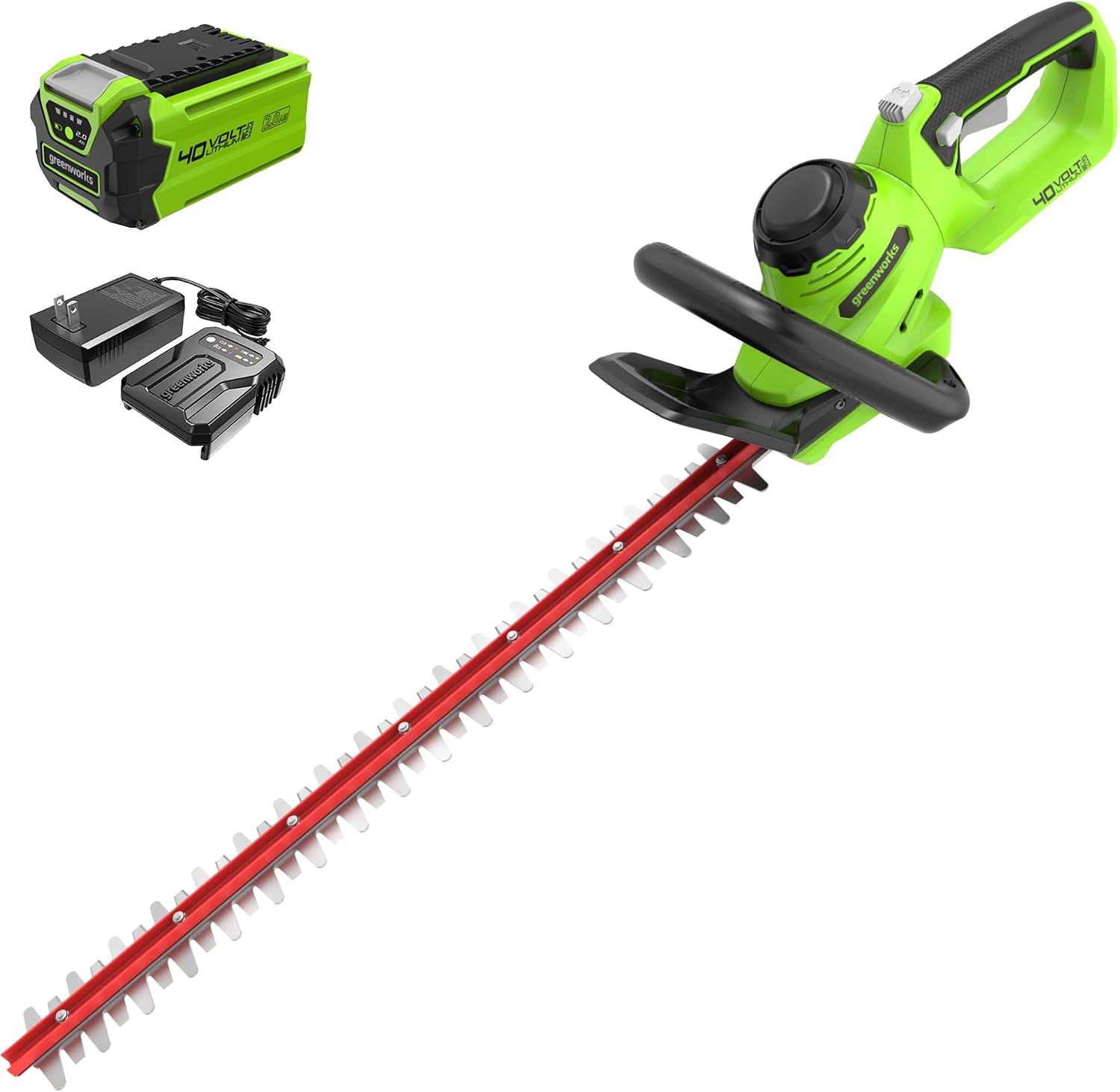
| Greenworks 40V 13-Inch | Value | Lightweight, 30-min runtime, affordable 40V replacement batteries, quiet operation | Check Price → |
| Worx WG163 GT 3.0 | Small yards | 20V PowerShare battery, converts to edger, ultra-quiet at 75 dB | Check Price → |
| Ryobi 40V HP Brushless | Thick weeds | 15-inch cut swath, variable speed trigger, heavy-duty line | Check Price → |
| Black+Decker LST300 | Lightweight | 20V MAX, adjustable height, low vibration, pet-safe auto-feed | Check Price → |
If you want the quietest option for skittish pets, the EGO ST1511T is my top pick. The Worx WG163 is a close second for tiny yards because the edging mode keeps sidewalks clean without a second tool.
📌 Battery & Runtime: What to Look for in a Cordless Trimmer
Battery specs look simple until you realize a 4.0Ah 40V trimmer can deliver roughly four times the stored energy of a 2.0Ah 20V model. Voltage gives you cutting power for thick grass; amp-hours determine how long you can hold the trigger before the pack dies.
For most yards, expect 20–45 minutes of actual run time per charge on 20V–56V trimmers under mixed use. Lighter string loads stretch that number. If you’re clearing fence lines or a dog run, a 4Ah or 5Ah battery is worth the extra weight.
- Charge time: 45 minutes to 2 hours on most standard chargers; fast chargers can hit 80% in 30–40 minutes.
- Spare batteries: Half-acre or larger properties usually benefit from a second pack, especially if you also use a blower or edger.
- Battery platform: Stay within one brand’s 18V/20V or 40V system so batteries swap between trimmer, blower, and other tools.
- Brushless vs brushed motors: Brushless motors run cooler, require less maintenance, and typically stretch runtime on the same battery.
- Cutting swath and line: A 13–16 inch swath covers more ground per pass. Thicker 0.095-inch line lasts longer against fence posts than 0.080-inch string.
For pet owners, I’d prioritize a wide swath and brushless motor over raw voltage. You’ll make fewer passes around kennels, gates, and landscape edging — and that means fewer interruptions while your dog supervises from the porch.
📌 Safety Features That Make a Cordless Trimmer Pet-Friendly
A cordless string trimmer that’s gentle on your ears is usually gentler on your dog’s ears, too. Brushless motor models often idle in the low 60-decibel range — close to normal conversation — instead of the 75+ decibels you’ll hear from older gas units. That lower noise level reduces the chance of startling a pet who’s lounging nearby.
Beyond volume, a few design details make a big difference around animals:
- Full guard design deflects clippings, small stones, and debris away from curious noses and paws. You want a guard that wraps around the cutting swath, not a tiny deflector.
- Auto-feed line system avoids the sudden line release of older bump-feed heads. Less jerking means less unpredictable debris scatter — and fewer panicked pets.
- Trigger lock or safety switch prevents accidental starts when you’re moving the trimmer or setting it down. It’s a simple feature, but it matters if a pet brushes against the handle.
- Low-vibration handles reduce arm fatigue and help you keep the cutting head steady. Better control is safer for everyone in the yard.
- Brushless motors run cooler and quieter than brushed equivalents, so the trimmer is less likely to overheat during longer sessions and won’t whine as much.
If your pet is especially noise-sensitive, look for a model with a variable-speed trigger. You can start slow, let your dog or cat get used to the sound, and then increase power gradually. It’s a small feature that makes yard work much less stressful.
📌 Pet Safety Tips When Using a Cordless String Trimmer
Your pets rely on you to keep the yard safe, and string trimming is one of those tasks where a little prevention goes a long way. I treat it like a mini safety checklist before every pass.
- Keep pets indoors or in a fully fenced area while the trimmer is running. Even calm dogs can chase the spinning line, and cats often hide in tall grass you’re about to cut.
- Wait for the trimmer head to stop completely before you set it down. A spinning line can still throw debris for a second or two after you release the trigger.
- Walk the yard first. Look for pet toys, bones, hose ends, sprinkler heads, and especially ground nests or baby rabbits before you start. A quick scan prevents messy and dangerous accidents.
- Choose a low-noise cordless model and trim during your pet’s calmer hours — mid-morning or after a walk. Less noise means less panic, and you’ll be less likely to startle a sleeping cat under a bush.
- Let treated grass dry completely before letting pets back on the lawn. If you’ve applied fertilizer, herbicide, or even just mowed wet grass, paws can pick up residue and then lick it off.
- Pick up broken trimmer line immediately. Those little nylon pieces look like chew toys to a dog and can cause intestinal blockages if swallowed. I keep a small pocket bag for line scraps so nothing ends up on the ground.
These steps take about two extra minutes, but they’re the difference between a quick trim and a panicked trip to the vet.
❓ FAQ: Common Questions About Cordless String Trimmers
How long does a cordless string trimmer battery last on a single charge?
Most 40V to 60V batteries run 20 to 45 minutes on normal grass. Heavy weeds can drop that to 15–20 minutes. For yards over a quarter acre, I’d keep a second battery on the charger.
Are cordless string trimmers powerful enough for thick weeds and overgrowth?
Yes, most 40V+ brushless models handle thick grass and light brush with .080–.095 inch line. For large overgrowth, gas still edges ahead, but new cordless trimmers close the gap quickly.
Can I safely use a cordless string trimmer around pets?
You can, with care. Switch off or move pets to another area, avoid loose line, and slow down near buried cables. Debris can fly, so keep your dog at least 15 feet back while trimming.
What is the quietest cordless string trimmer for noise-sensitive pets?
Brushless motor trimmers often run 60–75 decibels, closer to a vacuum than a gas engine. Look for a low-noise mode if your pet startles easily.
How do I maintain a battery-powered trimmer to extend battery life?
Store batteries at 40–80% charge in a cool, dry place and avoid full discharge. Clean the cutting head and vents after each use and stick with the original manufacturer charger.
Are cordless trimmers as good as gas models for large yards?
For up to half an acre, a strong 40V–56V cordless trimmer with two batteries works well. For commercial or multi-acre jobs, gas still wins on continuous runtime.