The best lawn mower for hills does two jobs at once: it keeps a steady cut on a slope, and it keeps you, your dog, and your landscaping safe. I’ve watched standard mowers lose grip on even a 10-degree incline, especially when grass is damp. That’s not just frustrating—it’s dangerous with pets running nearby.
Hill-friendly mowers solve this with lower centers of gravity, wider rear wheels, and self-propelled or lightweight designs you can control. You need something predictable. Below, I’ll share five mowers I’d trust on sloped yards, plus the safety habits that protect curious noses and paws.
📌 Why Choosing the Right Lawn Mower for Hills Matters for Pet Owners
Standard mowers on slopes are a gamble. Wheels lose grip, the deck tilts, and the whole machine can tip toward you — or worse, toward a pet sniffing nearby. That risk isn’t worth a quick mow.
Uneven cuts are more than cosmetic. When a mower bounces or rides up on one side, blades can scalp the grass or leave long, ragged strips. You’ll end up re-mowing the same spot, which means more time with blades spinning near your dog or cat.
A stable hill mower keeps blades where they belong — under the deck and away from paws. Look for a low center of gravity, wide rear wheels, and all-wheel or rear-wheel drive. Many hill-friendly models are battery-powered, so they run much quieter than gas engines and produce zero exhaust at pet nose level.
Traction and control matter because a slide can happen in a heartbeat. Here’s what I prioritize for yards where pets roam:
- Self-propelled rear-wheel drive — it grips and pulls steadily uphill.
- Wide, treaded tires — they resist slipping on wet grass or dry slopes.
- Low deck design — reduces tip-over risk on 15–30 degree inclines.
- Blade brake clutch — lets you stop the blade without killing the engine, handy if a pet wanders close.
A mower that crawls steadily is far safer than one that surfs downhill. I’d rather pause, check where the dog is, and keep cutting with full control.
📌 Key Features to Look for in a Hill-Friendly Lawn Mower
When I test a mower on a hill, I’m not just checking if it climbs. I’m watching whether it drifts sideways, how noisy it is around a dog, and whether I can turn it safely at the bottom. A few features separate mowers that feel planted from ones that fight you the whole way.
- Rear-wheel-drive self-propulsion: Front-drive mowers lose grip when the front wheels get light on an incline. Rear-wheel drive keeps the drive tires on the ground and pulling.
- Wide rear wheels with real tread: Look for at least 8-inch rear wheels with deep lugs. They resist side-slip far better than narrow plastic wheels.
- Low center of gravity: A lower deck and balanced weight help the mower hug the slope instead of tipping or bouncing.
- Quiet, low-emission power: Battery and electric mowers won’t blast a nervous dog with exhaust noise, and they eliminate fumes that settle in low yard spots where pets sniff.
- Blade safety features: A blade brake clutch lets you stop the cutting blade while the engine keeps running — useful when a dog darts into your path.
- Manageable weight: In my experience, 60–85 lb is the sweet spot for hills. Heavy enough to hold a line, light enough to correct if it starts sliding.
Traction control or a differential lock can help on wet grass, but I’d prioritize wide rear tires and a low deck first. Skip extreme lightweight mowers on steep terrain. They bounce and lose traction. You want a mower that tracks straight, turns predictably at the bottom, and doesn’t exhaust you halfway up the slope.
🔍 Top 5 Best Lawn Mowers for Hills in 2026
For sloped yards, I look for rear-wheel or all-wheel drive, a low center of gravity, and a blade stop that keeps pets safe. I skip corded electric mowers on hills—the cord is a trip hazard and limits your range.
1. Honda HRX217VKA – Best Gas Self-Propelled for Hills
Honda’s hydrostatic rear-wheel drive gives you steady speed control on slopes, and Roto-Stop lets you stop the blades while the engine keeps running—safer if a dog darts in front of you.
- Roto-Stop blade stop
- Hydrostatic variable speed
- 4-in-1 Versamow
- Heavy for a 21-inch deck
- Premium price
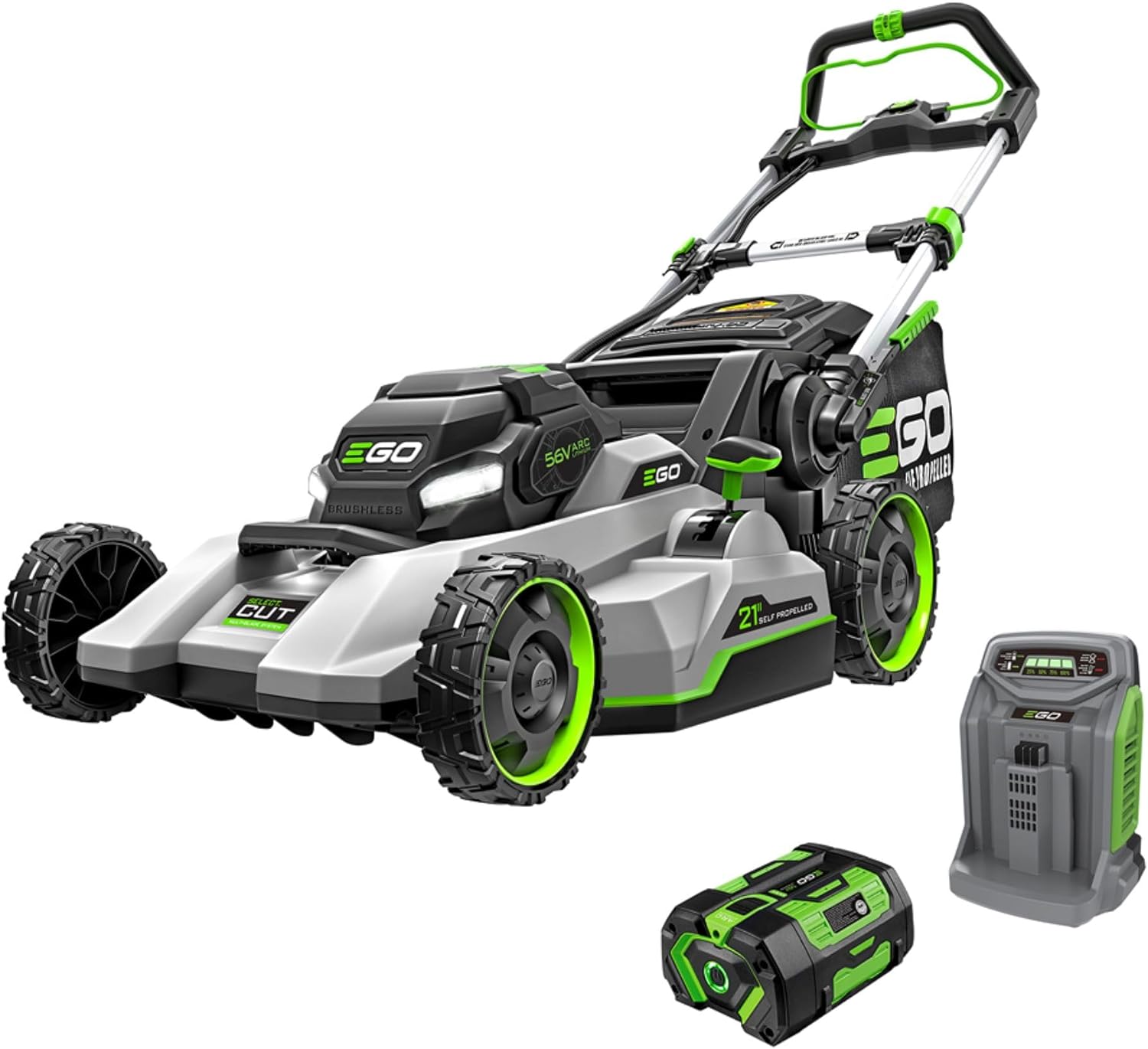
2. EGO Power+ LM2135SP – Best Battery Self-Propelled for Hills
This 21-inch cordless mower delivers gas-like torque without fumes. The rear-wheel-drive self-propelled system with variable speed handles moderate hills well, and the brushless motor maintains power under load.
- Quiet for noise-sensitive pets
- No gas smell or exhaust
- Adjustable self-propel speed
- Battery runtime drops on steep inclines
- Higher upfront cost
3. Toro Recycler 22 in. Personal Pace – Best Auto-Adjust Gas Mower
Toro’s Personal Pace self-propel system automatically matches your walking speed, so you won’t fight the mower on a slope. The rear bag reduces flying clippings around pets.
- Intuitive speed control
- Good value for gas
- Rear bagging for pet areas
- Gas engine needs maintenance
- Not ideal for very steep slopes
4. Husqvarna HU800AWDH – Best All-Wheel Drive for Uneven Hills
The all-wheel-drive system pulls with both wheels, which helps on uneven or slippery hill sections. A blade clutch lets you stop the blade without killing the engine—handy when pets wander close.
- AWD for extra traction
- Blade stop clutch
- 3-in-1 cutting
- Heavier than rear-wheel-drive models
- Assembly required
5. Greenworks 40V 21-inch Brushless Self-Propelled – Best Budget Battery Mower
For small to medium slopes, this 40V mower offers rear-wheel drive and a brushless motor at a lower price than premium cordless models. It’s noticeably quieter than gas, which helps if your dog is noise-sensitive.
- Quiet operation
- Lightweight and low-maintenance
- Good value for battery
- Not for steep or large hills
- Single battery may need recharge
🔍 Best Lawn Mower for Hills Comparison: At a Glance
I’ve put the five mowers side-by-side below, focusing on the specs that actually change how they handle a slope: drive type, power source, rated incline, weight, and noise. For pet households, the noise column matters as much as traction — a quieter mower means less stress for dogs and cats near the door.
| Mower | Drive Type | Power Source | Slope Rating | Weight | Noise Level | Quick Pros & Cons | Check Price |
|---|---|---|---|---|---|---|---|
| Honda HRX217VKA | Hydrostatic RWD | Gas | Up to 20° | ~89 lb | ~85 dB | ✅ Excellent traction, durable deck; ❌ Heavy, gas fumes | Check Price → |
| EGO Power+ LM2135SP | Rear-wheel self-propelled | Battery | Up to 15° | ~62 lb | ~75 dB | ✅ Very quiet, zero emissions; ❌ Runtime drops on long slopes | Check Price → |
| Toro Recycler SmartStow 21466 | AWD Personal Pace | Gas | Up to 20° | ~95 lb | ~87 dB | ✅ All-wheel grip, vertical storage; ❌ Heaviest pick | Check Price → |
| Cub Cadet SC 500 | RWD self-propelled | Gas | Up to 18° | ~85 lb | ~88 dB | ✅ Strong engine, good value; ❌ No AWD for steepest hills | Check Price → |
| Husqvarna LC221RH | RWD self-propelled | Gas | Up to 18° | ~90 lb | ~86 dB | ✅ Honda engine reliability, adjustable speed; ❌ Slightly heavier steering | Check Price → |
For slopes over 15°, stick with rear-wheel or all-wheel drive gas models like the Honda or Toro. Battery mowers such as the EGO are better on gentle inclines and around nervous pets, but you’ll trade some runtime on long uphill stretches.
🔑 How to Choose a Lawn Mower for Steep Slopes: Buying Guide
Start by measuring your yard’s steepest section, not just the average slope. Most mower manuals warn against mowing slopes over 15 degrees; if your yard is steeper, look for an all-wheel-drive model or use a string trimmer on the worst spots.
Drive system matters more than motor size on hills. Front-wheel drive loses traction when the front lifts on an incline. Rear-wheel drive keeps weight over the drive wheels, which helps maintain grip. All-wheel drive gives the most traction and is the safest choice for uneven, sloped yards.
Power source is a real trade-off on slopes. Gas mowers offer consistent power but are loud and emit fumes. Corded electric models are quiet and emission-free, but dragging a cord uphill can be dangerous. Battery mowers combine low noise and zero emissions, though they’re heavier and may struggle with thick grass on long hills.
If you have pets, prioritize these three features:
- Low noise — many pets are startled by gas engines; battery mowers usually run under 75 dB.
- Zero emissions — no exhaust means no fumes lingering where dogs sniff and roll.
- Blade disengagement — a mower that stops the blade but keeps the motor running lets you pause safely when your pet runs near.
🔑 How to Mow a Sloped Lawn Safely with Pets Around
Slopes change everything about mowing. The same yard that feels safe on flat ground can turn slick after morning dew, especially with a dog or cat wandering nearby. I treat sloped mowing like a short safety checklist.
- Mow across the slope, not up and down. With a walk-behind mower, horizontal passes keep the mower from rolling back into your feet or tipping forward. It also gives you a wider, more stable stance.
- Overlap each pass by a few inches. That prevents missed strips and keeps you from leaning downhill to reach an edge.
- Keep pets inside or in a separate fenced area. I don’t care how calm your dog is. A mower can fling sticks, rocks, and plastic toy fragments. Close the door, latch the gate, and wait until the blade stops before letting pets back out.
- Walk the slope before you start. Look for hidden bones, rubber chew toys, tennis balls, and dog-dug holes. Fill or mark holes so a wheel doesn’t drop into one and twist your ankle. Remove anything the blade could turn into a projectile.
- If the grass is wet, pause. Wet slopes reduce traction for both you and the mower. Wait for the dew to dry or skip that section.
On steep sections, I also keep the discharge chute pointed away from the house and fence line, and I never pull the mower backward toward my feet. It’s slower, but safer for everyone.
🔍 FAQ: Best Lawn Mower for Hills
Is a self-propelled mower necessary for hills?
It’s not strictly required, but it makes a big difference. On slopes above 10 degrees, rear-wheel self-propelled drive reduces pushing fatigue and improves traction. A solid pick is the Honda HRX217VKA. Check Price →
Can I use a riding mower on steep slopes?
Avoid riding mowers on slopes steeper than 15 degrees. They can tip or lose traction. For hilly yards, a self-propelled walk-behind mower is much safer, especially if you have pets nearby.
What is the maximum slope a push mower can handle?
Most gas push mowers handle 15–20 degrees, but comfort drops quickly above 15. Mow across the slope rather than up/down. If you need extra grip, look for high-traction rear wheels like the Toro Recycler 22. Check Price →
Are electric mowers safe for mowing hills?
Yes. Battery mowers often have a lower center of gravity, which helps stability. The EGO Power+ LM2142SP has rear-wheel drive and decent hill traction. Check Price →
How do I keep my dog safe while mowing a sloped lawn?
Keep dogs inside or on a leash in a separate area. Clear toys and hidden objects first. Mow in short passes and stop the blade if your dog enters the yard.
Do I need special tires for a lawn mower on hills?
Usually no. Many hill-friendly mowers already have wide, high-traction rear wheels. For extra grip on wet grass, you can add wheel weights or chains, but most moderate slopes don’t require them.