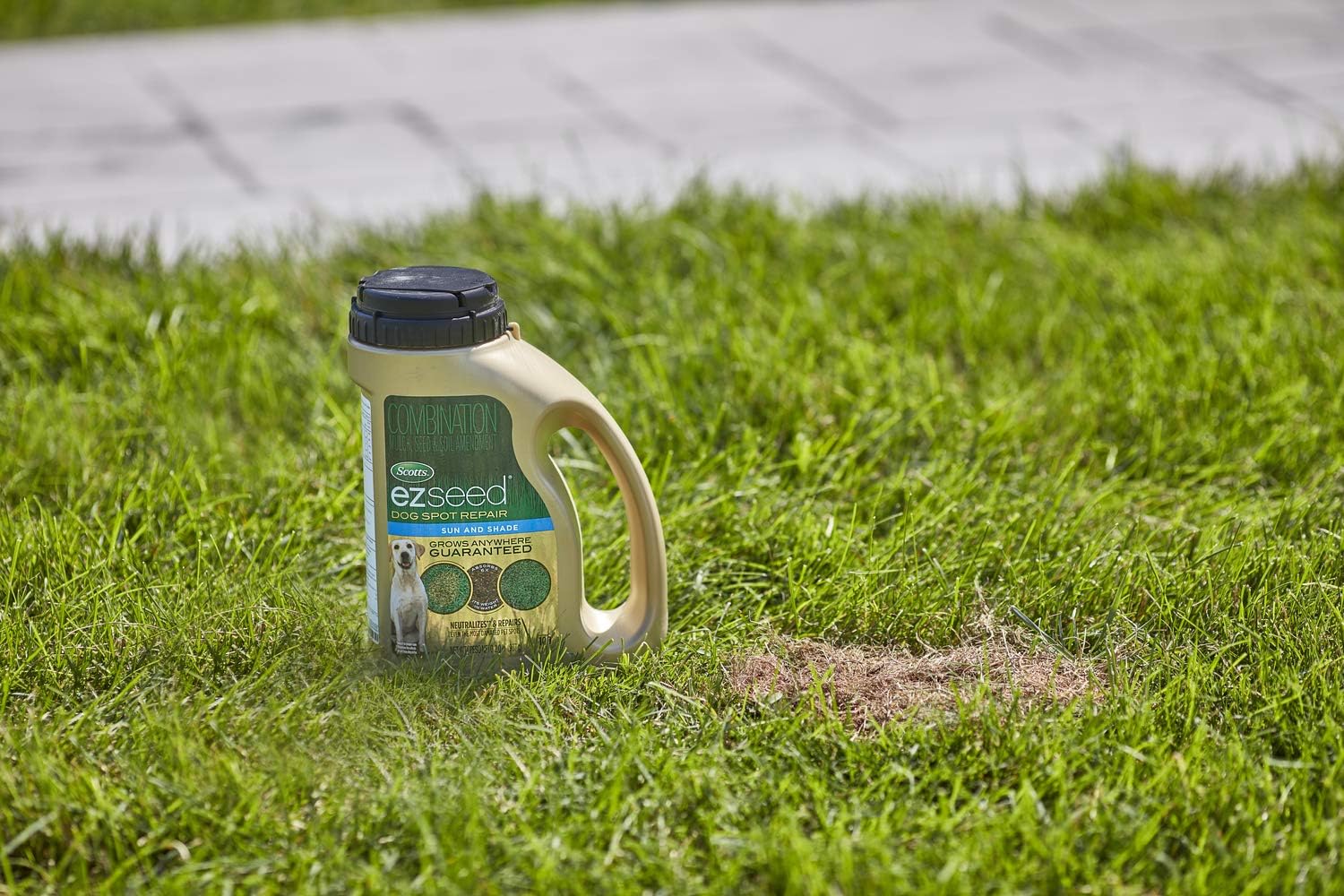
Your dog pees in the same corner every morning, and a week later that patch is a yellow-brown crater ringed by dark green grass. That’s the classic sign you need to repair urine spots in lawn turf. Urine nitrogen burns the blades at the center while over-fertilizing the edge.
The good news: most spots green back up in two to four weeks with water, a little soil, and a few minutes of work. This guide walks you through how to repair urine spots in lawn turf — from flushing fresh burns to reseeding patches that are already dead.
Two dogs and a small backyard taught me that speed matters far more than fancy products. Catch a spot within 24 hours and you’ll rarely need seed. Ignore it for a month and you’re staring at bare dirt, weeds, and a real renovation job.
📌 Why Dog Urine Burns Your Lawn and Creates Brown Spots
Dog urine is a concentrated dose of nitrogen and soluble salts. One squat from a medium-sized dog can dump as much nitrogen as a week’s worth of lawn fertilizer — into a patch the size of a saucer. That overload draws moisture out of the blades and scorches the crown, the growth point sitting right at soil level.
The result has a signature look: a dead brown center ringed by dark green, fast-growing grass. That outer halo is the zone where the dose was diluted enough to fertilize rather than kill.
What makes one spot worse than another
- Dog size and urine volume: a large breed leaves a bigger, hotter burn than a terrier.
- Hydration and diet: well-hydrated dogs produce more dilute urine, while high-protein diets and some supplements concentrate the nitrogen.
- Grass species: fine fescue, Kentucky bluegrass, and Bermuda burn fastest; tall fescue blends and perennial ryegrass tolerate more.
- Soil and weather: dry soil on a hot afternoon does the most damage, since there’s less moisture to dilute the salts.
Urine damage vs. the look-alikes
Urine spots come with that green halo — drought stress and fertilizer burn usually don’t. Grub damage peels up like loose carpet because the roots are gone, while urine-killed grass lifts with its roots still attached. Fungal problems spread in irregular patches, often with lesions or powdery growth on the blades.
Another clue is timing. A fresh spot can look greener at first, then browns within 24 to 48 hours as the salts finish their work. That short window is exactly why flushing the area fast makes such a difference to anyone learning how to repair urine spots in a lawn.
📌 Tools and Products You Need to Repair Dog Urine Spots
You don’t need a truckload of equipment to fix urine burn. A small kit covers most spots, and the extras only earn their keep if your dog keeps hitting the same stretch of grass.
Basic tools to gather
- Garden hose or 2-gallon watering can — for flushing salts out of the root zone after every accident.
- Handheld pump sprayer — gives you even coverage when applying neutralizers or liquid amendments.
- Hand rake and garden fork — the rake lifts dead, matted turf; the fork loosens compacted soil so roots can spread.
- Lawn edger or half-moon edger — cuts a clean square around a dead patch so new seed meets live grass evenly.
- Bucket — for mixing topsoil, compost, and seed without making a mess on the driveway.
Repair products to have on hand
- Grass seed matched to your lawn type — tall fescue, perennial ryegrass, or bermudagrass, depending on where you live.
- Topsoil or compost — a quarter to half inch over the repaired area.
- Starter fertilizer — higher in phosphorus to push new roots.
- Soil pH test kit — urine pushes pH upward, and seed struggles in soil that’s too alkaline.
Neutralizers and amendments
Gypsum helps flush sodium through the soil, while lawn-safe soil conditioners improve drainage in compacted spots. Enzyme-based pet odor neutralizers break down uric acid and rinse away the salt load that keeps drawing your dog back to the same patch.
Optional upgrades
A plug aerator, broadcast spreader, sprinkler timer, and soaker hose all make repeat repairs easier. Some owners also add a dog-friendly lawn supplement to the dog’s diet, though results vary by dog and by lawn.
Safety notes
Read every label rate and stick to it — more is not better. Keep pets off freshly treated or seeded areas until the product is fully dry, often 24 to 48 hours. Choose pet-safe formulations, and store seed and fertilizer out of reach.
Budget tiers
| Setup | What’s included | Typical cost |
|---|---|---|
| Quick-fix kit | Hose, hand rake, seed, topsoil, small bag of gypsum | Around $20–$40 |
| Full renovation | Core aerator, spreader, sprinkler timer, soaker hose, bulk seed and compost | $150 and up |
🔑 Step-by-Step: How to Repair Urine Spots in Your Lawn
Repairing a urine spot takes about 15 minutes of hands-on work on day one, then a couple of weeks of light watering. The sooner you catch it, the less seed you’ll need. Here’s the exact sequence I follow — and yes, the order matters.
- Flush fresh spots within a few hours. Soak the area with 1–2 inches of water so the nitrogen and salts dilute before they reach the roots. A hose, sprinkler, or watering can all work.
- Assess the damage. Tug a tuft of grass. If it’s rooted and just yellow, it’s stressed and may bounce back. If it lifts easily and snaps dry, the crown is dead and that patch needs seed.
- Rake out the dead turf. Pull the brown, matted material, then scratch the top half-inch of soil with a rake or hand cultivator to relieve compaction.
- Amend the soil. Spread a quarter to half inch of compost or topsoil. If the same spots keep crusting over, a light gypsum application can help move salts through the soil.
- Overseed the bare patch. Match the seed to your region and season — tall fescue or perennial ryegrass in cool climates, bermudagrass or zoysia in warm ones.
- Top-dress and water gently. Cover the seed with a thin layer of compost, mist it in, and keep the patch consistently moist for 10–14 days.
- Fertilize lightly, then mow high. Once new growth reaches about 2 inches, feed at half rate. Raise your deck height so taller blades shade the soil and hide wear.
Troubleshooting spots that won’t recover
- Still yellow after two weeks: salt or compaction is usually the culprit. Water deeply once a week and skip the fertilizer for now.
- Green ring around a dead center: that’s the classic nitrogen burn pattern from a single urination. Rake it out and reseed.
- Spot keeps spreading: urine damage stops at a fixed edge. If it grows, look for grubs, fungus, or disease instead.
Once you’ve done this a few times, you’ll know how to repair urine spots in lawn areas almost on autopilot — and your dog can keep using the yard.
📌 Fixing Severe Damage: Reseeding, Sod, and Soil Amendments
If a spot keeps coming back no matter how many times you patch it, or you’re staring at a patchwork of overlapping brown circles, stop patching. When the damaged area is bigger than a dinner plate — or the soil underneath has gone slick and crusty — the roots are gone and you’re wasting seed on dead ground. That’s your signal to strip it back and start over.
Strip, Aerate, and Fix the Soil First
- Cut out the dead mat and remove loose roots with a thatch rake or square shovel.
- Core-aerate the bare area so water and amendments actually reach the root zone.
- Run a soil test before adding anything. Lime raises pH, sulfur lowers it — guessing usually makes it worse.
Dog urine leaves concentrated salts behind. Work in gypsum plus 1–2 inches of compost, then run several deep watering cycles over a week to flush the salt below the root zone instead of just into the next layer down.
Reseed or Sod?
Seeding is cheaper and gives you far more variety, but it needs consistent moisture and patience. Sod is instant coverage with a much shorter recovery window. Match the seed to your existing lawn — tall fescue for cool-season, bermudagrass or zoysia for warm-season — and press it into firm contact with the soil. Early fall is the best window for cool-season grass; early spring works for warm-season types.
| Repair Method | Typical Cost per 100 sq ft | Time to Coverage | Watering Needs |
|---|---|---|---|
| Seed + topdressing | $8–$25 | 4–8 weeks | Light, 2–3x daily |
| Sod | $80–$200 | Immediate | Deep, daily for 2 weeks |
Protecting New Growth
Fence the area off from your dog for at least four weeks. Keep foot traffic minimal, water deeply every other day rather than lightly every day, and let the grass reach about 3 inches before the first mow. That routine is what makes the difference in how to repair urine spots in lawn for good.
🔑 How to Prevent Dog Urine Spots from Coming Back
Prevention comes down to two habits: changing where your dog pees, and flushing the soil before the nitrogen concentrates. Get those right and future burn marks stay small enough to ignore.
Set up a designated potty area
Pick one corner of the yard and cover it with mulch, gravel, or a tough ground cover like clover. Dogs tend to return to the same spot, so the main lawn stops absorbing the damage.
Dilute the urine
More water in your dog’s system means less concentrated nitrogen hitting the grass. Keep bowls full, and ask your vet about a diet or supplement aimed at reducing urinary nitrogen before adding one on your own.
Flush the spot right away
Keep a watering can by the door, or run a quick 2–3 minute sprinkler cycle over high-traffic zones after your dog goes out. Diluted urine is far less likely to burn.
Build a tougher lawn
- Mow high — 3 to 4 inches — for deeper roots and denser cover.
- Overseed each fall with urine-tolerant tall fescue or perennial ryegrass blends.
- Fertilize in balanced doses; excess nitrogen makes burn worse, not better.
Make maintenance a routine
Lawn protectant sprays and soil conditioners work best reapplied every 4–6 weeks through the growing season, not used once and forgotten. Rotate potty spots too, and expect the worst damage in hot, dry spells or on dormant grass.
If that routine holds, you’ll spend far less time searching for how to repair urine spots in lawn and far more time just enjoying the yard.
⚡ Dog Urine Spots vs. Other Lawn Damage: What You’re Actually Looking At
A brown patch in the lawn doesn’t automatically mean your dog is the culprit. Before you grab a bag of seed, rule out the lookalikes — grubs, drought, fertilizer burn, and dollar spot fungus all produce dead grass that gets blamed on urine.
The quickest way to tell them apart is to look at the pattern and the soil under your feet, not just the color. A single dead patch with a clean edge in the middle of a healthy lawn points one direction; spots that spread in irregular blotches across the whole yard point somewhere else.
| Problem | Appearance | Pattern | Timing | Soil Feel | The Fix |
|---|---|---|---|---|---|
| Dog urine | Brown center with a dark green ring | Round, isolated, often near a favorite marking spot | Shows up 3–7 days after a marking event | Firm, sometimes crusty or salty on the surface | Flush with water, reseed the center |
| Grub damage | Yellow-brown turf that lifts like loose carpet | Irregular spreading patches, often sunny slopes | Late summer into early fall | Spongy and rootless — you can peel it back | Confirm grubs in the top 2 inches, then treat |
| Drought stress | Blue-gray tint, footprints stay visible | Whole lawn, worst on slopes and near pavement | During hot, dry stretches | Bone dry several inches down | Deep, infrequent watering |
| Fertilizer burn | Crispy brown edges, sometimes streaked | Follows spreader lines or overlaps | Within days of feeding | Dry surface, high salt readings | Water heavily to dilute; rake out dead tissue |
| Dollar spot fungus | Small straw-colored circles, 1–3 inches | Many spots that merge into larger areas | Humid weather, heavy dew, spring and fall | Moist, often with visible white webbing at dawn | Improve airflow, water in the morning |
The green ring around a brown center is the strongest clue pointing to urine. Nitrogen and salts concentrate in one small area and scorch the crown, while the diluted outer edge gets a light fertilizer dose that pushes new growth. Few other lawn problems produce that halo effect.
If spots keep appearing in the same low, wet corner, or the soil feels rock-hard when you push a screwdriver in, you’re likely dealing with compaction or poor drainage rather than your dog alone. Water runs off compacted clay instead of flushing the nitrogen down, so the salts stay put.
Call in a soil test or a lawn care professional when damage spreads faster than you can reseed, when you’ve replanted the same spot twice with no luck, or when the turf pulls up easily and you find no roots. A basic soil test through your county extension office usually costs under $30 and tells you pH, nutrient levels, and drainage issues you can’t diagnose by eye.
❓ FAQ: Repairing Dog Urine Spots in Lawn
Will dog urine spots in my lawn grow back on their own, or do I have to reseed?
It depends on how deep the burn goes. If the center of the spot is still green-brown and the stolons (the runners) survive, most grasses will knit back over in 3 to 6 weeks once you flush the soil. If the middle is straw-colored, crispy, and lifts out in a dead plug, that crown is gone — reseeding or patching is the only way back.
How long does it take for a repaired spot to blend in?
Germination is the fast part: perennial ryegrass sprouts in 5 to 7 days, tall fescue in 7 to 14, and bermudagrass in 10 to 21 in warm weather. Blending in takes longer — plan on 6 to 10 weeks of watering and mowing for the patch to match the surrounding texture and color.
Does pouring water on the spot really help, and how much?
Yes, and it’s the cheapest fix you have. Dilution lowers the nitrogen and salt concentration before it reaches the roots. Pour 1 to 2 gallons directly over the spot right after your dog goes, or within 6 to 8 hours at the latest. The fresher the urine, the less flushing you need.
What grass seed is best for patching where my dog urinates?
Match your existing lawn first, then lean on tough, deep-rooted types. Tall fescue handles traffic and urine better than fine fescues, while perennial ryegrass repairs fastest. Warm-season lawns like bermuda and zoysia patch best with plugs or sod rather than seed.
Are there pet-safe products that neutralize urine damage?
Gypsum and enzyme-based soil conditioners are widely used to leach salts and calm the nitrogen spike, and most are safe around dogs once watered in. Skip anything with bleach, strong acids, or harsh ammonia. Keep your dog off treated patches until they’re fully dry.
Can changing my dog’s diet stop urine spots from forming?
Diet changes the concentration, not the chemistry. More water intake — wet food, extra bowls, a pet fountain — dilutes urine and can reduce burn severity noticeably. Some owners report improvement with lower-protein formulas, but talk to your vet before making that switch.
Learning how to repair urine spots in lawn doesn’t have to be a weekly battle — flush fast, reseed smart, and stay consistent.