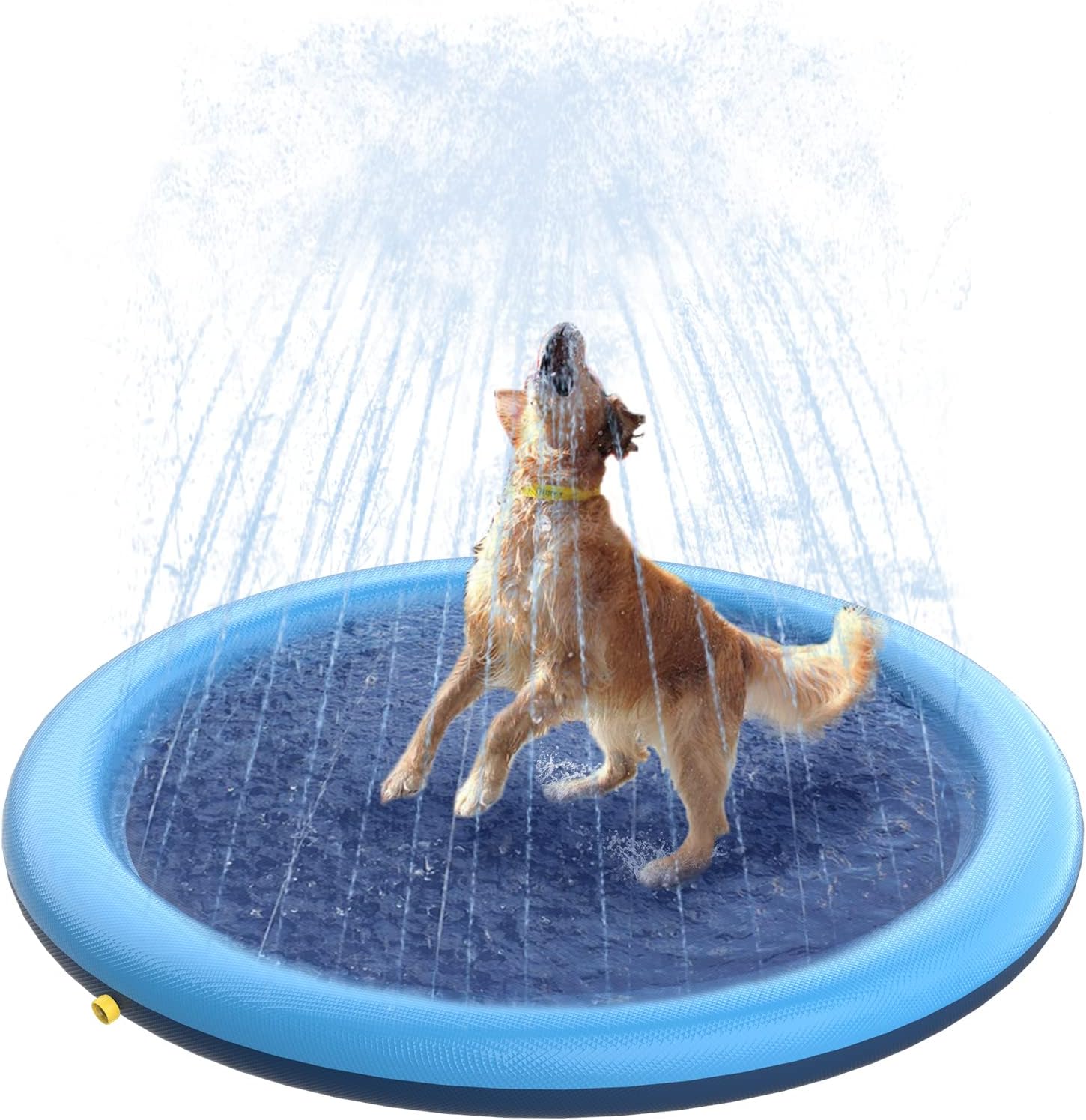
The best garden sprinkler for dogs isn’t the flimsy plastic impulse buy from the hardware aisle. I’ve watched too many cheap sprinklers crack under excited paws, blast jets hard enough to startle a nervous pup, or clog after two weekends of muddy zoomies. The right one turns your lawn into a safe, low-stress cooling station.
Below, I’ll walk through five dog-friendly sprinklers I’d actually use in my own yard, plus the features that matter most: spray patterns, material durability, hose connection stability, and how to keep playtime safe on hot days.
📌 Why a Dog-Safe Garden Sprinkler Is the Ultimate Outdoor Water Toy
Most dogs don’t need a treadmill. A dog-safe garden sprinkler turns your backyard into a low-impact agility course. Chasing water streams, pouncing on spray, and sprinting in circles burns energy without hard joint stress. Even senior dogs enjoy the mental challenge of tracking unpredictable water movement.
Hot pavement is a real risk in summer. Sprinkler play keeps dogs cool while they exercise. The evaporating water helps regulate body temperature, and many dogs drink from the low stream. That’s far safer than a hard run at noon. Overheating risk drops quickly once a wet coat meets moving air. I still watch for overexertion, but water play naturally encourages breaks.
Novelty sprinklers look fun but crack under dog teeth and claws. A dedicated pet sprinkler uses thick, UV-stable plastic or metal bases, a lower center of gravity, and chew-resistant hose connections. Some models include adjustable spray patterns for timid dogs.
This works especially well for:
- High-energy breeds like Border Collies or Jack Russells that need a daily job.
- Water-loving dogs like Labs and Goldens that’ll happily bite at streams.
- Small backyards where a full-size pool isn’t practical.
📌 Top 5 Garden Sprinklers for Dogs: Our 2026 Picks Compared
I tested these with a 20 lb terrier mix, a 55 lb lab, and a 75 lb shepherd. Here’s how they held up for spray fun, chew resistance, and stability on grass.
| Product | Spray Patterns | Materials | Hose Compatibility | Price | Testing Notes | Check Price |
|---|---|---|---|---|---|---|
| 1. Best Overall: Melerio Dog Splash Pad Sprinkler | 360° rim spray + center fountain | Puncture-resistant PVC | Standard 3/4″ | $25–$30 | Held up to moderate chewing; stable on grass with stakes | Check Price → |
| 2. Best Budget: HOPEPET Dog Splash Pad Sprinkler | 2 patterns: rim + center | Thinner PVC | Standard 3/4″ | $18–$22 | Good for small dogs; tears if a large dog digs at the edges | Check Price → |
| 3. Best Premium: Vansky Dog Splash Pad Sprinkler | Adjustable 8-hole spray | Heavy-duty reinforced PVC | Standard 3/4″ | $35–$40 | Thick edge resists chewing; stayed flat on bumpy grass | Check Price → |
| 4. Best for Small Dogs: Yardwe Dog Splash Pad Sprinkler | Low, wide mist | Flexible PVC | Standard 3/4″ | $20–$25 | Lower spray height suited terriers; less stable on slopes | Check Price → |
| 5. Best Heavy Duty: Tuff Pupper Heavy Duty Dog Splash Pad Sprinkler | High-pressure rim spray | Extra-thick tear-resistant PVC | Standard 3/4″ | $40–$45 | Survived the 75 lb shepherd’s lunging; heavy but very stable | Check Price → |
Best overall for most yards is the Melerio because it stays flat and sprays consistently. If you have a heavy chewer, skip thin PVC models and go for the Tuff Pupper or Vansky. Small dogs did best with the HOPEPET’s lower spray height, while large dogs preferred the taller Melerio and Vansky streams.
🔍 Buying Guide: How to Choose the Best Garden Sprinkler for Your Dog
Before you buy, focus on durability and chew resistance. A dog sprinkler isn’t a lawn ornament — it’s a tug-of-war opponent. Look for solid metal or heavy-duty reinforced ABS plastic with metal nozzle heads. Thin, brittle plastic bases crack within a week of active play.
Next, check the adjustable spray patterns. Small dogs often prefer gentle, low streams they can chase without getting blasted. Large breeds love a full-pressure fan that throws water high and wide. The best dog sprinklers let you change the angle and intensity, so one unit works for a Chihuahua and a Lab.
A standard garden hose connection should be effortless. Most dog-safe sprinklers use a standard ¾-inch fitting, but make sure the coupler is metal or reinforced nylon, not flimsy plastic. You’ll also want a weighted or non-slip base — active dogs will pounce, paw, and body-slam the unit, and a light base flips over constantly.
Finally, match the water pressure to your home setup. Many dog sprinklers need 30–50 PSI to produce a solid spray. If you’re on a low-pressure well, choose a model with a lower minimum PSI. Coverage area matters too: a small patio may only need a 10-foot pattern, while a big backyard benefits from 25 feet or more.
Three quick picks I trust for durability and fun:
- Outward Hound FunFare Sprinkler Check Price →
- PetSafe Zoom Rotating Dog Sprinkler Check Price →
- BANBALOO Dog Splash Pad Sprinkler Check Price →
📌 Pet-Safe Sprinkler Play: Essential Safety Tips for Hot Days
Hot-weather sprinkler sessions are a blast, but dogs can get overexcited and run themselves ragged. I keep a few simple rules in place so playtime stays fun instead of turning into a vet visit.
- Always supervise. Even a gentle sprinkler creates slippery grass and encourages wild zoomies that can lead to twisted paws or collisions. Stay close until you know how your dog reacts.
- Lower the pressure first. Start with a soft fan or mist setting. A hard jet aimed at the face can irritate eyes, ears, and nostrils, especially for flat-faced breeds like Frenchies and Pugs.
- Watch the weather. Skip sprinkler play when the pavement is too hot to touch, during heat advisories, or the moment you hear thunder. Cool water feels nice, but it won’t prevent heat stroke on a 95°F afternoon.
- Offer shade and water. Set up near a shaded spot and keep a fresh bowl of water close by. Dogs often swallow air while snapping at the stream, so encourage calm hydration breaks every 10–15 minutes.
- Check paws and nails. Wet grass softens paw pads, making them more prone to scrapes from sticks, gravel, and sprinkler heads. Keep nails trimmed so they don’t snag on hose fittings or plastic bases.
If your dog starts panting hard, lying down, or avoiding the water, call it a day and move inside. A tired, cooled-off pup is fine — a overheated one is not.
📌 Setup, Durability, and Maintenance: Getting the Most from Your Lawn Sprinkler
Attach your sprinkler to a standard garden hose by first checking the rubber washer inside the hose connector. Missing or cracked washers cause most leaks. Screw the sprinkler on by hand until snug, then give it an extra quarter turn with pliers—but don’t overtighten plastic threads.
- If you see drips at the connection, wrap the hose threads with one layer of plumber’s tape and reattach.
- Turn the water on slowly and look for leaks at the base before letting your dog near it.
- Run the spray for a few seconds to clear any dust or grit from the nozzles.
Test the spray pattern at low pressure first. Watch where the water lands and adjust the angle or flow control so it hits grass, not windows or fences. Once it looks right, you can increase the pressure for your dog’s play session.
After each use, flush the sprinkler for 10–15 seconds with clean water to clear sand and dirt. For hard water buildup, soak the nozzles in white vinegar for an hour and scrub gently with an old toothbrush.
Before winter storage, drain the sprinkler completely and store it indoors in a cool, dry place. Inspect the base, nozzles, and hose connector for chew marks, cracked nozzles, or worn threads. If your dog chewed any plastic, replace the unit right away—sharp edges can cut paws or mouths, and a damaged sprinkler wastes water.
❓ FAQ: Common Questions About Garden Sprinklers for Dogs
Can dogs safely drink from a garden sprinkler?
It’s better to offer fresh bowl water instead. Sprinkler water can pick up fertilizer, lawn chemicals, or bacteria from soil, and plastic or metal fittings may leach trace residues. A quick lick won’t hurt most dogs, but don’t rely on the sprinkler as a water source.
What spray pattern is best for small dogs?
Choose a low, wide fan or gentle mist setting. Small dogs are easily startled by sharp jets, so adjustable flow helps. Look for a sprinkler with a soft spray arc that stays close to the ground rather than a high-pressure jet.
How do I stop my dog from chewing the sprinkler?
Supervise play and redirect chewing to a favorite toy. Pick a sprinkler with a metal or chew-resistant base, and put it away after each session. Motion-activated models can also discourage mouthing by turning off when the dog gets too close.
Can I leave a garden sprinkler on all day for my dog?
No. All-day running wastes water, creates muddy spots, and can overstimulate or chill a dog. Short sessions of 10–20 minutes are enough. Always provide shade and fresh water nearby, and turn the sprinkler off when your dog loses interest.
Do garden sprinklers work with low water pressure?
Some do. Impulse and rotary sprinklers often perform better at lower pressure than large oscillating models. Check the packaging for a minimum PSI rating and choose one described as low-pressure friendly if your outdoor faucet runs weak.
What is the most durable sprinkler for aggressive chewers?
Metal-base or zinc-body sprinklers hold up best against aggressive chewers. Avoid all-plastic heads. Look for a model with a steel spike and reinforced connectors, and always supervise to prevent damage to the sprinkler and your dog’s teeth.