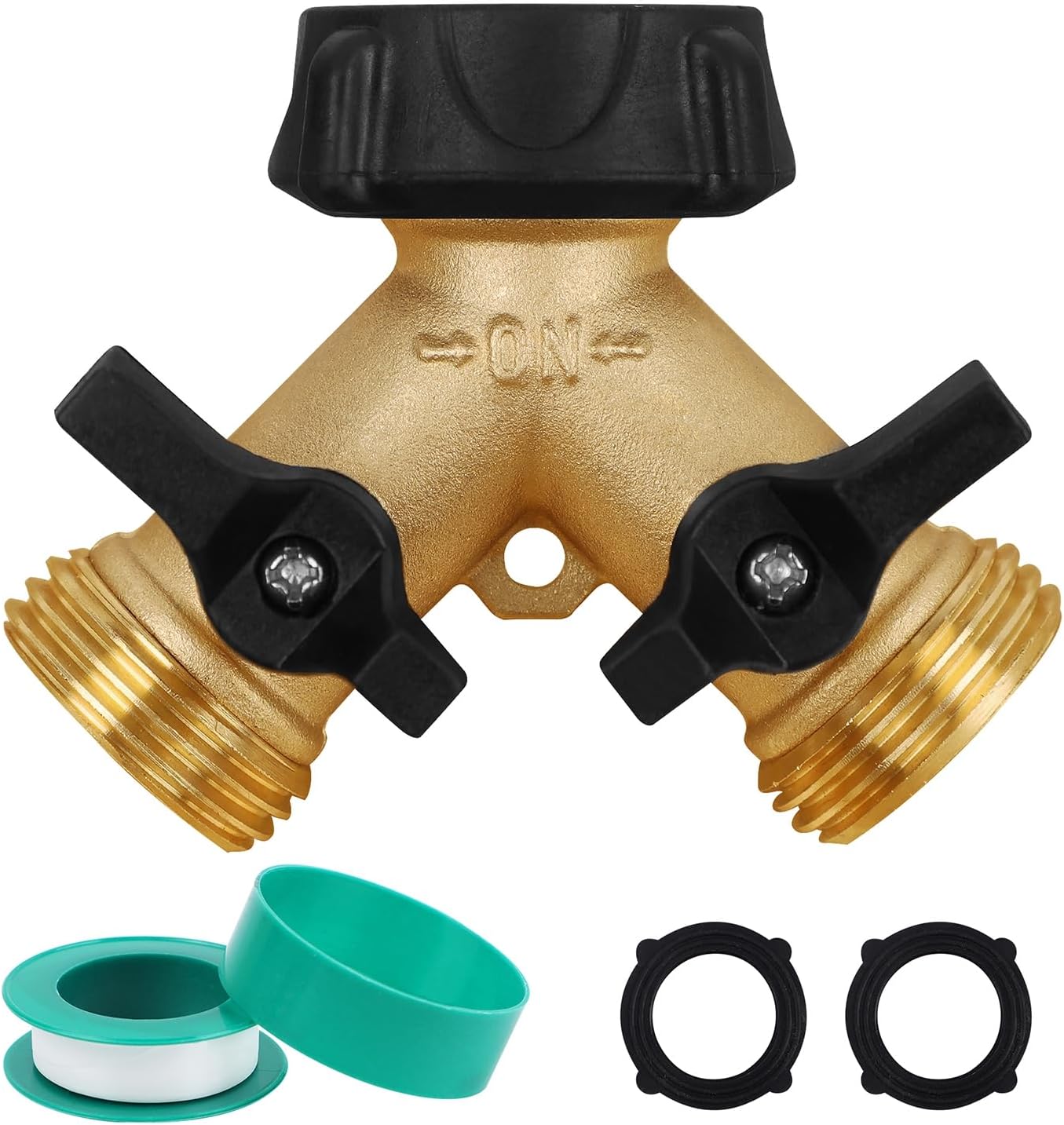
The best hose splitter for pet bathing stations isn’t just a convenience—it’s the difference between a calm rinse and a soaked, frustrated mess. I’ve wrestled muddy dogs while trying to swap a hose from the only outdoor faucet, and a leaky splitter only made the pressure worse.
A quality splitter locks onto the spigot without dripping and keeps multiple lines ready: one for warm-weather dog baths, one for a drinking bowl refill, one for garden cleanup. Below, I’ll break down what actually matters—flow rate, lever design, brass vs. aluminum, and leak-free fittings—so you can stop fighting your faucet and get back to rinsing paws.
📌 What to Look for in a Leak-Free Hose Splitter for Pet Care
You don’t need a complicated splitter for pet care, but you do need one that won’t crack or drip when you’re wrestling a muddy dog. Solid brass or aluminum construction beats plastic every time. Metal bodies handle hose yanks, temperature swings, and being dropped on concrete without splitting at the threads.
Look for individual shut-off valves on each outlet. These let you stop water to one hose while the other keeps running, so you can rinse paws without flooding the drinking bowl station. Ball valves with quarter-turn operation work best. Easy-grip rubber or oversized lever handles matter more than you think when your hands are wet, soapy, or covered in dog shampoo.
Leak prevention isn’t just about saving water. Drips at the splitter connection create slick mud patches and soak your towels while you’re filling multiple bowls. Make sure every threaded connection has a good rubber washer, and avoid cross-threading when you attach hoses.
Outlet count comes down to setup:
- 2-way splitters handle most pet homes: one hose for bathing, one for a bowl filler or patio rinse.
- 4-way splitters work if you run separate stations for washdown, drinking water, and maybe a sprinkler or pressure nozzle.
Finally, check for standard 3/4-inch garden hose threads. If you use quick-connect fittings, confirm the splitter’s male ends are compatible. A little brass-on-brass snugness keeps the whole area dry and safe for paws.
🔍 Top 5 Best Hose Splitters for Pet Bathing and Outdoor Watering
I prioritized splitters that don’t leak, turn easily with wet hands, and hold up to daily pet wash duty. These five are the ones I’d actually install on my own spigot.
1. 2-Way Heavy-Duty Brass Splitter – Best Overall
Two independent ball valves let you direct water to a pet shower attachment while leaving a regular hose connected.
- Leak-resistant solid brass body
- Individual shut-off controls per outlet
- Heavier than plastic options
2. 4-Way Aluminum Splitter – Best for Multiple Hoses and Sprinklers
Four independent shut-off ports work well for outdoor kennels, sprinklers, and a dedicated pet wash line all at once.
- Lightweight aluminum construction
- Four individually controlled outlets
- Can corrode if water sits inside
3. Plastic 2-Way Splitter with Leak-Resistant Washers – Best Budget
Built-in rubber washers reduce drips, and the low price is perfect for occasional dog rinses after muddy walks.
- Very affordable
- Easy to install by hand
- Plastic threads can strip if overtightened
4. Swivel-Connection Brass Splitter – Best for Reducing Kinks
Rotating swivel nuts keep the hose from twisting while you move around a wiggling dog during outdoor baths.
- Swivel fittings prevent hose kinks
- Solid brass for long-term use
- Swivel seals wear over time
5. Stainless Steel 4-Way Splitter – Premium Extreme Weather
Stainless steel holds up to freezing winters and intense sun, making it a reliable year-round outdoor pet bathing station.
- Rust-resistant stainless body
- Handles temperature swings well
- Higher upfront cost
⚡ Hose Splitter Comparison: Key Specs for Pet Owners
Most outdoor pet bathing setups need a splitter that handles frequent on/off cycles, rough bumps, and pressure changes. Your best hose splitter choice depends on whether you’re attaching a shower wand, a slow-fill bowl, or both.
| Material | Outdoor Durability | Best Pet Use |
|---|---|---|
| Brass | Excellent; resists rust and mineral buildup | Permanent outdoor stations |
| Aluminum | Good but can corrode over time | Light-duty, covered porches |
| Plastic | Fair; cracks under freezing or rough handling | Indoor or temporary setups |
Outlets and flow control: A two-outlet splitter with independent quarter-turn ball valves is the sweet spot. You can run a gentle bowl filler while the shower side stays off, then flip a valve for full rinse pressure. Gate valves are cheaper but need multiple turns and often drip if not fully seated.
Leak resistance: Check for rubber washers at every hose connection and O-rings around valve stems. Adding thread seal tape on threaded joints stops most drips before they start.
Size and compatibility: Stick with standard 3/4-inch GHT fittings for garden hoses and outdoor faucets. If you’re adapting an indoor utility sink or laundry hookup for winter pet baths, grab a 3/4-inch to 1/2-inch adapter and a short flex hose.
🔑 How to Set Up a Hose Splitter for Multiple Pet Washing and Drinking Stations
Start by turning off the spigot and draining any pressure from the old hose. Thread the splitter onto the spigot by hand, then snug it a quarter turn with pliers—don’t over-tighten brass threads. If you see drips, wrap the spigot threads with two turns of plumber’s tape before reinstalling.
Connect each hose to an outlet, keeping the shut-off levers closed while you attach. Open the spigot fully, then open one outlet at a time. Feel along each connection for leaks; a dry paper towel makes small drips obvious. Tighten the swivel collar on any weeping hose.
For a multi-station setup, I like this split:
- Outlet 1: pet shower or rinsing wand.
- Outlet 2: outdoor dog bowl auto-filler or gravity water line.
- Outlet 3: rinse area for muddy paws or kennel cleaning.
Shut-off valves on the splitter save you trips back to the spigot. Use quarter-turn ball valves—they seal faster than gate valves and rarely seize. You can leave the spigot open all season and control flow at each outlet.
Before freezing weather, remove the splitter. Drain all outlets, shake out water, and store it indoors. Coil hoses with both ends open so they can drain, and shut off or insulate the spigot if you can’t remove the splitter.
📌 Hose Splitter Materials and Durability for Outdoor Pet Use
The best hose splitter for pet bathing stations and garden chores isn’t just about outlet count—material choice determines how long it survives sun, water pressure, and puppy paws. I’ve used all four common materials outdoors and have a clear ranking.
Brass is my default for permanent setups. It resists corrosion, handles high PSI without cracking, and outlasts most plastic parts by years. Models like the Melnor 2-Way Brass Splitter ($18–$24) or Orbit 2-Valve Brass Manifold ($22–$28) are solid.
Aluminum is lighter and cheaper, but only buy anodized versions. Bare aluminum can pit and seize after a season of hard water. A Gilmour Zinc/Aluminum splitter ($12–$16) works fine for occasional rinses, just don’t expect brass-level longevity.
Plastic splitters like the Twinkle Star 2-Way ($8–$12) are tempting for quick jobs. They’re fine on a garden hose at moderate pressure, but UV exposure makes them brittle, and a hard freeze cracks plastic bodies. Avoid them for permanent pet washing stations.
Stainless steel costs more but earns its price in coastal or humid regions. A Dramm 4-Way Brass/Stainless splitter ($38–$45) resists rust better than anything else I’ve tested. It’s worth it if you wash dogs near salt air.
Maintenance is simple. Here’s what I do every spring:
- Replace rubber washers annually ($0.10 each prevents most leaks).
- Lubricate valve stems with food-grade silicone spray once a season.
- Store splitters indoors in freezing climates, even brass ones—ice expansion can warp threaded connections.
🔍 FAQ: Best Hose Splitter for Pet Bathing and Outdoor Watering
Can a hose splitter be used to run a pet shower and a drinking fountain at the same time?
Yes, if the splitter has independent shut-offs. Connect one outlet to a pet shower wand and the other to a low-flow drinking fountain or bowl filler. I’ve run this with the Morvat 2-way brass splitter; just supervise the drinking side so a stuck float can’t overflow. Check Price →
Will a brass hose splitter leak if left outside during winter?
Not if it’s drained and stored indoors. Brass resists cracking, but trapped water freezes and expands, which can split valve bodies. Remove hoses, open all valves, and bring the splitter inside below 32°F. The IPOW 4-way brass splitter tolerates cold better than plastic versions but isn’t freeze-proof. Check Price →
How many hoses can I connect to a hose splitter for multiple pet areas?
Most brass splitters have 2 or 4 outlets. A 4-way can feed a dog wash, kennel misting line, drinking bowl filler, and a spare garden hose. Pressure drops sharply beyond four, so add a second spigot splitter instead of daisy-chaining.
What is the difference between a 2-way and a 4-way hose splitter for pet care?
A 2-way is simpler with fewer leak points—ideal for one bathing station plus one drinking line. A 4-way adds flexibility but needs caps on unused outlets. For most yards, I’d pick the Morvat 2-way. Larger kennel setups benefit from a 4-way like Homend. Check Price →
Do I need a backflow preventer with a hose splitter for pet watering?
Yes. A vacuum breaker or backflow preventer stops contaminated water from siphoning back into your home’s supply if pressure drops. It’s essential when a hose end sits in a pet bowl or trough. I treat a hose-bibb vacuum breaker as cheap insurance—under $15.
How do I stop a hose splitter from leaking at the spigot connection?
Replace the rubber washer inside the splitter inlet first; that fixes most drips. Then wrap spigot threads with 2–3 turns of plumber’s tape, hand-tighten, and add no more than a quarter turn with a wrench. Overtightening crushes the washer and makes leaks worse.