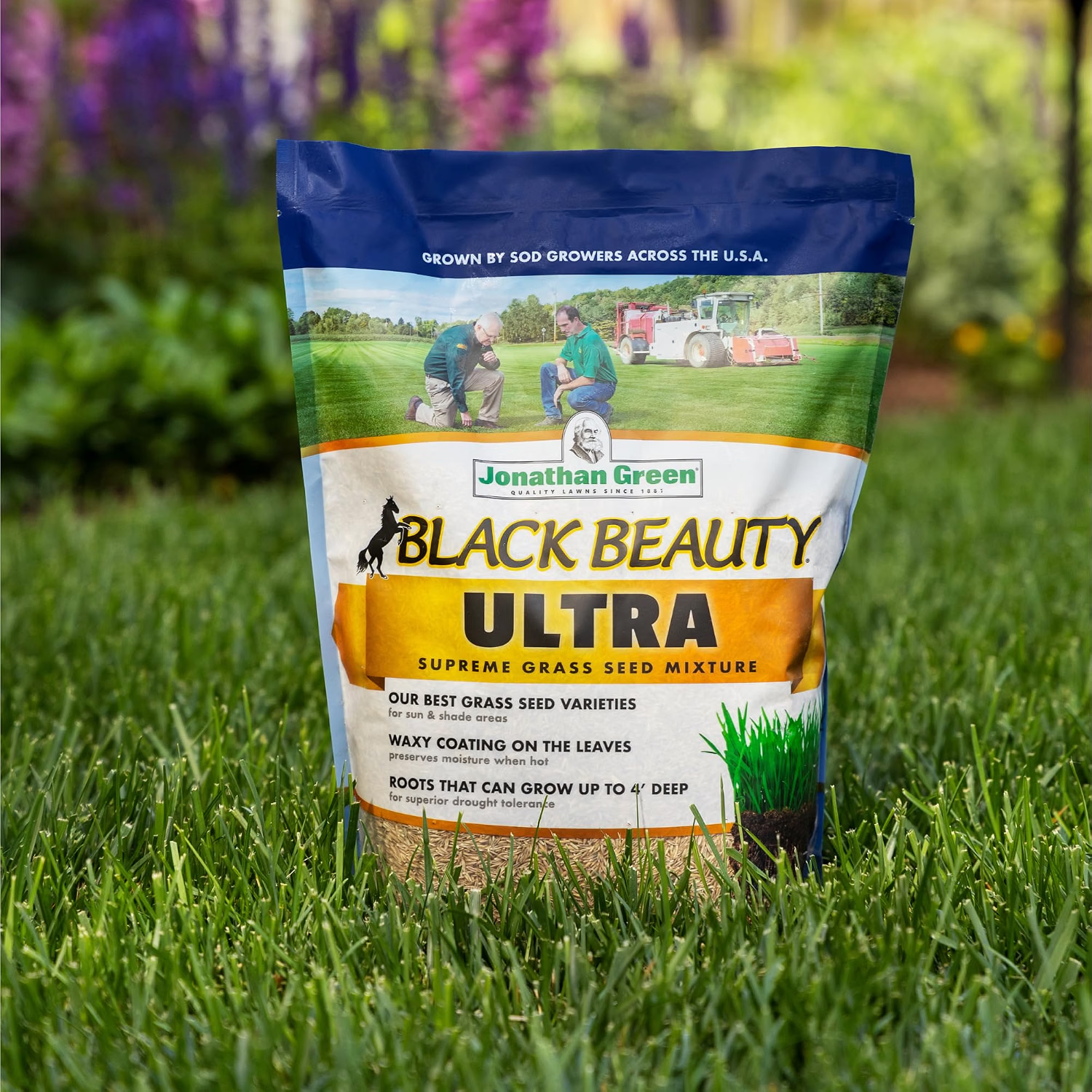
Sandy soil drains fast — almost too fast. Water and fertilizer run straight through it. Fresh seed dries out before it sprouts, and established lawns go thin and yellow by mid-summer. Finding the best grass sandy soil can support starts with one fact. If your yard feels like a beach underfoot and your mower kicks up dust clouds, the problem is the soil, not your care routine.
The best grass for sandy soil roots deep, shrugs off drought, and spreads to fill bare patches on its own. A glossy bag of the wrong seed won’t fix ground that can’t hold moisture.
I’ve reseeded sandy lots for years. The gap between a patchy yard and a thick one usually comes down to species choice plus a bit of soil prep. Below you’ll find warm- and cool-season picks, real seed mixes, and the upkeep that matters most on fast-draining ground.
📌 Fast-Draining, Nutrient-Poor Lawns: Why Sandy Soil Is Tough on Grass
Sandy soil behaves like a sieve. Water can move through it at 1–2 inches per hour or faster. It also carries dissolved nitrogen, potassium, and micronutrients straight down past the root zone. That’s why a sandy lawn greens up after rain, then looks starved and pale a week later.
The bigger problem is establishment. Shallow-rooted grasses sprout fine, then stall — there’s no moisture reserve to carry them through their first dry stretch. Thin, patchy turf follows, and bare sand heats up fast in summer. That extra heat stresses seedlings even more.
When you’re shopping for the best grass sandy soil can support, look for these traits in a species or seed mix:
- Drought tolerance — grasses that go dormant instead of dying when water runs short
- Deep, aggressive roots — tall fescue, bermudagrass, and bahiagrass reach 6+ inches and beyond
- Low fertility needs — varieties that stay green on light feeding schedules
- Heat tolerance — crucial, since bare sand surface temperatures climb quickly
- Wear resistance — rhizomes and stolons that knit the surface back together
No watering schedule or fertilizer program fixes the wrong grass. You can run the sprinkler every day and still watch thin turf burn out. The plant simply isn’t built for fast-draining, nutrient-poor ground.
Pick the right variety and a sandy lawn can look genuinely good — dense, green through most of the season, and tough enough for foot traffic. It won’t be a fuss-free putting green, though. Expect lighter, more frequent feedings and a watering routine built around deep, infrequent soaks rather than quick daily sprinkles.
🔍 Best Grass Sandy Soil Can Support: Warm-Season Grasses
Warm-season grasses are the heavy hitters on sandy ground. They go dormant in winter but send roots deep enough to chase moisture. Most also recover from drought faster than any cool-season turf. Bermudagrass is the traffic champion, Zoysia the densest, and Bahia the toughest on poor sand. Centipede needs the least upkeep, Seashore Paspalum tolerates salt, and St. Augustine handles shade best where it’s adapted.
| Grass | Drought | Fertility | Mow Height | Shade | Traffic | Establishment |
|---|---|---|---|---|---|---|
| Bermuda (Tifway 419, Celebration, Latitude 36) | Excellent | High | 0.5–1.5 in | Poor | Excellent | Fast |
| Zoysia (Zenith, Innovation, Empire, JaMur) | Very good | Moderate | 1–2 in | Moderate | Very good | Slow |
| Bahia (Argentine, Pensacola) | Excellent | Very low | 3–4 in | Fair | Good | Moderate |
| Centipede (TifBlair) | Good | Low | 1–2 in | Moderate | Fair | Moderate |
| Seashore Paspalum (Sea Isle 1, Aloha) | Very good | High | 1–2 in | Fair | Very good | Moderate |
| St. Augustine (Floratam, Palmetto, CitraBlue) | Good | Moderate | 2.5–4 in | Good | Fair–good | Moderate |
Cultivar choice matters more than species on sand. Improved Bermuda like Tifway 419 and Celebration fills in fast but demands nitrogen and full sun. Zenith and Innovation Zoysia tolerate drought and shade better while sipping less fertilizer. TifBlair Centipede is the budget option if you don’t mind slower spread and coarser texture.
One caveat: these grasses need warmth. Below USDA zone 7 they’ll freeze out or never green up long enough to thicken. In the transition zone and the North, the best grass for sandy soil is usually a cool-season fescue blend.
Pennington Smart Seed Dense Shade Mix — Cool-Season Repair for Sandy, Shaded Spots

A fine fescue and tall fescue blend for northern and transitional sandy lawns where Bermuda, Zoysia, or St. Augustine won’t survive winter. It’s built for shade, holds up to light foot traffic, and covers roughly 1,400 sq ft at the seeded rate. Not a warm-season substitute — southern gardeners should skip it.
- Tolerates shade and sandy, low-fertility soil
- 7 lb bag covers about 1,400 sq ft
- Good for patching thin spots under trees
- Not suitable for zones 8–10
- Needs regular watering to germinate
🔍 Best Cool-Season Grasses for Sandy Soil
Cool-season grasses aren’t the obvious answer for fast-draining sand. A few of them still handle it far better than the seed-bag aisle suggests. The trick is picking deep-rooted, drought-hardy types and avoiding thirsty ones that sulk the moment the soil dries out.
Here’s how the main options stack up on a sandy root zone:
- Tall fescue — the strongest cool-season choice. Its roots push 2–3 feet deep, so it reaches moisture sand loses quickly.
- Fine fescues (hard, sheep, creeping red) — the most drought- and low-fertility-tolerant group, though they’re slow to fill in and dislike heavy foot traffic.
- Perennial ryegrass — germinates in 5–7 days and knits sand together fast, but it’s shallow-rooted and thins out in dry summers.
- Kentucky bluegrass — needs consistent moisture and higher fertility, so it’s a poor fit unless you irrigate regularly and amend with compost.
Look for endophyte-enhanced tall fescue and fine fescue blends. The endophyte is a fungus that lives inside the grass. It’s linked to better heat and drought tolerance, and it makes the plant less appealing to surface-feeding insects. Blends usually outperform single varieties on sand, because you spread the risk across different root depths and growth habits.
For northern lawns with cold winters and sandy soil, overseed in late summer to early fall. The soil is still warm, weeds are winding down, and roots establish before frost. Shady, sandy yards do well with a quality dense-shade mix that leans on fine fescues.
Pennington Smart Seed Dense Shade Mix — 7 lb Bag for Dry, Shaded Sandy Lawns
A fine-fescue-heavy blend built for low-light, dry sites. The 7 lb bag covers roughly 1,750 sq ft for new seeding or 3,500 sq ft for overseeding, and it’s a solid fit for sandy northern yards under tree cover.
⚡ Warm-Season vs Cool-Season Grasses for Sandy Soil: Comparison Table
Quick side-by-side: warm-season vs cool-season grasses
Both categories can grow in sand, but they behave very differently once summer heat or winter cold arrives. Use this table to narrow your options before you buy seed or sod.
| Factor | Warm-Season Grasses (Bermuda, Zoysia, Centipede, St. Augustine) | Cool-Season Grasses (Tall Fescue, Fine Fescue, Kentucky Bluegrass, Perennial Ryegrass) |
|---|---|---|
| Drought tolerance | Excellent to very good | Moderate; fine fescue is the toughest of the group |
| Water needs | Low once rooted — about 1 inch every 7–10 days | Higher — 1–1.5 inches weekly in summer |
| Fertilizer needs | Low to moderate (Bermuda wants more nitrogen) | Moderate to high; sand leaches nutrients fast |
| Mowing frequency | Weekly in peak growth; Bermuda can need twice | Weekly in spring and fall |
| Shade tolerance | Poor, except St. Augustine and Zoysia | Good, especially fine fescue |
| Wear tolerance | Excellent (Bermuda, Zoysia) | Fair; ryegrass recovers fastest |
| Best climate zones | USDA 7–11, hot and humid summers | USDA 4–7, cold winters, mild summers |
How to read this table for your yard
Start with your growing zone, then weigh sun, traffic, and how much time you’ll actually spend on upkeep. A sunny, low-traffic lawn with limited water points to warm-season types.
- Full sun, hot summers, low water: Bermuda or Zoysia.
- Shade plus foot traffic: tall fescue, over-seeded yearly.
- Willing to mow and water often: Kentucky bluegrass looks great but costs you weekends.
The transition-zone problem
In USDA zones 6–7, summers scorch cool-season grass and winters kill warm-season grass. Neither option is perfect on sandy soil, which drains fast and holds even less moisture through a July heat wave.
Most homeowners there choose tall fescue for shade or Zoysia for sun, then accept some dieback at the season’s edges.
Which grass category wins on sandy soil?
For low water and low fertilizer on sandy ground, the best grass sandy soil can support is a warm-season type — Zoysia and Centipede especially. For fast establishment and heavy foot traffic, Bermuda covers quickly and shrugs off abuse.
If you need shade tolerance, cool-season fescue is the realistic pick, even with its thirstier habits.
📌 Grass Seed Mixes and Lawn Care Products for Sandy Soil
Buying for sand comes down to three things: seed with deep roots, amendments that actually hold moisture, and fertilizer that doesn’t leach past the root zone. The categories below were chosen on label transparency, particle size, and reported performance on droughty, nutrient-poor ground — not packaging.
Grass seed blends
Read the cultivar names, not the blend name. You want specific drought-tolerant varieties listed, plus endophyte-enhanced seed where a cool-season grass fits your zone. Endophytes are fungi living inside the plant that can improve heat and drought tolerance.
For shaded sandy patches, Pennington Smart Seed Dense Shade Mix is a good match — 7 lb of coated seed at $28.47, with a tackifier that helps germination on fast-draining soil.
Amendments and fertilizers
- Compost and topdressing — a ¼-inch layer builds water-holding capacity.
- Humic acid granules — improve nutrient exchange in low-organic soils.
- Soil wetting agents — reduce the hydrophobia that makes sand repel water.
- Slow-release fertilizer — look for low-salt, polymer-coated nitrogen so it feeds instead of flushing away.
Watering tools
Deep, infrequent watering beats daily sprinkling on sand. A soaker hose or drip irrigation kit pushes water down instead of evaporating, and a smart sprinkler controller adjusts for rain and heat automatically.
Label terms worth knowing
- Drought-tolerant cultivars — named varieties, not vague ‘sun mix’ claims.
- Endophyte-enhanced — cool-season seed with built-in stress tolerance.
- Beneficial microbes — mycorrhizae that extend root reach in sand.
- Low-salt formulations — gentler on already-lean soil.
🔑 How to Choose the Best Grass for Sandy Soil by Climate
Pick your climate zone first, then filter everything else. There’s no single best grass sandy soil can support — a grass that thrives in a Florida backyard will die in a Minnesota winter.
Work Through These Six Questions in Order
- Climate: warm-season (Zones 7–11) or cool-season (Zones 3–7).
- Sun or shade: sandy soil dries fast, so full-sun spots need drought-tough types.
- Traffic: kids, dogs, and footpaths demand a self-repairing grass.
- Water: irrigation access decides whether you can keep a thirsty lawn alive.
- Maintenance budget: bermudagrass needs mowing every 5–7 days in summer.
- Lawn goals: curb-appeal front yard, or a low-input backyard?
Match Grass to Common Scenarios
- Full-sun front lawn: bermudagrass or zoysia for a tight, formal look.
- Low-water backyard: buffalograss, centipede, or fine fescue.
- Play area: tall fescue (cool) or bermudagrass (warm) — both recover well.
- Overseeding existing sand: a turf-type tall fescue blend, slit-seeded in early fall.
Regional Shortcuts
In the South, go bermudagrass, zoysia, or St. Augustine. Up North, tall fescue and Kentucky bluegrass handle sand better than ryegrass alone. The Midwest sits on the edge — tall fescue is the safest bet. In the transition zone, tall fescue plus a little bluegrass gives you the best odds.
Seed, Sod, or Plugs?
On sandy ground, seed wins most of the time. Sand is easy to work, seed is cheap, and roots establish downward without fighting a clay pan. Sod needs constant moisture to knit into loose sand — one dry week and the seams lift. Plugs suit spreading warm-season grasses like zoysia or centipede where seed is expensive or unavailable.
A quick soil test before you buy tells you pH and nutrient levels, which matters more on sand than on any other soil type. Check price on soil test kits →
📌 Planting and Maintenance Tips for Sandy Soil Lawns
Build the soil before you build the lawn
Sand holds water the way a colander does, so the fix starts below the surface. Spread 2–3 inches of compost or aged manure and work it into the top 4–6 inches with a tiller or core aerator, then rake level. On an existing lawn, skip the tilling and topdress a 1/4-inch layer each spring instead.
One warning: never dump compost on top of sand and call it done. A distinct layer stops roots and water at the seam. Blend, don’t stack.
Compost and manure blends for topdressing are cheap insurance here.
Seeding rates, timing, and the first three weeks
- Rates: tall fescue 6–8 lb per 1,000 sq ft overseeding (8–10 lb new lawn); bermuda 1–2 lb; buffalograss 2–3 lb.
- Timing: warm-season grasses go down late spring to early summer, once soil hits 65°F. Cool-season types want late summer to early fall, 6–8 weeks before your first frost date.
- Starter fertilizer: a high-phosphorus blend at seeding, then nothing with heavy nitrogen until the blades need mowing twice.
- Mulch: a thin straw or peat layer — 1/4 inch, no more — keeps moisture in and birds out.
- Water: mist the top half-inch two or three times daily for 2–3 weeks. Sandy soil dries fast, so short, frequent sips beat one long soak during germination.
Maintenance that matches the soil
Once established, flip the watering logic: deep and infrequent. Even the best grass for sandy soil thins out under daily light sprinkling, which wets the surface but never reaches the roots. Aim for 3/4–1 inch twice a week so roots chase moisture downward.
Split slow-release fertilizer into two or three light applications per season instead of one heavy dose, since sand leaches nitrogen quickly. Mow fescue at 3–3.5 inches and bermuda at 1.5–2 inches, and overseed every one to two years to fill in thinning spots.
Troubleshooting sandy-soil lawns
- Bone-dry by evening: add compost annually and check that your sprinkler output is actually 1 inch — tuna cans are the honest test.
- Pale, spindly growth after heavy rain: classic nutrient leaching; switch to coated slow-release granules.
- Persistent thin patches: usually compaction, not seed failure. Core aerate in early fall.
- Drought stress (gray-blue tint, footprint tracks): water deeply the next morning rather than a light sprinkle.
🔍 FAQ: Best Grass for Sandy Soil
What is the best grass for sandy soil in full sun?
For warm climates, Bermudagrass is the best grass sandy soil can support in full sun — it spreads fast, handles heat, and recovers from foot traffic. In cooler zones, go with tall fescue or a turf-type ryegrass blend. Both tolerate fast-draining ground better than bluegrass.
Will tall fescue grow in sandy soil?
Yes, but only if you amend it. Tall fescue has deep roots and survives drought reasonably well, yet sandy soil holds almost no moisture. Till in 2–3 inches of compost before seeding, then water lightly and often until the roots reach 6 inches deep.
How often should I water a new lawn in sandy soil?
Two to three short sessions daily for the first 10–14 days, since sand drains within hours. After germination, cut back to one deeper soak every 2–3 days. Once established, most sandy lawns need about 1 inch of water per week, split into two rounds.
What is the best warm-season grass for sandy soil?
Bahiagrass wins on pure toughness — it thrives in dry, acidic sand where other grasses quit. Zoysia and St. Augustine are decent alternatives if you want a softer feel, though St. Augustine needs more shade tolerance and moisture than pure sand usually provides.
Can I improve sandy soil without replacing it?
Absolutely. Top-dress yearly with ¼ inch of compost, leave grass clippings in place, and apply a slow-release fertilizer. Organic matter builds up over a few seasons and slowly raises water-holding capacity without a full renovation.
What fertilizer is best for lawns in sandy soil?
Choose a slow-release, polymer-coated blend with a balanced N-P-K ratio, and apply smaller doses more often — nutrients leach straight through sand. For shady or thin sandy patches, over-seeding helps thicken the turf.
Pennington Smart Seed Dense Shade Mix is a solid choice for shaded sandy spots, and it ships in a 7 lb bag that covers roughly 1,750 sq ft on bare ground.
4 thoughts on “Best Grass for Sandy Soil in 2026: A Buying Guide to Seed Mixes, Warm- and Cool-Season Grasses”