It happens every summer: your lawn starts out lush, then the bare patches appear. Around the dog run. Along the fence. Right by the back door where your pup waits to come in. If that sounds familiar, you don’t just need more seed — you need the best grass seed for patchy lawn recovery that can handle heavy pet traffic.
I’ve reseeded my own backyard after two rescue dogs turned the grass into a dirt obstacle course. Most blends marketed for repair fail because they’re too fragile for urine, digging, and daily sprinting. I’ve compared seed mixes that actually survive those conditions.
This guide covers the top pet-safe grass seed picks for 2026, what to look for, and a simple reseeding plan that works around dogs. No chemical-heavy promises — just honest advice from someone who’s been elbow-deep in lawn repair.
📌 Why Your Lawn Has Patchy Spots (Especially When You Have Pets)
Your grass isn’t failing randomly — pets just accelerate the usual suspects. Dog urine nitrogen burn, heavy foot traffic, digging, soil compaction, and seasonal stress are the main culprits. With a dog, several of these usually hit the same lawn at once.
Dog urine creates that classic pattern: a bright green ring around a dead brown center. The nitrogen concentration burns the grass crown before roots can absorb it. Female dogs cause the worst damage because they empty the whole bladder in one spot, while males spread it out.
Heavy traffic works differently. Repeated running grinds blades down, then compacts the soil so roots can’t breathe. Digging rips turf out completely — usually along fence lines where dogs chase squirrels or hunt for buried critters.
Here’s the trap people miss most often: patchy grass returns when you reseed onto bad soil without fixing the cause. Compacted ground blocks water and oxygen, off-balance pH locks up nutrients, and the wrong seed mix simply won’t root deep enough to survive round two.
Repair strategy should differ by damage type. Urine spots need flushing with water, gypsum to break down salts, and seed with better nitrogen tolerance. High-traffic zones need aeration, compost top-dressing, and a durable species bred to handle repeated wear.
📌 What to Look For in Grass Seed for Patchy Lawns With Pets
When you’re repairing bare spots, not every bag of seed deserves a spot in your cart. Lawn seed marketed for “general use” often contains chemical coatings or synthetic fertilizers that can irritate your dog’s paws or cause stomach upset if ingested. Stick with explicitly pet-safe, non-toxic mixes that list safe coating agents like cellulose or mention “safe for pets and children” right on the label.
For quick spot repair, germination speed matters as much as safety. Look for seed labeled “fast-establishing” or “quick repair”, with germination windows around 7–14 days. Perennial ryegrass is a classic fast sprout, while fine fescues follow a few days later.
Once it grows, your grass needs to survive real pet life. That means choosing species that handle urine burns, heat, drought, and heavy foot traffic. Good options include:
- Tall fescue – deep roots, drought-tolerant, holds up to traffic
- Perennial ryegrass – fast recovery and solid urine resistance
- Kentucky bluegrass – self-repairs via rhizomes, but slower to establish
- Fine fescue – shade-friendly, but weaker under heavy paw traffic
You’ll also want to check whether the bag is a patch-repair blend or a full-lawn overseeding mix. Patch blends are denser, with more ryegrass for quick coverage and a mulch or tackifier to hold seed in place. Overseeding formulas are looser and better spread over an existing thinning lawn, not a bare dirt patch.
Finally, look at the extras baked into the bag. Coated seed holds moisture longer, mulch protects seedlings from birds, and a gentle starter fertilizer gives young roots a nutritional boost. Just confirm the fertilizer is organic or slow-release — fast-release synthetic nitrogen can actually burn new blades and smell like a buffet for your pup.
🔍 Top 5 Best Grass Seed for Patchy Lawn Repair in 2026
I picked these five mixes based on three things pet owners actually struggle with: urine burn, heavy foot traffic, and shady spots under trees. Then I checked germination speed, seed coatings, and price per bag.
One honest warning before you buy: no grass seed is truly “edible.” Most coated seed just contains fertilizer, and that’s fine once it’s dry. Keep your dog off freshly seeded areas until you’ve mowed twice — that’s the real pet-safe rule.
1. Scotts EZ Seed Dog Spot Repair – Best Overall Patch for Urine Spots
This all-in-one mix combines seed, mulch, and fertilizer, so you just rake the dead spot, sprinkle, and water. The mulch mat locks in moisture, which makes it forgiving if you forget to water twice a day.
It’s a spot-treatment product, not a whole-lawn resurfacer. Expect visible grass in roughly 7–14 days with warm soil.
- No separate topsoil or starter fertilizer needed
- Holds moisture well on hot, sunny patches
- Sun & shade mix covers most yard conditions
- Expensive per square foot compared to bulk seed
- Best for small patches, not large bare areas
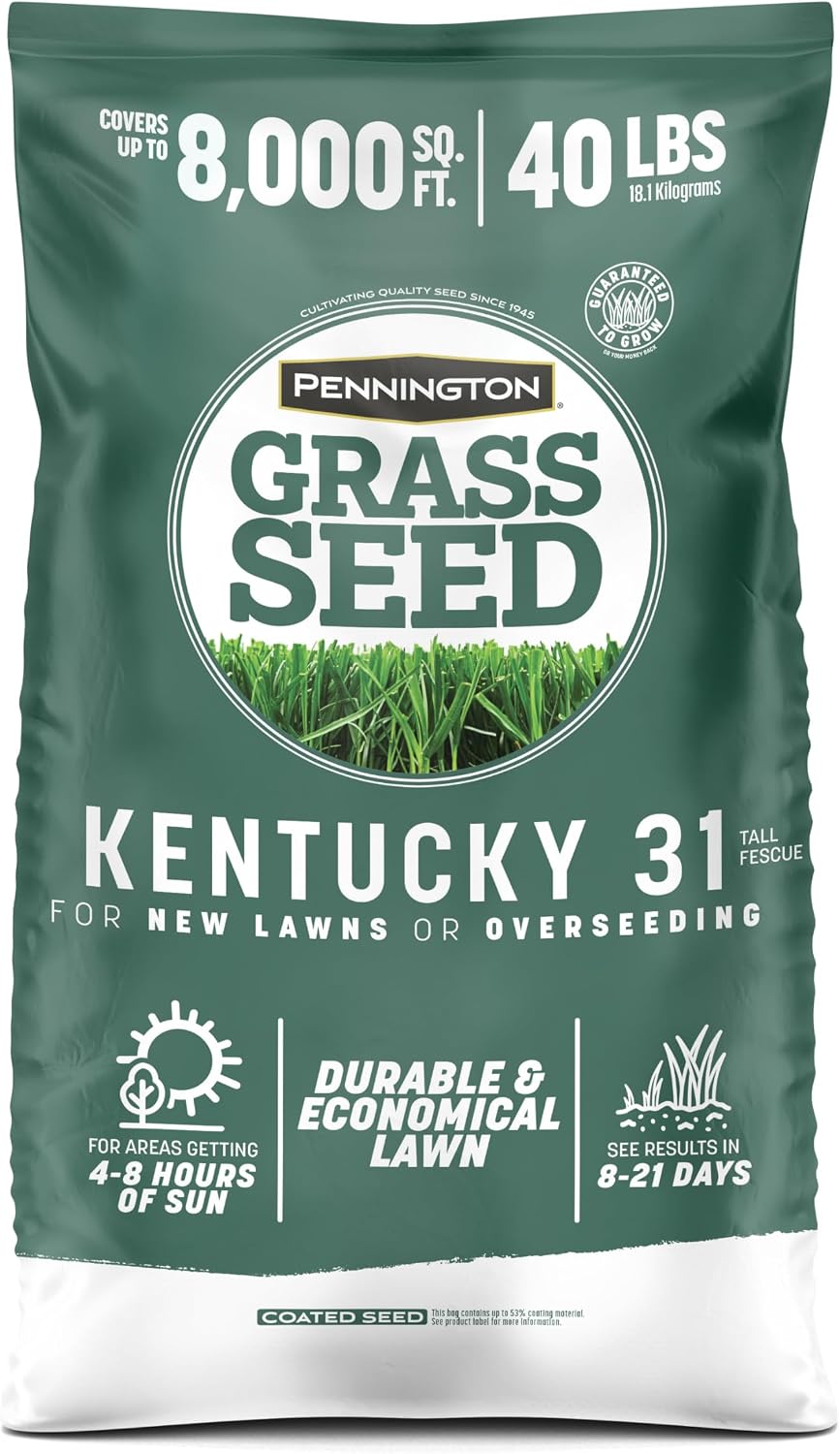
2. Pennington Kentucky 31 Tall Fescue – Best Value for Big Backyards
If your whole backyard looks thin after a summer of dog races, this 40-pound bag is your budget fix. Kentucky 31 is a tough, deep-rooted tall fescue that shrugs off heavy traffic and recovers faster than delicate blends.
It germinates slower — roughly 14–21 days — and has a coarser blade texture than premium lawns. But for filling acres of patchy ground without emptying your wallet, nothing else comes close.
- Very low cost per pound for large areas
- Deep roots handle drought and wear
- Also excellent for overseeding dog paths
- Slower germination than rye-based mixes
- Coarse texture may not match a fine-bladed lawn
3. Jonathan Green Black Beauty Ultra – Best Premium Tall Fescue for Urine Recovery
This premium tall fescue blend is bred for deep roots, dark color, and better tolerance of dog urine than most commercial mixes. It’s a favorite among homeowners who want a thick, carpet-like lawn that still survives a busy dog.
The trade-off? You pay more per pound, and it performs best with consistent watering during establishment.
- Excellent heat, drought, and urine tolerance
- Grows well in both sun and partial shade
- Premium dark-green color
- Premium price per bag
- Not ideal for pure deep shade
4. Scotts Turf Builder Rapid Grass – Fastest Fill-In for Bare Spots
Scotts claims you’ll see sprouts in as few as 5 days, and in my experience that’s close to accurate in warm soil. This seed-and-fertilizer combo is made for exactly what its name says: rapid recovery of ugly bare patches.
It’s a great choice when you need quick results before a backyard event, not when you’re establishing a whole new lawn on a budget.
- Fastest sprouting option in this lineup
- Built-in fertilizer helps seedlings establish
- Works for sun, shade, and mixed conditions
- Short-lived rye grass dies out in summer heat
- More expensive per pound than bulk seed
5. Pennington Smart Seed Dense Shade – Best for Tree-Covered Dog Zones
Dogs love lounging under trees — and lawns there turn patchy fast. This mix uses fine fescues that actually thrive in low light, so bare spots under branches stand a real chance of filling in.
Just know that fine fescue blades are delicate. It tolerates shade well, but it won’t hold up to constant fetch sprints the way tall fescue will.
- Performs well in heavy, dappled shade
- Fine texture blends into existing lawns
- Lower water needs once established
- Not built for high-traffic wear
- Slower germination: about 14–21 days
⚡ Side-by-Side Comparison
| Product | Seed Type | Germination | Pet-Safe? | Best Use | Price Range | Check Price |
|---|---|---|---|---|---|---|
| Scotts EZ Seed Dog Spot Repair | Perennial rye mix with mulch + fertilizer | 7–14 days | Yes, once dry | Urine spots & small patches | $20–$35 | Check Price → |
| Pennington Kentucky 31 | Tall fescue | 14–21 days | Yes, once dry | Large bare backyards, heavy traffic | $45–$65 (40 lb) | Check Price → |
| Jonathan Green Black Beauty Ultra | Premium tall fescue blend | 10–21 days | Yes, once dry | Urine recovery, sun & partial shade | $30–$50 | Check Price → |
| Scotts Turf Builder Rapid Grass | Annual rye & perennial rye blend | 5–7 days | Yes, once dry | Quick bare-spot coverage | $20–$35 | Check Price → |
| Pennington Smart Seed Dense Shade | Fine fescue blend | 14–21 days | Yes, once dry | Shaded patches under trees | $20–$35 | Check Price → |
📌 Step-by-Step Guide to Reseeding Patchy Lawn Spots Around Pets
Reseeding isn’t complicated, but doing it right around pets takes a few extra steps. Here’s the exact routine I use on my own lawn after urine spots and bare patches show up.
- Prep the soil. Rake out dead grass and debris, then loosen the top inch of soil with a garden rake or cultivator. If the ground is compacted, poke it with a manual aerator first so roots can actually penetrate.
- Neutralize urine spots. Dog urine leaves concentrated salt and nitrogen that can kill new seed before it germinates. Flush the area with water for several days before seeding, or work a little gypsum into the soil to help break down the salts.
- Apply seed correctly. For small patch repair, scatter seed by hand at a dense, even rate — roughly the bag’s recommended overseeding rate. For larger thin zones, use a broadcast spreader set to half-rate and crisscross in two directions for even coverage.
- Protect the area. New seed is fragile, and pets love fresh soil. Surround patches with temporary fencing, garden flags, or a lightweight germination net until the grass is established. This is non-negotiable for the first two to three weeks.
- Water on a schedule. Keep the top inch of soil consistently moist — usually light watering twice daily for 7 to 14 days, then gradually cut back. Never let the surface fully dry out or pool into puddles.
- Wait and reassess. Quality seed typically shows visible sprouting within 7 to 14 days. If a patch still looks thin after four weeks, apply a second round and keep pets off until the new grass reaches mowing height.
One honest tip: pet traffic can undo weeks of work in a single afternoon. While new grass establishes, try redirecting your dog to a designated bathroom area — it’s the single biggest factor in whether those patches actually recover.
🔑 When to Plant Grass Seed and How to Keep Your Lawn Healthy Around Dogs
Timing is everything when overseeding patchy spots. For cool-season grasses like tall fescue and perennial ryegrass, plan for late August through mid-October 2026, when soil temps hover between 50–65°F. Warm-season lawns (Bermuda, Zoysia) need warmer ground — aim for late May to mid-June, once soil hits 65°F or higher.
Getting the window right only solves half the problem. You also need to protect tender new growth from urine burn. Start by watering deeply but less often — about 1 to 1.5 inches per week encourages roots to dig down. Mow cool-season grass taller (3–4 inches), so the canopy shades the soil and dilutes the impact of urine.
To further reduce dog-related damage:
- Dilute urine spots with a hose for 10–15 seconds right after your dog pees.
- Switch to a slow-release, lower-nitrogen fertilizer — skip feeding entirely during peak summer heat.
- Train your dog to use a dedicated potty zone filled with mulch or pea gravel, and reward them every time they choose it.
For soil that’s taken a beating, apply gypsum or lime to balance urine-acidified patches. A thin ¼-inch compost topdressing before overseeding gives seedlings a fertile, moisture-retentive base to root into.
Keep dogs off freshly seeded areas for at least 2–3 weeks. Temporary fencing or a light straw mulch protects sprouting seed, and after germination, let traffic back in gradually rather than all at once.
Aerate cool-season lawns in early fall and overseed again in early spring if winter took a toll — that rotation keeps your yard filling in fast, even with a dog who treats your sprinkler like a personal fountain.
❓ FAQ About Grass Seed for Patchy Lawns With Pets
Here are the answers pet owners ask me most before reseeding a damaged lawn.
Will grass seed grow if dogs keep walking or peeing on it?
Only if you protect it. Dog urine’s high nitrogen burns tender new roots, and paw traffic crushes seedlings before they anchor. Leash-walk your dog away from seeded patches for the first two weeks, and water deeply to dilute fresh urine.
What is the best grass seed for dog urine damage?
Tall fescue is the standard choice. Its deep root system rebounds from urine scorch and heavy traffic faster than Kentucky bluegrass. In warm climates, Bermuda or zoysia works better — these spread and fill burned spots on their own.
How long does patchy lawn repair seed take to show results?
Perennial ryegrass can green up in about 5 to 10 days. Tall fescue typically germinates in 7 to 14 days, while Kentucky bluegrass needs 14 to 21 days. Expect fuzzy new growth within two weeks with a fast mix, but wait six to eight weeks before heavy play resumes.
Is it safe to use grass seed around my dog?
Bare, untreated seed is generally safe, but coatings are the catch. Some products include fungicides or pest repellents that may upset a dog’s stomach if swallowed. Choose seed labeled untreated or pet-safe, and keep pups off fresh patches until germination.
Should I choose tall fescue or ryegrass for a pet-friendly lawn?
For permanent repair, tall fescue wins — it handles traffic and urine burns better over the long run. Perennial ryegrass is the fast patch: quicker germination, but thinner turf under constant paws. Many pet mixes blend both, so ryegrass covers fast while fescue builds deep roots.
How do I reseed a large patchy lawn without keeping my dog indoors for weeks?
Reseed in zones, not all at once. Split the yard into sections, repair one at a time, and block each with temporary fencing for two to three weeks. A light straw or peat moss layer holds moisture and discourages digging.
3 thoughts on “Best Grass Seed for Patchy Lawns in 2026: Pet-Safe Picks for Fast Recovery”