The grass seed for dry sandy soil problem hits every pet owner the same way: you water, you fertilize, and the lawn still thins out by midsummer. Sand drains fast, so roots get thirsty and nutrients wash right through. Add a dog that sprints across the yard, and standard seed never stands a chance.
I’ve reseeded enough patchy, sun-baked lawns to know the fix isn’t more water — it’s picking varieties with deep root systems and real drought tolerance. You also need seed that’s safe for paws and won’t cause stomach trouble if your dog grazes. Here’s what actually works in 2026.
📌 Why Dry Sandy Soil Needs Special Grass Seed
Sandy soil drains like a sieve. Water slips through those large particles before seedlings can take a drink, often leaving the top two inches dry within an hour of irrigation. Nutrients leach away just as fast, so young grass gets starved before it ever establishes.
Add a dry climate and the problem compounds. High sun, low humidity, and spotty rain mean the 7–21 day germination window becomes a race against evaporation. Standard ryegrass or Kentucky bluegrass often sprouts, then stalls and dies when the surface turns dusty. I’ve watched cheap big-box mixes fail fastest in sandy Zone 8 and 9 yards, especially where dogs run and compact the thin soil.
That’s why drought-tolerant, deep-rooted species matter here. Tall fescue can send roots 2–3 feet down once established, pulling moisture from layers surface grasses never reach. Buffalograss and Bermuda cope by going dormant during heat waves instead of dying outright. These traits also help lawns recover from dog urine burns in sandy, fast-draining ground.
Skip shallow-rooted conventional mixes. For dry sandy soil, the seed’s rooting habit and drought response matter more than its color or initial germination speed.
📌 Top 5 Pet-Friendly Grass Seed Varieties for Dry Sandy Soil
These five grass types aren’t just drought survivors — they’re safe, wear-tolerant choices I’d actually seed in a sandy yard with dogs. Avoid cheap “contractor’s mix” unless you’re comfortable with unknown annual grasses and patchy coverage. Here’s how the pet-friendly options compare.
| Variety | Drought Tolerance | Dog Wear Resistance | Sun Needs | Germination Time | Maintenance | Check Price |
|---|---|---|---|---|---|---|
| Bermuda | Excellent | Very high — recovers fast from zoomies | Full sun | 7–14 days | Medium; mow low, spreads quickly | Check Price → |
| Tall fescue | Very good | Moderate to high — deep roots help it bounce back | Full sun to partial shade | 7–12 days | Low to medium; needs occasional overseeding | Check Price → |
| Buffalo grass | Excellent | Moderate — soft under paws, slower to repair | Full sun | 14–30 days | Low; native, minimal water and mowing | Check Price → |
| Zoysia | Excellent | High — dense mat stands up to dog traffic | Full sun to light shade | 14–21 days | Medium; slower to establish, then very durable | Check Price → |
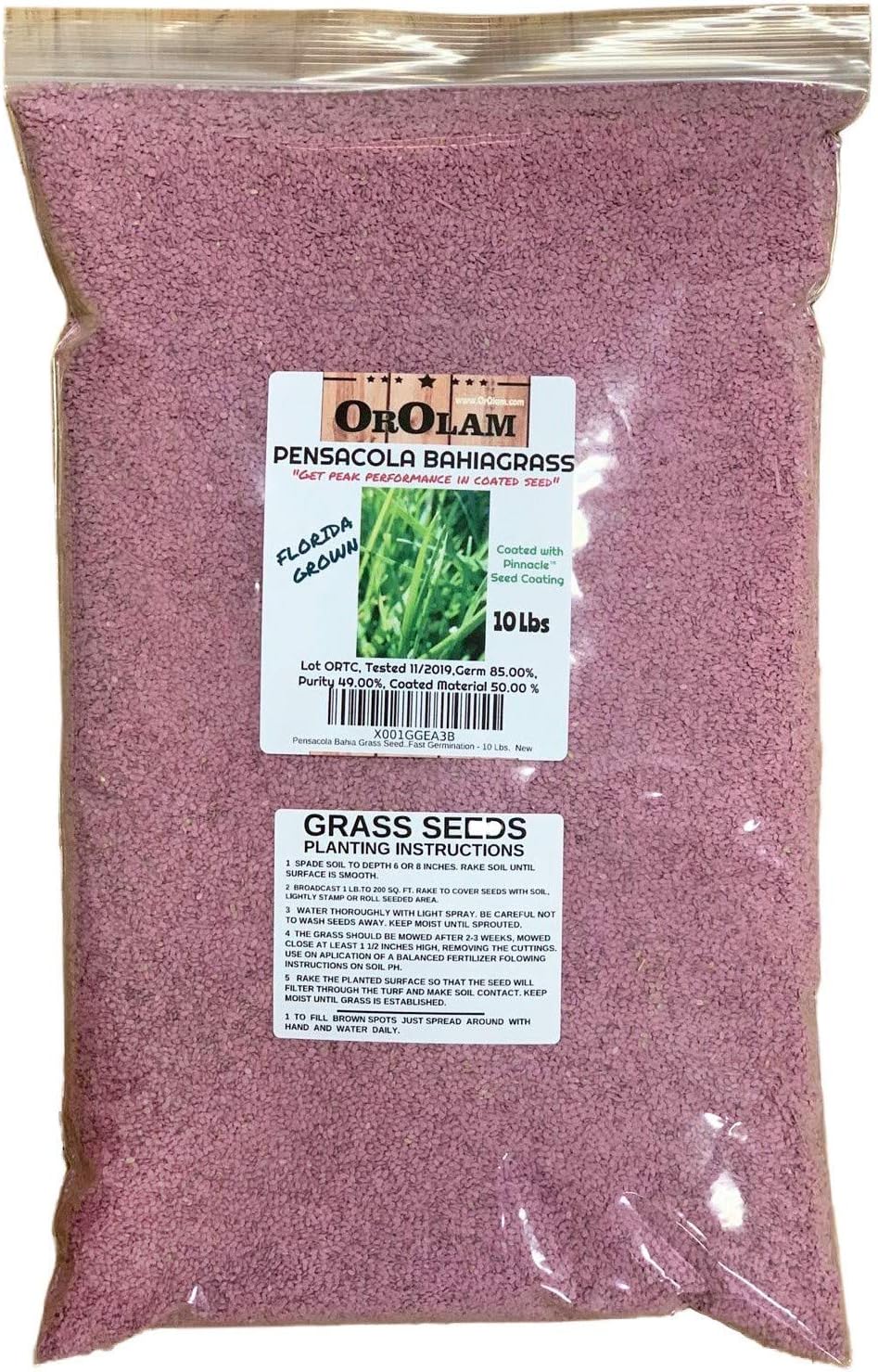
| Bahia | Excellent | Moderate — coarse texture, handles sandy acidic soil | Full sun | 10–21 days | Low; tough and forgiving once established | Check Price → |
If you need a low-effort patch, buffalo grass and Bahia ask the least. For a dense dog-run surface, Bermuda or zoysia are worth the extra mowing.
📌 Key Features to Look for in Grass Seed for Sandy Soil
Sandy soil drains fast, so the seed you pick has to work harder. I always check two things first: root depth potential and drought tolerance ratings. Varieties like tall fescue and bermuda can send roots 12–24 inches down, which matters when surface moisture disappears in a day. Look for seed labels that mention “drought tolerant” or list a high drought rating, not just “full sun.”
- Deep root systems: Rhizomatous tall fescue and buffalo grass hold sandy soil better than shallow-rooted Kentucky bluegrass. They reach deeper water and help stabilize loose ground where pets run.
- Pet-safe coatings: Many coated seeds use a moisture-retaining polymer or lime. Avoid fungicide-treated seed if your dog grazes or digs. Check the bag for “untreated” or “pet-safe” wording.
- Blends vs. single varieties: A blend of tall fescue, fine fescue, and a little ryegrass often outperforms one variety in sandy soil. Different root depths share the load and fill bare spots faster.
- Coated seed for moisture retention: A coating helps seed stay damp long enough to germinate, which is huge in fast-draining sand. It also makes tiny seeds easier to spread evenly, so you get fewer patchy areas.
🔑 How to Prepare Dry Sandy Soil for Seeding Success
Getting seed to survive in dry sandy soil starts before you open the bag. Sandy ground drains too fast, so the first job is holding moisture and nutrients near the seed. I use a simple four-step prep that works for most cool-season and warm-season blends.
- Work in organic matter. Spread 1–2 inches of compost or aged manure over the area and till it into the top 4–6 inches. This raises water-holding capacity without turning the root zone soggy. On large patches, a garden fork or rented aerator is less disruptive than a heavy tiller.
- Test and adjust pH. Use a $12–15 soil test kit. Most turf grasses prefer pH 6.0–7.0. If your sandy soil is below 6.0, add pelletized lime at the label rate. If it’s above 7.5, elemental sulfur helps nudge it down slowly.
- Level and loosen compacted areas. Rake high spots into low spots, then go over packed trails or dog-run lines with a core aerator or broadfork. You want a firm but crumbly seedbed, not loose sand that shifts after the first watering.
- Apply starter fertilizer before seeding. Rake a phosphorus-rich starter like 18-24-12 into the top 2 inches right before broadcasting seed. Follow the bag rate, usually 1–2 lbs per 1,000 sq ft. Phosphorus supports early root growth in fast-draining ground.
Water lightly two to three times daily for the first 10–14 days. Sandy soil dries from the surface quickly, but the organic matter you mixed in buys seedlings a little extra time.
📌 Watering and Maintenance Tips for Drought-Prone Sandy Lawns
Sandy soil drains fast, so germination watering needs to be different from clay lawns. For the first 2–3 weeks, water lightly and often — about 5–10 minutes, 2–3 times per day. The goal is to keep the top half inch of soil consistently moist without washing seeds away.
Once seedlings reach 2–3 inches tall, switch to deep, infrequent watering. Give the lawn about 1 inch of water per week, split into one or two sessions. This trains roots to chase moisture downward. In sandy soil, that might mean 30–45 minutes per zone, depending on your sprinkler output.
Mowing also reduces moisture loss. Keep drought-tolerant grasses at 3–4 inches tall during hot months. Taller blades shade the soil and slow evaporation. Never remove more than one-third of the blade at once, and mow only when the lawn is dry to avoid stressing roots.
- Water early morning to cut evaporation and fungal risk.
- Test soil moisture with a screwdriver — if it slides in easily, you can wait another day.
- Aerate sandy lawns lightly each fall or spring to reduce compaction, especially if pets run the same paths.
- Overseed bare patches with a drought-tolerant mix every 1–2 years in early fall, then follow the same frequent light watering for new seed.
During extended dry spells, don’t force green growth with extra nitrogen. Light, slow-release feeding in late spring keeps roots healthy without a water-hungry flush. For pet areas, rinse off any granular fertilizer residues so dogs and cats aren’t tempted to lick the lawn.
❓ FAQ: Grass Seed for Dry Sandy Soil
How often should I water new grass seed in sandy soil?
Sandy soil drains fast, so new seed needs light, frequent watering — about 2–3 times daily for 5–10 minutes during the first two weeks. Keep the top inch moist. Once seedlings reach 2 inches, shift to deeper watering every 2–3 days to push roots down.
Is Bermuda grass seed safe for dogs and cats?
Yes, Bermuda grass is non-toxic to dogs and cats. It’s also tough enough to handle paw traffic once established. The trade-off? It can feel a bit rough for pets that like to roll around. Some owners mix it with softer perennial ryegrass for a more forgiving surface.
What is the most drought-tolerant grass seed for sandy soil?
Buffalograss and Bermuda grass are the top drought survivors for sandy soil. Buffalograss needs very little water once established and tolerates heat well. Bermuda also bounces back fast after dry spells. Tall fescue is a good cool-season option with deep roots but requires slightly more moisture.
Can I mix different grass seed varieties for a dry sandy lawn?
Absolutely. Blending two or three compatible varieties improves resilience. Try mixing tall fescue for deep roots with a small percentage of perennial ryegrass for quick coverage. Avoid mixing aggressive spreaders like Bermuda with clumping fescues if you want a uniform look — they fight for space.
When is the best time to plant grass seed in dry sandy soil?
For warm-season grasses like Bermuda or buffalograss, plant in late spring to early summer when soil temps are consistently above 65°F. For cool-season tall fescue, early fall works best in most regions. Avoid peak summer heat — sandy soil dries out too quickly for new sprouts.
How do I keep grass alive in sandy soil with active dogs?
Choose traffic-tolerant seed, overseed bare patches promptly, and let grass grow to 3–4 inches for deeper roots and better cushioning. Water deeply but less often once established. Create a small designated digging or running zone so the rest of your lawn gets a break from daily wear.