
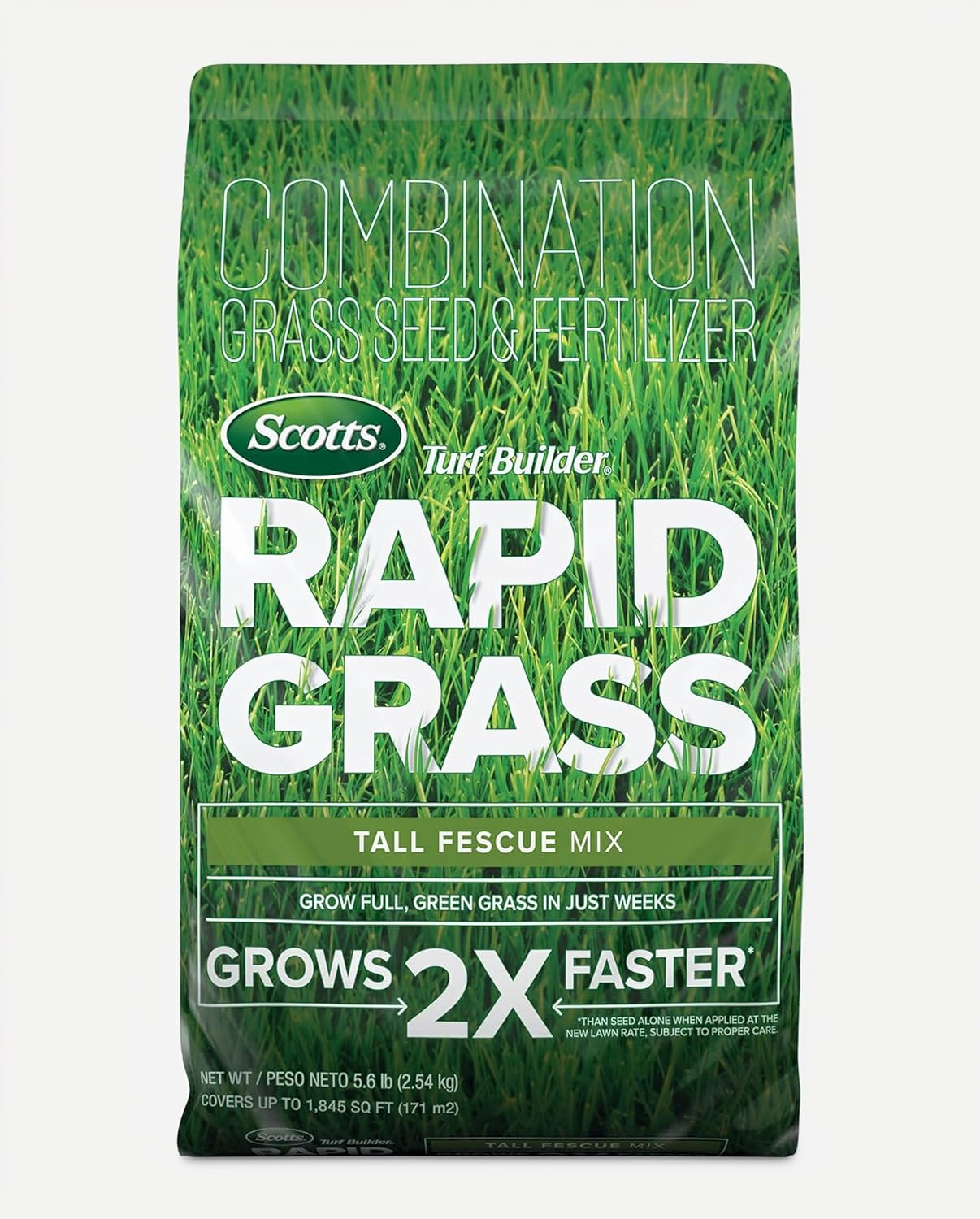
The tall fescue perennial ryegrass comparison comes up often for homeowners building or repairing a cool-season lawn. Both grasses can produce attractive turf, but they behave differently when conditions turn hot, dry, shady, or heavily used.
Tall fescue is a popular choice for a relatively drought-tolerant cool-season lawn. It roots deeper than many cool-season grasses and handles moderate stress well. Perennial ryegrass is known for quick establishment, strong seedling vigor, and a fine-textured appearance.
The better grass seed depends on your climate, soil, sunlight, irrigation, traffic, and how quickly you need the lawn to establish.
This guide compares the two grasses on drought tolerance, shade, appearance, maintenance, establishment speed, and seeding rates. It also covers common lawn situations so you can choose seed that fits your yard, not just the fastest-growing option.
Tall Fescue vs Perennial Ryegrass: Quick Answer
For the tall fescue perennial ryegrass decision, use this simple rule:
- Tall fescue: consider it when drought tolerance, summer performance, moderate shade, and lower irrigation demand are important.
- Perennial ryegrass: consider it when fast establishment, fine texture, and quick repair are higher priorities.
- A blend: can make sense when the seed mix is designed for your local climate and site conditions.
Neither species is automatically better for every lawn. Your growing conditions should determine the choice.
Tall Fescue Perennial Ryegrass: Key Differences
The biggest practical difference is establishment speed versus longer-term stress tolerance. Perennial ryegrass typically establishes quickly. Turf-type tall fescue is often selected for deeper rooting and better performance when water is limited. Most tall fescue perennial ryegrass decisions come down to that trade-off.
| Factor | Tall Fescue | Perennial Ryegrass |
|---|---|---|
| Grass type | Cool-season bunch-type grass | Cool-season bunch-type grass |
| Establishment | Moderate | Fast |
| Drought tolerance | Generally better | Generally lower |
| Shade tolerance | Moderate; cultivar and site matter | Limited |
| Blade texture | Medium to coarse | Fine to medium, glossy appearance |
| Heat stress | Usually better suited to summer stress | Can decline during prolonged heat |
| Recovery from damage | Moderate; bunch-type growth | Fast establishment and seedling vigor |
| Typical full-seeding rate | About 6–8 lb/1,000 sq ft for turf-type varieties | About 4–5 lb/1,000 sq ft for turf-type varieties |
Seed rates vary by cultivar, seed quality, site preparation, and whether the lawn is being established or overseeded. Always follow the seed label when it differs from a general guideline.
What Is Tall Fescue?
Tall fescue is a cool-season, bunch-type turfgrass. It is widely used where homeowners want a balance of appearance, durability, and summer stress tolerance.
Modern turf-type tall fescue varieties are generally finer and denser than older coarse tall fescue types. That distinction matters when shopping for lawn seed. Inexpensive coarse varieties can look noticeably different from premium turf-type cultivars.
Why Homeowners Choose Tall Fescue
- Good drought tolerance compared with many cool-season lawn grasses
- Deep rooting can help the plant access moisture deeper in the soil
- Useful for transition-zone lawns
- Can perform reasonably well under moderate shade
- Suitable for lawns that experience regular foot traffic
- Works well as a primary species in many cool-season seed programs
University of Minnesota Extension (UMN Extension) notes that fescue species generally offer strong drought tolerance. Tall fescue’s deeper root system helps it reach moisture further down the soil profile.
What Is Perennial Ryegrass?
Perennial ryegrass is another cool-season bunch-type grass. It is valued for rapid germination, strong seedling vigor, attractive color, and fine texture.
It is frequently used in cool-season lawn mixtures. It also works for overseeding or repair where quick establishment is useful.
Why Homeowners Choose Perennial Ryegrass
- Fast germination and establishment
- Fine-textured appearance
- Strong seedling vigor
- Useful for repairing thin areas
- Can provide quick cover in appropriate climates
- Often included in cool-season seed blends
Penn State Extension lists turf-type perennial ryegrass at about 4–5 lb per 1,000 square feet for new lawn establishment in Pennsylvania. That helps explain why ryegrass is often selected when quick establishment matters.
Which Grass Is Better for Your Climate?
Climate should be one of the first factors in the tall fescue perennial ryegrass decision. Both are cool-season species, so neither is a universal lawn solution for hot climates.
Tall Fescue for Hotter Summer Conditions
Tall fescue is often a practical choice in the transition zone and other locations where cool-season grass must cope with hot summers. Its deeper rooting gives it an advantage when water becomes limited.
Drought tolerance does not mean tall fescue requires no water, though. Newly seeded tall fescue needs consistent moisture while establishing. Established lawns still require irrigation during prolonged drought when rainfall is insufficient.
Perennial Ryegrass for Cooler Conditions
Perennial ryegrass can perform very well where summers are relatively mild and moisture is available. It is also useful where rapid establishment matters more than maximum summer drought tolerance.
Its lack of strong shade tolerance is another reason to evaluate the actual site before buying a ryegrass-heavy mixture. UMN Extension specifically recommends avoiding perennial ryegrass as a major component for heavily shaded lawn areas.
Tall Fescue vs Perennial Ryegrass for Shade
If your lawn receives limited sunlight, tall fescue is generally the more useful of the two options. Neither should be considered a true deep-shade grass, though.
Before choosing seed for shade, check:
- How many hours of direct sunlight the area receives
- Whether trees compete for water and nutrients
- Whether the area stays wet or dries quickly
- Whether a fine-fescue blend would be more appropriate
For genuinely shady lawns, look beyond the tall fescue vs perennial ryegrass comparison. Fine fescues are often better suited to lower-light conditions, depending on climate and soil.
Which Is More Drought Tolerant?
In the tall fescue perennial ryegrass comparison, tall fescue generally has the advantage for drought tolerance. Its rooting characteristics allow it to access water deeper in the soil when the soil profile permits root penetration.
Perennial ryegrass can still make an excellent lawn in a suitable climate. It generally needs more reliable moisture to maintain active growth during extended dry periods.
Watering strategy matters as much as species selection. UMN Extension recommends infrequent, deeper irrigation rather than frequent shallow watering when conditions require irrigation. The exact amount depends on soil and weather.
Appearance, Texture, and Color
The two grasses can look noticeably different in a lawn.
| Appearance | Tall Fescue | Perennial Ryegrass |
|---|---|---|
| Blade texture | Medium to coarse, depending on cultivar | Fine to medium and glossy |
| Overall look | More substantial blade appearance | Fine, dense-looking turf |
| Color | Medium to dark green depending on cultivar | Often vivid green |
| Establishment appearance | Can take longer to look fully filled in | Usually becomes visually uniform sooner |
If you want a classic fine-bladed lawn and have the climate and irrigation to support it, perennial ryegrass can be attractive. If you prefer a more substantial blade and need better summer stress tolerance, turf-type tall fescue may fit the site better.
Which Is Better for Dogs, Kids, and Foot Traffic?
Both grasses can be used in active residential lawns, but their recovery characteristics differ.
Tall fescue can provide a durable turf stand when properly established. Because it is a bunch-type grass, however, damaged areas do not automatically spread laterally to fill every bare spot.
Perennial ryegrass has strong seedling vigor and can establish quickly after reseeding. That makes it useful when rapid repair is important.
For high-traffic lawns: don’t choose grass seed based only on species. Cultivar selection, soil preparation, mowing, irrigation, and the timing of traffic after seeding all affect the final result.
Mowing and Maintenance Differences
Mowing and maintenance needs differ between the two species.
Tall Fescue Maintenance
- Generally performs well when maintained at a relatively tall mowing height.
- Avoid removing excessive leaf tissue in a single mowing.
- Keep mower blades sharp.
- Adjust irrigation based on rainfall, soil, and drought conditions.
Perennial Ryegrass Maintenance
- Can require more frequent mowing during periods of rapid growth.
- Performs best when mowing height is matched to the cultivar and lawn use.
- Needs adequate moisture during active growth.
- Avoid excessive nitrogen applications that push unnecessary growth.
Rather than using one fixed mowing height for every lawn, follow the needs of your grass. Avoid removing more than about one-third of the leaf blade at a time. UMN Extension emphasizes maintaining adequate lawn height and adjusting mowing to growth rate.
For more on mower blade maintenance, see our guide to how often to sharpen your mower blade. For more on thickening a lawn, see our guide to how to make grass grow thicker.
Seeding Rates: Tall Fescue vs Perennial Ryegrass
Seeding rates vary by cultivar and purpose, so there is no single universal number.
| Grass | Typical Full-Seeding Reference | Important Note |
|---|---|---|
| Turf-type tall fescue | About 6–8 lb/1,000 sq ft | Use the cultivar’s label for the final rate |
| Perennial ryegrass | About 4–5 lb/1,000 sq ft | Rates vary with cultivar and purpose |
Penn State’s turfgrass recommendations list turf-type tall fescue at 6–8 lb/1,000 sq ft and turf-type perennial ryegrass at 4–5 lb/1,000 sq ft for specified home-lawn situations.
Do not automatically double the rate for a renovation. Over-seeding, full renovation, coated seed, cultivar, seed purity, and site preparation can all change the appropriate rate. If your soil is compacted or low in organic matter, see our guide to improving lawn soil before you seed.
Which Grass Seed Germinates Faster?
Perennial ryegrass generally establishes faster than tall fescue. This is one of its biggest advantages and a major reason it appears in many lawn seed mixtures.
Germination time depends on soil temperature, moisture, seed-to-soil contact, planting depth, and weather, so real-world establishment can vary. For more on watering new seed, see our guide to how much water does new grass seed need.
Choose Perennial Ryegrass When:
- You need relatively fast establishment
- You are repairing thin or damaged cool-season turf
- Your climate supports perennial ryegrass
- You want a fine-textured lawn
Choose Tall Fescue When:
- Summer drought is a major concern
- You want a primary turf species rather than a quick repair grass
- Your lawn receives moderate shade
- You prefer deeper-rooted cool-season turf
Can You Mix Tall Fescue and Perennial Ryegrass?
Yes, but the blend should be designed around the site rather than created simply because both grasses are cool-season species.
Perennial ryegrass can provide fast seedling establishment while tall fescue contributes stronger summer performance. The final proportions should reflect your climate and the role you want each grass to play, though.
Penn State Extension provides examples of turfgrass mixtures that use perennial ryegrass alongside other cool-season grasses. UMN Extension notes that turf-type tall fescue can be included when drought and traffic tolerance are priorities.
Important: a seed mixture is not automatically better than a single species. If your site has hot summers and limited irrigation, a ryegrass-heavy blend may not be a good long-term fit.
Tall Fescue vs Perennial Ryegrass for Different Soil Types
Clay Soil
Tall fescue is often considered a practical option for heavier soils, but soil preparation still matters. Compaction, poor drainage, and excessive moisture can limit either grass. For more on soil preparation, see our guide to how to improve lawn soil.
Sandy Soil
Sandy soil drains quickly and can lose moisture rapidly. If your lawn has sandy soil, the grass species is only part of the equation. Organic matter, irrigation management, and appropriate fertilization can be just as important.
For more information, see our guide to the best grass for sandy soil.
Which Grass Seed Fits Your Lawn?
Use this quick guide to match your situation to the right grass.
| Your Situation | Consider | Reason |
|---|---|---|
| Hot summers and limited irrigation | Tall fescue | Better drought tolerance |
| Fast repair is the priority | Perennial ryegrass | Fast establishment |
| Moderate shade | Tall fescue | Generally more shade-tolerant than ryegrass |
| Cool, moist climate | Perennial ryegrass | Fast establishment and fine texture |
| Need a primary drought-tolerant cool-season grass | Tall fescue | Strong summer performance |
| Need quick seasonal cover | Perennial ryegrass | Strong seedling vigor |
What to Look for When Buying Grass Seed
Once you’ve decided between tall fescue and perennial ryegrass, don’t stop at the species name. The cultivar and seed quality can have a major impact on the finished lawn, and so can soil preparation.
For Tall Fescue
- Look for turf-type tall fescue when lawn appearance matters.
- Check the seed label for the actual cultivar names.
- Avoid choosing a bag based only on the word “fescue.”
- Compare germination percentage and other label information.
For Perennial Ryegrass
- Make sure the label says perennial ryegrass, not annual ryegrass.
- Look for turf-type cultivars when establishing a residential lawn.
- Check whether the cultivar is suitable for your local climate.
- Avoid assuming that the fastest germinating seed will also have the best summer performance.
More LawnChoiceLab Grass & Lawn Guides
Frequently Asked Questions
Is tall fescue better than perennial ryegrass?
In the tall fescue perennial ryegrass comparison, it depends on your lawn. Tall fescue is generally better suited to homeowners who prioritize drought tolerance and summer performance. Perennial ryegrass is attractive when rapid establishment and fine texture are more important.
Which grows faster, tall fescue or perennial ryegrass?
Perennial ryegrass generally establishes faster. Exact germination time depends on soil temperature, moisture, seed depth, and other growing conditions.
Which is more drought tolerant, tall fescue or perennial ryegrass?
Tall fescue generally has better drought tolerance. Its deeper rooting can help it access moisture deeper in the soil.
Can you mix tall fescue and perennial ryegrass?
Yes. Both are used in cool-season seed mixtures. The mix should be selected for your climate and lawn conditions rather than an arbitrary percentage, though.
Which is better for shade, tall fescue or perennial ryegrass?
Tall fescue is generally the better choice of the two for moderate shade. Perennial ryegrass has limited shade tolerance. For deep shade, consider fine fescue or another grass specifically adapted to low-light conditions.
Which grass is better for dogs?
Either can work in a dog-friendly lawn when properly established. Tall fescue can provide durable turf and good summer performance. Perennial ryegrass offers rapid establishment and repair. Traffic level, irrigation, soil, and maintenance also matter. For more on repairing worn areas, see our guide to how to make grass grow thicker.
What is the best grass seed for hot summers?
Among these two cool-season options, tall fescue is generally better suited to hot, dry summer conditions. In very hot climates, however, a warm-season grass may be more appropriate than either species.
How much tall fescue seed do I need?
A common reference rate for turf-type tall fescue is about 6–8 pounds per 1,000 square feet for full establishment. Follow the specific seed label, because rates vary by cultivar and application.
How much perennial ryegrass seed do I need?
A common full-seeding reference is about 4–5 pounds per 1,000 square feet for turf-type perennial ryegrass. Your seed label should be the final authority for the specific cultivar and application.
The Bottom Line: Tall Fescue vs Perennial Ryegrass
The tall fescue perennial ryegrass decision is really a question of what your lawn needs most.
- Choose tall fescue when drought tolerance, summer performance, moderate shade, and long-term turf performance are priorities.
- Choose perennial ryegrass when fast establishment, quick repair, and fine texture are more important.
- Consider a blend when both species have a role in your local growing conditions.
Before buying seed, check your local climate, sunlight, soil, irrigation, and existing grass. The right seed is the one that matches those conditions, not necessarily the one that germinates fastest or looks best on the package.