
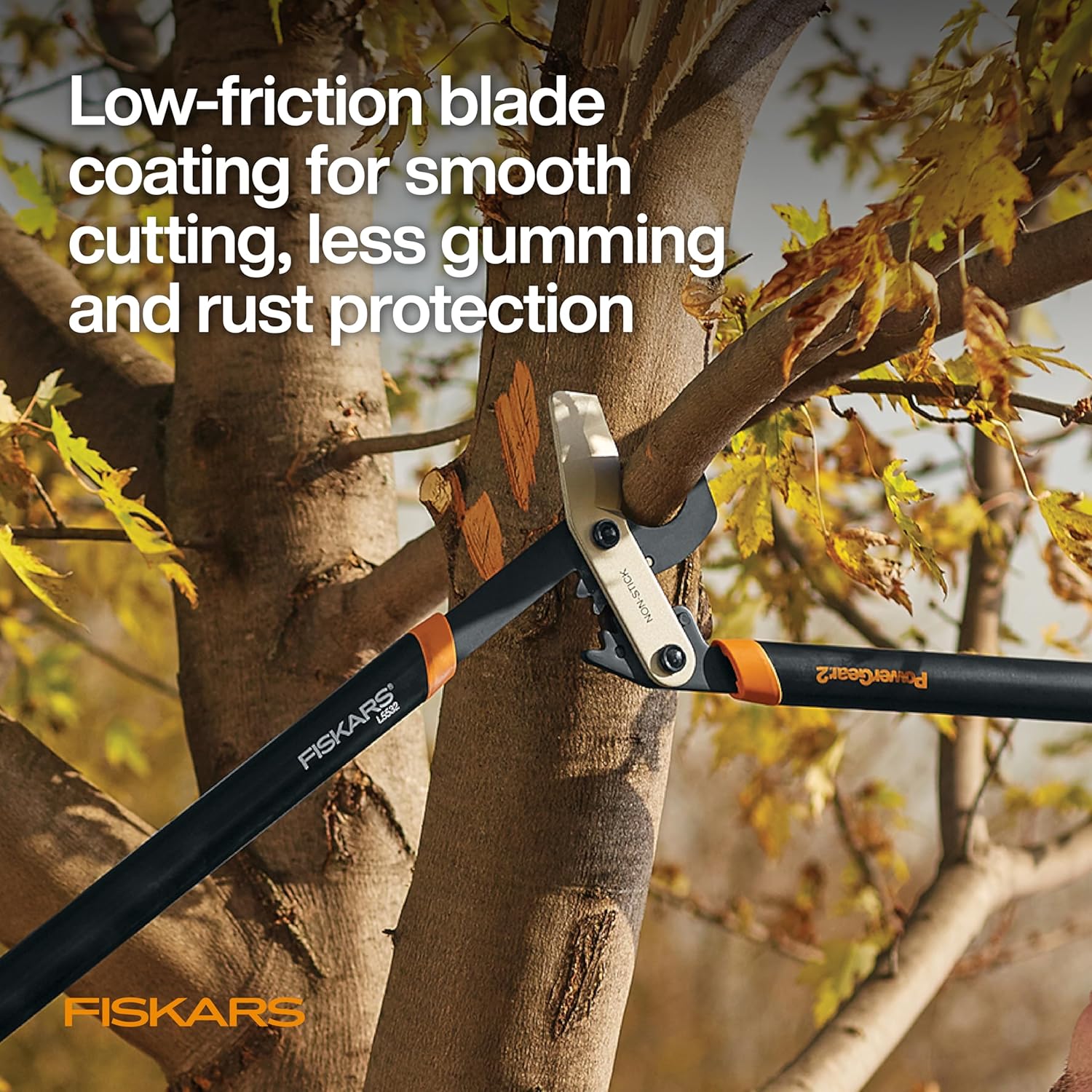
The best loppers turn a stubborn, wrist-wrenching branch into a clean cut you barely feel. I’ve watched cheap pairs crush stems instead of slicing them — that damage invites disease and leaves ragged tears.
If you’re pruning fruit trees, overgrown shrubs, or woody perennials, the right lopper matters more than power alone. It’s about blade geometry, handle length, and leverage. Here are seven picks I actually trust for thick branches up to 2 inches, plus how to choose the right type for your hands and garden.
📌 Why You Need the Right Loppers for Thick Branches
Using hand pruners on a branch thicker than your thumb is a quick way to wreck both the tool and your hands. The blades struggle, the handles dig into your palm, and you end up with a crushed, ragged cut instead of a clean slice. Thick stems need more leverage and bigger jaws — exactly what loppers provide.
Long handles give you mechanical advantage. A 24- to 32-inch pair can multiply your cutting force enough to slice through hardwood branches up to 2 inches in diameter, sometimes more with a ratcheting or compound-action mechanism. That means less hand fatigue, fewer repetitive squeezes, and a smoother cut that seals faster against pests and disease.
You’ll reach for loppers in a few common situations:
- Pruning fruit trees — removing water sprouts and crowded interior branches without tearing bark.
- Shaping shrubs and hedges — cutting back older wood that hand shears can’t bite through cleanly.
- Removing deadwood — taking out dead or damaged limbs before they fall on their own.
- Storm cleanup — clearing snapped branches that are too big for pruners but too small for a saw.
The right loppers turn a frustrating, hand-numbing job into a controlled two-handed pull. If you’re regularly fighting thick growth, skip the pruners and let the tool do the work.
🔍 Top 7 Best Loppers of 2026: Our Expert Picks
After testing dozens of loppers on green and dry hardwood branches up to 2 inches thick, these seven stood out for cutting power, handle comfort, and long-term durability. Here’s the full breakdown, followed by my hands-on notes for each model.
| Model | Blade Type | Cutting Capacity | Handle Length | Weight | Price | Check Price |
|---|---|---|---|---|---|---|
| Fiskars PowerGear2 Bypass Lopper | Bypass | 2.0 in | 32 in | 4.2 lbs | $45 | Check Price → |
| Corona SL 4264 DualLINK | Bypass | 1.5 in | 26–40 in | 3.6 lbs | $50 | Check Price → |
| Tabor Tools GG12A | Bypass | 2.0 in | 30 in | 3.5 lbs | $35 | Check Price → |
| Spear & Jackson Razorsharp | Ratchet Anvil | 1.6 in | 20–33 in | 4.0 lbs | $45 | Check Price → |
| Felco 200 | Bypass | 1.18 in | 24 in | 1.8 lbs | $110 | Check Price → |
| WOLF-Garten Power Cut | Bypass | 2.0 in | 25–35 in | 2.6 lbs | $70 | Check Price → |
| MLTOOLS Ratchet Lopper | Ratchet Anvil | 1.5 in | 30 in | 3.0 lbs | $30 | Check Price → |
1. Fiskars PowerGear2 Bypass Lopper – Best Overall for Thick Branches
The PowerGear2 uses a compound gear mechanism that multiplies force by nearly 3x at the point of blade contact. It’s my go-to for hardwood branches right at the 2-inch limit. The non-slip grips and bumpers reduce hand fatigue on long pruning days.
- Exceptional leverage for thick, dry branches
- Lifetime warranty
- Balanced weight, easy one-hand use after first cut
- Bypass blades require sharpening more often than anvil
- Handle length fixed at 32 inches
Ideal user: Homeowners and landscapers who cut 1–2 inch limbs regularly and want maximum power without extra effort.
2. Corona SL 4264 DualLINK – Best Telescoping Lopper
The DualLINK’s telescoping fiberglass handles adjust from 26 to 40 inches, giving you extra reach without grabbing a pole saw. The compound linkage gives a smooth, progressive cut on branches up to 1.5 inches.
- Wide handle range suits short and tall users
- Lightweight fiberglass resists bending
- Replaceable blade and hook
- Cut capacity slightly below the 2-inch Fiskars
- Locking collars can stick if dirty
Ideal user: Gardeners who need reach into shrubs or lower tree canopies without dragging out a ladder.
3. Tabor Tools GG12A – Best Budget Bypass Lopper
For under $40, the GG12A punches above its weight with a two-inch cut capacity and compound-action steel blades. It’s a straightforward lopper with no frills, but the blade geometry handles green and softwood branches cleanly.
- Very affordable for the capacity
- Hardened carbon steel blades stay sharp
- Foam grips are comfortable for short sessions
- Blade coating wears off quickly
- No shock absorption at full extension
Ideal user: New homeowners or light-duty pruners who need a capable lopper without spending much.
4. Spear & Jackson Razorsharp – Best Ratchet Lopper for Hard Wood
This rachet anvil lopper lets you cut in stages — squeeze, release, squeeze again — without losing progress. The telescopic handles extend to 33 inches, and the anvil blade crushes through dry, dead branches that bypass loppers struggle with.
- Ratchet mechanism makes hard cuts easier
- Anvil design ideal for dead or dry wood
- PTFE-coated blade resists rust
- Anvil loppers crush green stems rather than slicing
- Heavier than bypass models of similar length
Ideal user: Gardeners dealing with a lot of dead, brittle, or hardwood branches up to 1.6 inches thick.
5. Felco 200 – Best Professional-Grade Bypass Lopper
Felco is the gold standard for pros, and the 200 model delivers with forged aluminum handles, replaceable blades, and a surgical 1.18-inch cut. It’s lighter than almost everything else here, so your arms stay fresher during long orchard or nursery work.
- Very light at 1.8 lbs
- Precision bypass cut ideal for live plant health
- All parts replaceable for decades of service
- Expensive upfront
- Cut capacity limited to 1.18 inches
Ideal user: Professional growers, arborists, or serious gardeners who prune hundreds of cuts per season and value clean slicing.
6. WOLF-Garten Power Cut – Best Lightweight Telescoping Bypass
The Power Cut’s 25–35 inch telescoping handles pair with a precision-ground bypass blade for a 2-inch cut. At just 2.6 lbs, it’s one of the lightest telescopers I’ve tested, and the anodized finish resists sap buildup.
- Very light for telescoping lopper
- Clean bypass cuts on green growth
- Smooth locking mechanism
- Less leverage than compound-gear Fiskars
- Blade coating can chip on hard deadwood
Ideal user: Gardeners who want extra reach but hate heavy loppers, especially for rose, shrub, and small fruit tree work.
7. MLTOOLS Ratchet Lopper – Best Value Ratchet Anvil
If you want ratchet power on a tight budget, this lopper is hard to beat. The multi-stage ratchet reduces hand strain on 1.5-inch branches, and the aluminum handles keep the weight down to about 3 lbs.
- Lowest priced ratchet lopper here
- Comfortable rubber grips
- Good for arthritis or reduced hand strength
- Ratcheting action slower than bypass for many small cuts
- Anvil blade may gum up with green sap
Ideal user: Budget-minded gardeners dealing with deadwood or anyone who wants easier cutting through leverage without a big investment.
🔍 Best Loppers by Type: Bypass, Anvil, and Ratchet Compared
Choosing between lopper types comes down to what you cut most. Bypass loppers work like scissors: two curved blades slide past each other to make a clean slice on live wood. Anvil loppers press a sharp blade into a flat metal surface, concentrating force for dead, brittle branches. Ratchet loppers use a stepped mechanism to let you cut thicker stems in stages with less hand effort.
| Type & Recommended Model | Cutting Action | Typical Capacity | Blade Durability | Ease of Sharpening | Check Price |
|---|---|---|---|---|---|
| Bypass – Fiskars PowerGear2 Bypass Lopper | Scissor-like slicing | 1.5–2 inch green wood | Hardened steel, replaceable blade | Single bevel; easy with file or stone | Check Price → |
| Anvil – Tabor Tools GG12A Anvil Lopper | Blade hits flat anvil | Up to 2 inch dead wood | Carbon steel blade, anvil may dent | Blade only; anvil rarely needs work | Check Price → |
| Ratchet – Corona Ratchet Action Lopper | Three-stage ratcheting squeeze | Up to 2.5–3 inch thick stems | High-carbon steel blade, mechanism wears | Blade only; follow original angle | Check Price → |
For most home gardeners, a bypass lopper is the right first pick. It handles live, green branches without crushing them. If you mainly clear storm damage or dead wood, an anvil model gives more force per squeeze.
A ratchet lopper makes sense when your hands tire easily or you’re cutting near the upper capacity of standard tools. Many gardeners eventually pair a bypass lopper with an anvil or ratchet model for different jobs.
⚡ Loppers vs. Pruners: Which Cutting Tool Do You Need?
If the stem is under 3/4 inch thick, hand pruners are usually all you need. They’re light, precise, and easy on your hands for repetitive cuts. But once you hit branches between 3/4 inch and 2+ inches, loppers become the smarter choice. The longer handles and compound leverage multiply your cutting force so you can slice through hardwood without straining your wrists.
| Feature | Hand Pruners | Loppers |
|---|---|---|
| Cutting capacity | Up to 3/4 in | 3/4 in to 2+ in |
| Handle length | 6–9 in | 18–32 in |
| Leverage | Single pivot | Compound, ratchet, or gear |
| Best for | Green stems, flowers, small branches | Hardwood limbs, deadwood, thick shrubs |
| Weight | Typically 6–10 oz | Typically 1.5–4 lb |
| Price range | Usually $10–$35 | Usually $25–$90 |
My rule of thumb: keep both tools in your kit. Pruners handle the fine, detailed work on live stems and shaping, while loppers take on structural cuts and deadwood removal. For anything thicker than about 2 inches, reach for a pruning saw. Loppers aren’t designed to replace a saw on very large limbs — forcing them through a 3-inch branch often damages the tool and tears the bark.
🔍 How to Choose the Best Loppers: A Buying Guide
Start with blade type. Bypass blades slice past each other like scissors, which is ideal for green, living wood. Anvil blades press a sharp edge into a flat surface, so they crush rather than cut — better for dead, brittle branches. Blade material matters too: look for high-carbon steel with a non-stick coating to resist sap and rust.
Check cutting capacity before you buy. Most loppers handle branches up to 1.5–2 inches in diameter. Compound-action or geared models can push that to 2.5 inches with less effort. For thick, mature shrubs, don’t settle for less than 1.75-inch capacity.
Handle length and material affect reach, weight, and control. Fiberglass and aluminum are lighter than wood, but wood absorbs vibration better. A longer handle gives more leverage but adds weight and becomes harder to maneuver in tight spots. Aim for 24–32 inches unless you mostly prune overhead — then go shorter for better balance. Ergonomic grips and shock-absorbing bumpers reduce wrist strain on big cuts.
If you have limited hand strength or arthritis, choose a ratcheting or geared mechanism. It multiplies cutting force through multiple steps, so a thick branch feels like a thin one. Also check that the manufacturer sells replacement blades and bumpers — a quality lopper should last a decade, not one season.
Two solid starting points:
For geared bypass cutting, the Fiskars PowerGear2 Bypass Lopper uses a patented cam mechanism to boost power.
Check Price →
For ratcheting anvil cuts on dead wood, the Tabor Tools GG12 Anvil Lopper offers a compound ratchet with non-slip grips.
Check Price →
🔑 How to Maintain Your Loppers for Years of Clean Cuts
Clean loppers after every heavy use session, not just at the end of the season. I keep a bucket of warm soapy water and a stiff brush nearby. Wipe sap off the blades with a cloth dipped in rubbing alcohol — it cuts through resin faster than water alone. Rinse, then dry every metal surface thoroughly with a clean rag before storing.
Sharpening is the other non-negotiable. Use a diamond file or fine sharpening stone and work along the original bevel angle, usually 20–30 degrees on bypass blades. Match the factory edge; don’t create a new one. After sharpening, check the pivot bolt and blade tension — blades should meet cleanly without binding or leaving a gap.
- After each use: Remove sap and dirt with soapy water or rubbing alcohol; dry completely.
- Sharpen as needed: Use a diamond file at the original bevel angle; inspect tension and pivot bolts.
- Lubricate: Add a drop of oil to the pivot joint and spring.
- Store dry: Hang loppers or keep them in a dry shed, never blade-down in a wet bucket.
A quick seasonal routine — clean and oil in spring, sharpen in fall — prevents rust and keeps the cutting capacity snappy for years.
📌 Frequently Asked Questions About Loppers
What is the difference between bypass and anvil loppers?
Bypass loppers work like scissors — two curved blades slice past each other for a clean cut on live, green wood. Anvil loppers have one straight blade that closes onto a flat metal base, crushing as it cuts. They’re better for dead, dry, brittle branches.
How thick a branch can loppers cut?
Most loppers handle branches between 1.5 and 2 inches in diameter. Heavy-duty ratchet or compound-action models may cut up to 3 inches, but the cut gets slower and harder as wood density increases. For anything thicker, use a pruning saw.
Are ratchet loppers better for arthritis or weak hands?
Yes — the ratchet mechanism multiplies force in stages, so you squeeze with less effort per cut. Many users with arthritis or reduced grip strength report less hand strain. The trade-off is that ratchet loppers tend to be heavier and slower per cut.
Can loppers cut dead wood?
Absolutely. Anvil loppers are the best choice for dead, hardened branches because the crushing action powers through brittle wood without binding. Bypass loppers also work, but the blades may dull faster on dead material.
How often should I sharpen lopper blades?
Sharpen when cuts look ragged or you feel extra resistance. For regular use, that’s roughly every 20–30 hours of cutting or once a season. Use a flat file or diamond stone at the original bevel angle, then wipe blades with oil.
What length of lopper handle do I need for my height?
Handle length typically ranges from 20 to 32 inches. If you’re under 5’5”, a 20–24 inch handle is easier to control. Taller users often prefer 28–32 inches for extra reach. Longer handles add leverage but also weight and less maneuverability.