
Every spring, those bright yellow flowers pop up overnight — and then turn into stubborn, taproot-deep weeds that take over your lawn. For pet owners, dandelions aren’t just an eyesore. They signal where your dog loves to sniff, dig, and occasionally snack, which makes safe removal a real priority.
I’ve pulled thousands of dandelions by hand and tested plenty of tools in my own backyard, with two dogs who treat every weed as a new toy. The truth is, the best weeding tool for dandelions depends on your lawn size, your back, and how much effort you’re willing to put in.
This guide covers the safest, most effective options — so you can get the weeds out without risky chemicals or wasted effort.
📌 Why Dandelion Removal Matters for Pet Owners
One dandelion looks innocent. But that single plant releases hundreds of seeds, and its taproot can drill down 6 to 12 inches. Before you know it, they’re crowding out your grass everywhere.
Here’s the part most people miss: pulling the leaves off doesn’t kill the plant. Leave even a chunk of taproot in the soil and it regrows within weeks. Complete root removal is the most reliable way to stop the cycle.
Now for the pet angle. Dandelions themselves aren’t toxic to dogs or cats. The problem is how we usually fight them. Many lawn herbicides contain ingredients like 2,4-D and dicamba, which can linger on grass after application. Your dog runs through the yard, picks them up on their paws, then licks them off. That’s a real exposure risk, especially for pups who love rolling in fresh grass.
That’s why I lean toward mechanical removal with a proper weeding tool. A stand-up weeder or dandelion extractor gets the whole root out without spraying anything. You avoid chemical exposure entirely, there’s no waiting period before pets can play, and you won’t worry about herbicide drift onto flower beds or veggie patches.
Bottom line: the right tool makes dandelion control safer for your pets and more effective for your lawn.
📌 Key Features to Look For in a Dandelion Weeder
Dandelions aren’t just an eyesore — their taproots burrow deep, and if you leave even an inch behind, the plant comes right back. That’s why the tool matters more than your elbow grease. Here’s what I check before recommending any weeder to a pet owner.
- Long blade with real reach. The blade needs to get under the whole taproot. I look for at least 6 inches of working length, and a split or V-shaped tip that grips the root so you can ease it out whole instead of snapping it.
- Stand-up, ergonomic handle. Bending over 50 times is rough on your back. A handle that lands around waist height keeps you upright, and a foot pedal adds leverage for stubborn roots. If you have a big yard or creaky knees, this is non-negotiable.
- Stainless steel or reinforced aluminum. Stainless resists rust and rinses clean in seconds. Aluminum keeps the tool light enough to swing all day. I avoid cheap painted steel — it chips, rusts, and eventually snaps mid-pull.
- Easy-clean, rust-resistant build. You’ll be stabbing wet soil, then leaving the tool in the shed. Smooth, coated surfaces mean one quick hose-down and it’s done. A rubberized or wooden grip that stays comfortable when wet is a bonus.
- Pet-safe operation. The biggest win for dog owners: physical removal means no toxic chemical sprays in your yard. Choose a weeder with a collar or lock that keeps the blade covered when idle, so curious noses and paws stay safe.
None of this matters if the tool feels awkward in your hands, so hold one before you buy if you can. The best dandelion weeder for your yard is the one you’ll actually use — and that’s also the safest one for your dog.
📌 Types of Dandelion Weeding Tools: Manual, Stand-Up, and Powered
Dandelion weeders fall into three main camps: manual handheld tools, stand-up long-handled tools, and powered electric options. Each has a different sweet spot depending on your lawn size, soil condition, and how much bending your back can handle.
Manual Handheld Weeders
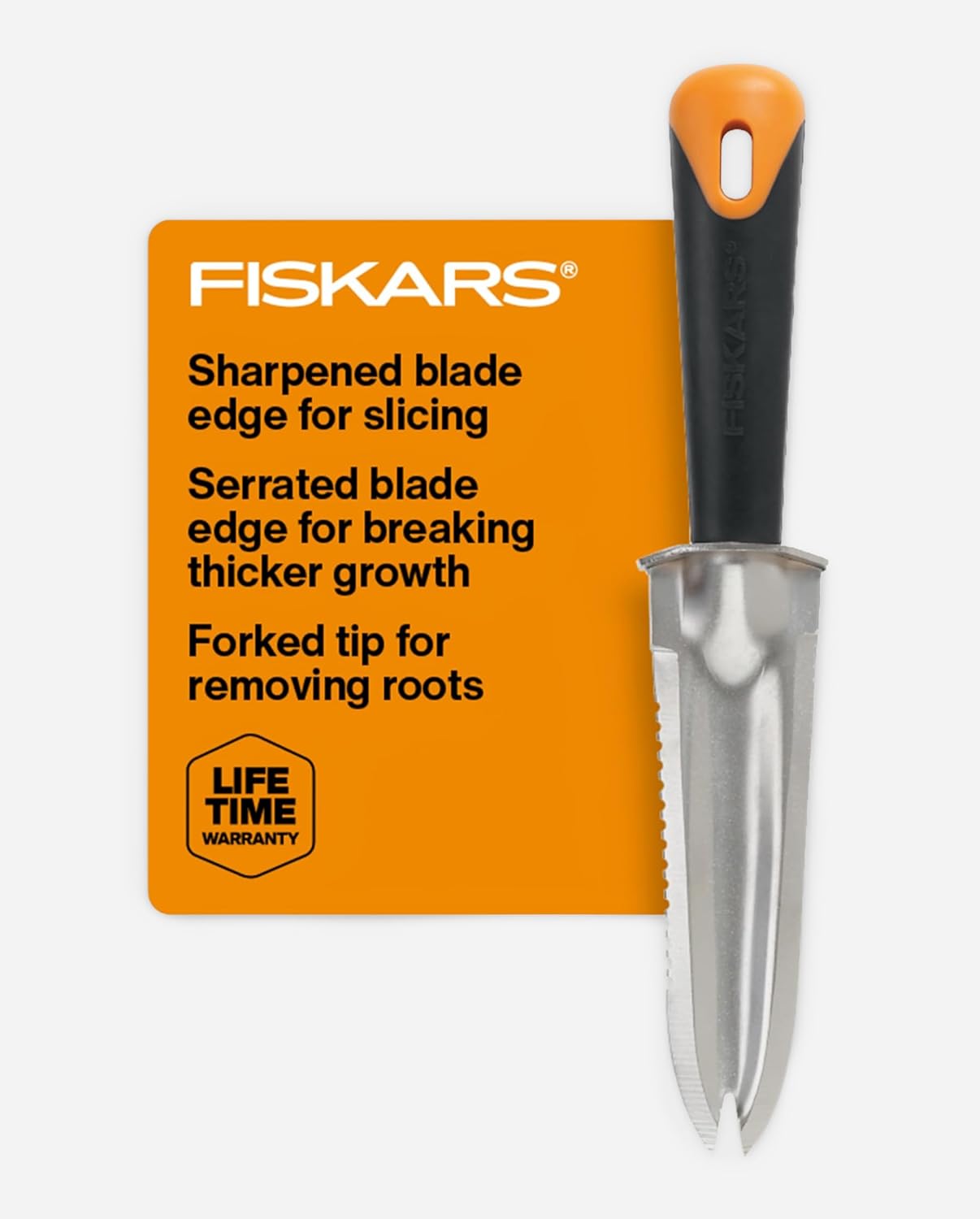
Handheld weeders are the classic pick — think of the Fiskars 4-Claw Weeder or a simple forked dandelion digger. They’re lightweight, precise, and budget-friendly, with most models landing between $8 and $30.
The best ones slide a long slim fork down alongside the taproot, so you can pry the whole root out in one motion. That matters because if the root snaps off, the dandelion regrows within weeks.
Stand-Up Weeders
Long-handled stand-up weeders, like the Grampa’s Weeder or the Fiskars Stand-Up Weeder, save your knees and your lower back. You step on a foot pedal to drive the metal claw into the soil, then lean back to lever the weed out — roots included.
They run roughly $25 to $50 and shine in loose, average soil. In hard-packed clay, expect to push harder.
Powered Dandelion Removers
Electric weeder attachments, such as the Black+Decker 20V system, spin a metal bit into the ground to bust up compacted soil. They’re the fastest option for a badly infested lawn, with prices around $60 to $150.
The tradeoff: they cost more, make noise, and can nick your grass if you rush. Keep pets clear while the tool is running, and there’s no chemical exposure to worry about.
Quick Comparison Table
| Tool Type | Ease of Use | Root Removal | Price Range | Pet Safety | Check Price |
|---|---|---|---|---|---|
| Manual Handheld | Kneeling required; most control | Excellent if you lift the root whole | $8–$30 | Safe — no chemicals | Check Price → |
| Stand-Up | No bending or kneeling | Good in loose soil | $25–$50 | Safe — mechanical only | Check Price → |
| Powered / Electric | Fastest; least effort | Great in hard, compacted soil | $60–$150 | Safe — keep pets clear while running | Check Price → |
🔍 Top 5 Best Weeding Tools for Dandelions in 2026
🔍 Top 5 Best Weeding Tools for Dandelions in 2026
I’ve pulled more dandelions than I care to count, and I’ve broken two cheap weeders doing it. The tools below are the ones that actually survived my clay-heavy backyard — and they’re all pet-safe to use around curious noses.
I judged each one on root removal depth, ease of use, and durability. A weeder that snaps mid-pull or leaves half the taproot behind isn’t worth your money.
1. Grampa’s Weeder – Best Overall Manual Weeder for Deep Roots
The Grampa’s Weeder is a classic for good reason. You push the four steel tines into the soil, pull the handle back, and the lever action lifts the entire root network without you crouching or kneeling.
I’ve used mine for three seasons on dandelions, thistles, and plantain. The 33″ handle gives solid leverage, and the D-grip feels comfortable even with wet gloves.
- Removes deep dandelion taproots cleanly
- No bending or kneeling required
- Sturdy steel construction lasts years
- Heavier than smaller hand weeders (about 4 lbs)
- Not ideal for tight spots near fences or pavers
2. Fiskars Stand-Up Weeder – Best Back-Friendly Pick
The Fiskars Stand-Up Weeder is the tool I grab when my back is already sore. You press the four serrated claws into the ground with your foot, then pull the handle back to grip and lift the weed out — all while standing fully upright.
It’s 39″ long, so it fits most gardeners’ height without hunching. The claws lock onto the root head before you pull, which really cuts down on broken taproots.
- Zero bending during use
- Foot pedal gives extra digging power
- Grips roots firmly before lifting
- Takes practice to angle correctly in hard soil
- Not great for tiny weeds or seedlings
3. BLACK+DECKER 4V MAX Powered Weeder – Best Powered Option
For mature dandelions with roots a foot deep, the BLACK+DECKER 4V MAX is my secret weapon. The rotating steel tines bore straight down alongside the taproot, then pull it out — no digging, no yanking.
It runs on a rechargeable lithium battery (about 30 minutes per charge) and the head pivots, so you can work at a comfortable angle. A full charge handled roughly 25 dandelions in my yard before I needed to top it up.
- Great for tough, established dandelions
- Pivoting head reduces wrist strain
- No cords or gas to deal with
- Heavier than manual tools (about 5 lbs)
- Battery won’t last for a full yard overhaul
4. Edward Tools Dandelion Weeder – Best Budget Option
The Edward Tools weeder is the perfect starter tool for small yards or spot removal. It features a V-shaped stainless steel fork that you twist into the soil to pop out the taproot — simple, effective, and nearly indestructible.
The package includes a free twist removal tool and a sharpening stone, which is rare at this price. It’s only 18″ long, so expect to kneel or sit while you work.
- Very affordable (with free bonus tools)
- Lightweight and easy to maneuver
- Stainless steel head resists rust
- Short handle means lots of bending
- Not ideal for large infestations
5. Radius Garden PRO Weeder – Best Multi-Functional Tool
The Radius Garden PRO Weeder earns its spot because it’s actually three tools in one: a dandelion weeder, a transplanting fork, and a soil loosener. The angled stainless steel head and ergonomic rotating grip make it easy on your wrist.
I keep one hanging near my dog run specifically for quick touch-ups between deeper weeding sessions. The natural-hand-angle handle is a thoughtful touch, especially if you have arthritis or grip issues.
- Ergonomic grip reduces hand fatigue
- Versatile weeder + transplanting fork
- Angled head reaches under low plants
- Manual design needs decent soil moisture
- Shorter handle means more bending
⚡ Quick Comparison Table
| Product | Type | Best For | Key Spec | Price | Check Price |
|---|---|---|---|---|---|
| Grampa’s Weeder | Manual lever-action | Deep roots, all yard sizes | 33″ handle, 4 steel tines | ~$25 | Check Price → |
| Fiskars Stand-Up Weeder | Stand-up claw | Back-friendly gardening | 39″ handle, foot pedal | ~$30 | Check Price → |
| BLACK+DECKER 4V MAX | Powered / cordless | Stubborn, mature dandelions | Rechargeable, pivoting head | ~$69 | Check Price → |
| Edward Tools Weeder | Manual hand fork | Small yards, spot removal | 18″ handle, stainless fork | ~$15 | Check Price → |
| Radius Garden PRO | Ergonomic hand tool | Multi-purpose lawn care | Angled head, rotating grip | ~$25 | Check Price → |
If your dandelions are mostly in open lawn areas, the Grampa’s Weeder is my top recommendation — it’s the best balance of root removal, price, and durability. For anyone with back trouble, the Fiskars Stand-Up Weeder is the one to buy.
🔑 How to Remove Dandelions Effectively Without Harming Your Lawn
The secret to killing dandelions for good is timing. Weed them when the soil is damp — ideally the day after rain — because a wet taproot slides out whole, while a dry one snaps and regrows within two weeks. Catch them before they flower, and you stop hundreds of new seeds from spreading across your yard.
Here’s the technique that works every time, whether you’re using a manual weeder or a stand-up tool:
- Push your weeder down 4–6 inches deep at a slight angle, right alongside the taproot.
- Twist and lever gently to loosen the soil’s grip — don’t yank straight up.
- Grab the crown low (not the leaves) and pull upward, keeping the root intact.
- Check the tip. White and intact means you’re done; if it snapped, reinsert and dig wider.
I prefer a long-handled stand-up weeder for leverage on tough clay soil. For shallow, loose soil, a manual forked weeder with a deep V-slot is faster and more precise.
After extracting the weed, don’t leave a bare hole — that’s a welcome mat for the next dandelion. Backfill with a topsoil-and-grass-seed mix, tamp lightly, and keep it watered for a week or two. Bare spots are the main way dandelions re-establish, so patching quickly matters.
Prevention is the real long-term fix. Mow at 3 inches or taller to shade the soil, fertilize in the fall when grass roots grow deepest, and test your soil to keep pH between 6.0 and 7.0. Dandelions love thin, stressed lawns — a thick, healthy one crowds them out on its own.
📌 Pet Safety Tips When Using Weeding Tools and Herbicides
Before you so much as touch a single dandelion, do a quick sweep of your yard. Dogs love to nap in sunny grass, and cats have a talent for appearing right under your feet. Get in the habit of checking every corner — especially tall grass and bushes — before you start working.
Sharp weeding tools like stand-up weeders and hori-hori knives are excellent for removing taproots, but they’re dangerous if left lying around. After each use, clean the blade and store it in a locked shed or on a high shelf. Never leave a tool unattended mid-job; a curious pup can knock it over and step on the point.
If you decide to use herbicides, read the label before you buy. Look for products specifically marked pet-safe or those with ingredients like pelargonic acid, which break down quickly. Keep your pets indoors while you spray and wait until the product is completely dry — usually 2 to 4 hours on a sunny day — before letting them back out.
For most pet households, mechanical removal is the safest approach. A good dandelion weeder gets the entire taproot out without chemicals, which means zero risk of your dog licking a treated leaf or rolling in a freshly sprayed patch. It takes more elbow grease, but that’s a trade-off I’m happy to make for my own two retrievers.
Watch for these signs if your pet may have touched a treated area or tool:
- Excessive drooling, pawing at the mouth, or vomiting
- Skin irritation, redness, or itching on paws and belly
- Lethargy or unusual behavior within a few hours
If you notice any of these, rinse the affected area with warm water and mild soap, then call your veterinarian or the ASPCA Animal Poison Control hotline right away. Keep the product label or tool nearby so they know exactly what your pet came into contact with.
❓ FAQ
What is the best tool to get dandelion roots out completely?
A long-bladed fishtail weeder or a corkscrew-style dandelion digger works best. Insert it next to the root, push down 4–6 inches, and pry gently with a rocking motion. If the taproot snaps instead of sliding out, you’ll usually see regrowth within a couple of weeks.
Are stand-up dandelion weeders better for people with back pain?
Yes — stand-up weeders let you stay upright and use your body weight instead of bending over. Most models have a foot pedal and claw that grips the root while you pull the handle straight up. That saves your lower back and knees, which matters when you’re pulling dozens of weeds per session. Check Price →
Can I use a dandelion weeder safely around my pets?
Absolutely. Manual weeders contain no chemicals, so your dog or cat can sniff around before you even finish pulling. The sharp tines are the only real risk — store them upright and never leave one lying in the grass. Powered tools are louder, so keep pets inside while you’re operating one.
Do powered dandelion removers work better than manual ones?
Powered versions spin or vibrate to loosen compacted soil, which helps in hard, dry ground. But they’re heavier, noisier, and cost $80–$150 more than a solid $15–$30 manual weeder. For typical lawns, a good manual tool removes the whole root just as well without the hassle.
How often should I weed dandelions to keep my lawn healthy?
Hit them early in spring before they flower, then do a quick pass every 1–2 weeks through the growing season. Removing young plants before seed heads form is the real key — one mature dandelion can drop hundreds of seeds. Consistency beats one big weekend effort every time.
What should I do after pulling dandelions to prevent them from coming back?
Fill each hole with a bit of compost or topsoil and overseed with grass seed so bare spots don’t invite new weeds. A thick, healthy lawn is your best defense — mow at 3–4 inches tall and fertilize in the fall. Skip the herbicide; consistent spot-pulling with the right tool handles the job.
2 thoughts on “Best Weeding Tool for Dandelions (2026 Guide): Safe & Effective Options for Pet Owners”