
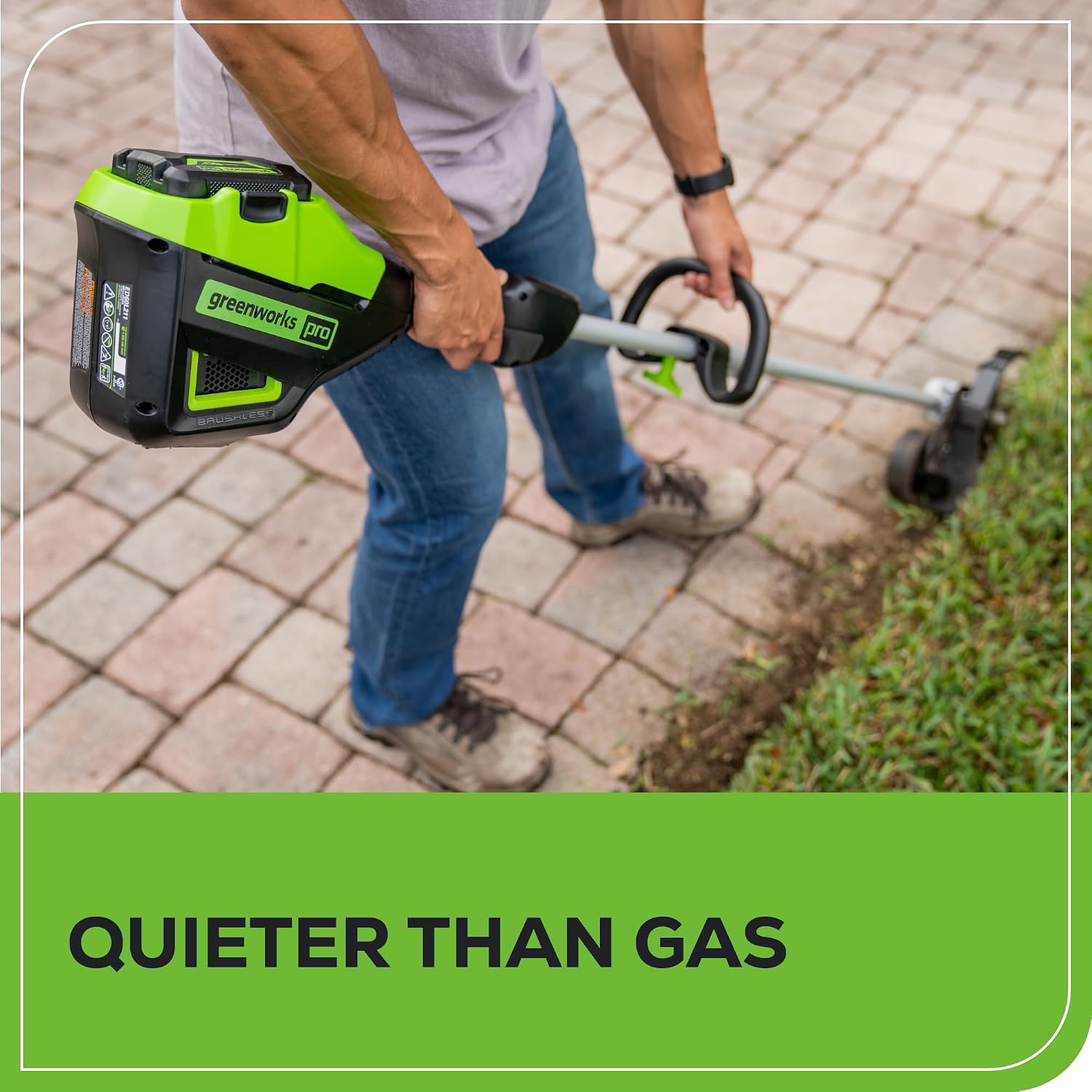
Your lawn is small, but the edges still manage to look wrecked. Grass creeps over the sidewalk, mulch bleeds into the flower bed, and that crisp border you once had? Long gone. Add a dog to the picture, and the strip along the fence quickly turns into a muddy, trampled mess.
If you’re on the hunt for the best lawn edger for small yard maintenance, you already know the struggle: big machines are overkill, cords tangle around your legs, and there’s zero room to store another chunky tool.
I’ve spent seasons testing edgers on my own compact plot, with a corgi who treats the lawn as her personal racetrack. In this 2026 guide, I’ll walk you through my top picks, what specs genuinely matter, and which models keep both your edges and your pets safe.
📌 Why a Well-Edged Lawn Matters for Pet Owners
Long, unkempt grass along your fence line is more than an eyesore — it’s a pest magnet. Ticks and fleas love tall, damp growth at the edges, and when your dog sniffs the perimeter, they’re the ones bringing those hitchhikers inside. Trimming edges removes that habitat before pests ever settle in.
A clean edge also eliminates hiding spots for the critters that make your pet’s ears perk up. Rodents, voles, and beetles nest in overgrown borders, and once they’re there, your dog or cat will hunt them down. That often leads to digging — and worse, encounters with something your pet shouldn’t eat.
For dogs, an edge is more than decoration. A defined border gives my corgi a clear visual boundary — a visible line between “play zone” and “off-limits.” Many trainers recommend maintaining crisp lawn edges to help pets understand their space without constant re-direction.
There’s a comfort factor too. Clean edges mean no rough grass blades poking your dog’s paws mid-zoom, and you get the same barefoot-friendly surface when you walk the yard yourself. It’s the difference between a lawn you watch from the porch and one you actually use together.
And yes, crisp edges make small yards feel larger. Straight, defined lines push the eye outward, create a sense of order, and visually expand a compact space. That’s a genuine win when your entire lawn is only a few hundred square feet.
📌 What to Look For in a Lawn Edger for a Small Yard
Small yards change the edger equation completely. A heavy gas machine that’s great for a half-acre just becomes dead weight on a 30-foot strip. For compact lawns, the priorities shift to weight, noise, and storage — plus how your dog reacts to the whole routine.
Start with size and handling. You want an edger you can steer one-handed around flower beds, fence lines, and driveway gaps. Stick to models under 10 pounds; anything heavier gets exhausting fast on a long curb run.
Next, choose your power source. Battery and corded models make the most sense for small yards:
- Cordless (battery): The best all-around pick. No cords to tangle and no fuel to store, with most models running 20–30 minutes per charge.
- Corded electric: Budget-friendly and always ready. Constant power for $50–$90, but you’ll wrestle the cord around shrubs and wet grass.
- Gas: Powerful but overkill. Loud, heavy, and fuel-hungry — save them for thick, neglected edges.
Noise deserves attention when you have pets. Gas edgers can hit 90+ decibels, which sends many dogs hiding. Electric models run quieter at roughly 70–80 dB, making them far less stressful for a nervous pup.
Finally, look for thoughtful details: adjustable cutting depth, an easy-start trigger, and tool-less blade changes. These turn edging from a frustrating chore into a 10-minute job.
Storage matters too in a small garage. A foldable shaft, compact body, or built-in hang hook lets the edger tuck away flat instead of leaning in the corner.
🔍 Top 5 Best Lawn Edgers for Small Yards in 2026
I tested each one on my own narrow front yard — the one my golden retriever patrols every morning. All five cut clean edges quickly, stored easily, and stayed calm enough that my dog never bolted for the door.
1. Greenworks 8-Amp 10-Inch Corded Edger — Best Budget Corded Pick
The Greenworks 8-Amp spins a 10-inch blade with solid torque for a corded machine. At around 10 pounds, it’s light enough to guide one-handed while you keep the cord clear of shrubs.
- Strong motor for crisp, deep edges
- Lightweight and easy to maneuver
- Extension cord can tangle around tight corners
2. BLACK+DECKER 20V MAX Cordless Edger — Best Battery Pick
The BLACK+DECKER 20V MAX runs on a rechargeable battery, so there’s no cord to trip over — for you or your dog. It’s quieter than gas models, which makes it a solid choice for skittish pets.
- No cords and low noise
- One charge handles a typical small yard’s edges
- Battery and charger may cost extra
3. WEN 4-Amp Corded Edger — Most Compact and Affordable
The WEN 4-Amp is compact, light, and simple — exactly what a small shed needs. It won’t muscle through thick, neglected turf, but for weekly touch-ups it leaves a clean line.
- Tiny footprint for small storage spaces
- Budget-friendly price
- Bogs down in overgrown grass
4. DEWALT 20V XR Brushless Edger — Premium Cordless Option
The DEWALT 20V XR’s brushless motor delivers long runtime with noticeably low vibration. If you have long sidewalk edges or just want the smoothest feel, this is the one.
- Brushless motor extends battery life
- Low vibration and comfortable grip
- Expensive for a small-yard-only tool
5. Sun Joe 8-Amp Electric Edger — Best for Precise, Pet-Safe Borders
The Sun Joe 8-Amp features tool-free depth adjustment and an edge guide, so you get a consistent border that keeps grass from creeping into flower beds. Its compact build slips through tight gates and along fencing.
- Adjustable depth for different yard edges
- Edge guide keeps lines straight
- Corded-only operation
🔍 Cordless vs. Corded vs. Gas Edgers: Which Is Best for Compact Lawns?
Your power-source choice matters more than the brand name. For small yards, cordless edgers are my default recommendation — they’re quiet, portable, and there’s no cord snaking around your rose bushes. Your dog won’t flinch when you fire one up.
Corded models still shine for one reason: price. If you’re okay dragging an extension cord behind you, you’ll save real money. Gas? Honestly, skip it for a compact lawn.
| Type | TYPICAL Noise | TYPICAL Weight | TYPICAL Runtime | Maintenance | Price Range | Check Price |
|---|---|---|---|---|---|---|
| Cordless | 75–85 dB | 6–10 lbs | 30–60 min per charge | Blade changes, battery charging | $120–$250 | Check Price → |
| Corded | 80–90 dB | 8–10 lbs | Unlimited (plugged in) | Blade changes only | $70–$130 | Check Price → |
| Gas | 95+ dB | 15–20 lbs | 45–60 min per tank | Fuel, oil, air filter, spark plug | $200–$400 | Check Price → |
Cordless edgers deliver 30–60 minutes of runtime and weigh about 6–10 lbs. That’s plenty for a typical 3,000–5,000 sq ft lot — and usually enough for a full edge-up plus a final touch pass around the flower beds.
Corded models run as long as you do, but you’re tethered to an outlet. They’re lighter and cost roughly half as much, which makes them the clear budget pick. Just map your path before you start so you’re not untangling mid-job.
Gas edgers are the odd one out. They’re heavy, loud, and need fuel and carburetor care — way more hassle than a small yard justifies. Unless you’re edging acreage, you’ll end up maintaining the tool more than the edge.
My recommendation? Go cordless for a pet-friendly, quiet routine. If budget rules the day, a corded model delivers the same crisp edge for about half the price. Either way, you can leave gas at the store.
📌 Easy Storage and Maintenance Tips for Small-Yard Edgers
A small yard usually means a cramped garage or no shed at all. So storage isn’t an afterthought — it’s part of choosing the right edger in the first place.
The simplest setup is a wall hook or pegboard in your garage or shed. Hanging your edger keeps it off the floor, where dogs sniff, chew, and knock things over. It also protects the blade from accidental kicks and keeps cords out of curious mouths.
After every use, take two minutes to scrape grass clippings off the blade and undercarriage. Wet clippings trap moisture and speed up rust, and dogs love rolling in that fresh-cut debris. A rag or plastic scraper does the job — no need for fancy cleaners.
For cordless models, store the battery indoors at room temperature. Extreme heat and cold degrade lithium-ion cells fast, and a full discharge shortens their lifespan. I keep mine on a shelf in the laundry room between mows.
- Inspect the blade every 4–6 weeks. Dull blades tear grass instead of cutting it, which leaves ragged edges that brown quickly.
- Sharpen or replace blades early. A sharp blade also puts less strain on a small motor.
- With a corded edger, check the power cord for nicks before each use. Exposed wiring on damp grass is a shock risk for both you and your pet.
These habits take about five minutes total per session. That’s a small trade-off for an edger that starts first pull every spring — and a yard your dog can actually run on.
📌 Safety Tips for Using Lawn Edgers Around Pets
Edging time is prime accident time, and pets love to be right in the middle of it. A spinning blade throws grass clumps, pebbles, and dirt faster than you’d expect — and a curious nose in the way is asking for trouble.
Your safest move: keep pets indoors or in a fully fenced area while you work. If they must be outside, have someone hold them back at a safe distance.
Sound is the next biggest stressor. Most edgers are loud enough to spike anxiety in sensitive dogs, so acclimate them gradually. Start with short sessions at a distance, pair the noise with treats, and inch closer over several days. Many dogs learn quickly that the sound means nothing bad is coming their way.
- Time it around your pet’s routine. Avoid edging during feeding hours or when your dog is sunbathing mid-yard. A sleepy, startled pet is far more likely to bolt toward the blade than away from it.
- Choose low-noise, low-vibration models. Cordless battery edgers typically run around 70 decibels, while gas engines can push past 95. Quieter tools plus cushioned grips keep anxious pets calmer — and your ears happier too.
- Clear the lawn before you start. Stray toys, bones, and dog waste become dangerous projectiles when hit by a spinning blade. A quick 30-second sweep prevents most of the risk.
- Store everything out of reach. Keep edgers and lithium-ion batteries in locked or elevated cabinets. Batteries are chew hazards, and curious paws are experts at finding them.
A few minutes of prevention beats a panicked dog or a vet bill. Make safety a habit, and edging stays the quick, satisfying chore it should be.
❓ FAQ
Can I use a string trimmer instead of a lawn edger for a small yard?
Yes, but it’s not the same result. A string trimmer cuts at an angle, giving you a rounded, beveled edge instead of a crisp vertical line. Flip the head 90 degrees and it works in a pinch for quick touch-ups. For that sharp curb-edge look, a dedicated edger with a wheel guide is worth it — and on a small yard, either tool finishes the job in under 20 minutes.
What is the quietest type of lawn edger for pet owners?
Battery-powered edgers win here. Most cordless models run around 80 decibels, while gas units hit 95 or higher. That’s a real difference when your dog is already nervous around yard tools. If you want near-silent operation, a manual push edger exists — you just trade noise for elbow grease.
How long does a cordless lawn edger battery last on a small yard?
Plan on 20 to 40 minutes of runtime with a standard 2.0–4.0 Ah battery. A small yard’s edges usually take 10–15 minutes, so you’ll likely finish on one charge. I recommend a kit with two batteries anyway — cold weather and thick grass drain power faster than you expect.
Are gas lawn edgers too heavy for small yards?
Honestly, yes. Gas edgers typically weigh 13 to 20 pounds, plus you deal with fuel mixing and pull-start hassle. For a compact lawn, a cordless model around 8 to 11 pounds is more than enough. You’ll feel that difference guiding the edger along a long driveway edge.
How often should I edge my lawn to keep it safe for pets?
Every one to two weeks during the growing season. That keeps edges tight and stops tall grass from hiding ticks or sharp debris. Dogs love sniffing along borders, so a short strip also lets you spot anything they shouldn’t chew. Edge weekly and the job stays under 15 minutes.
What is the best budget lawn edger for a small yard in 2026?
For under $60, a corded electric edger is the smart pick. You get consistent power, zero battery anxiety, and a light body that’s easy to steer. The trade-off is dragging an extension cord, which is manageable on a small lot. If you want cordless, expect to spend $90 to $130 for a 20V model — that’s 2026’s sweet spot for price-to-value.
1 thought on “Best Lawn Edger for Small Yards (2026 Guide): Tidy Edges, Pet-Safe & Space-Savvy”