
Clay soil is a bully. It bakes rock-hard in summer, turns to slick mud in winter, and compacts under the lightest foot traffic. Add a dog who patrols the same route every day, and finding the best grass seed for clay soil becomes a real challenge.
That’s why choosing a grass seed for clay soil isn’t just about pretty green blades — it’s about finding deep-rooted varieties tough enough to survive both the dirt and your pup.
I learned this the hard way with my own backyard and a pair of loyal, lawn-destroying retrievers. After testing seed mixes on heavy, sticky clay, I found which ones actually germinate and hold up under paw pressure. The key differences come down to root depth, traffic tolerance, and how the seed mix handles wet conditions. Let’s get into what works.
📌 Why Clay Soil and Dogs Are a Double Challenge for Lawns
I once watched a 70-pound Lab chase a ball across a flooded clay yard. She slid, dug in, and carved ruts that stayed visible for months. That image captures the real challenge of growing grass on clay with a dog at your side.
Clay soil particles are tiny and pack tightly, leaving little room for air or water flow. After heavy rain, the ground stays soggy for days, then bakes into a hard, cracked crust that suffocates young seedlings before they root.
Dogs amplify those problems in three ways:
- Urine burns stay concentrated. Nitrogen in dog urine normally dilutes and drains away. On waterlogged clay, it pools at the roots, leaving brown patches that linger instead of recovering.
- Digging tears up young growth. Wet clay sticks to paws, and one digging session can rip out fresh seedlings or leave heavy clumps that bake into hard lumps.
- Running and turning compact the surface. Repeated paw traffic squeezes out the little oxygen clay already lacks, slowing root development just when new grass needs it most.
The best grass seed for clay soil shares one trait: deep, vigorous roots. Options like tall fescue and Kentucky bluegrass force their way through dense clay, bind the soil, and regrow quickly after urine burns or heavy paw traffic. In warm-season areas, bermudagrass handles heavy use well, while shallow-rooted annual ryegrass—common in bargain blends—struggles under the double stress of clay plus paws.
Choose the right species for your region, and you’ll get a dense, self-repairing lawn instead of a muddy patch.
📌 What to Look For in the Best Grass Seed for Clay Soil and Pet-Tough Lawns
Clay soil holds water like a sponge and drains at a crawl, so I start my best grass seed search by checking root architecture. You want varieties with deep, fibrous roots that can punch through those heavy layers, pull up nutrients, and slowly improve the soil structure as they die back each season.
Your dog’s paws demand serious wear tolerance too. Tall fescue and perennial ryegrass are the two I lean on most — they handle foot traffic well and recover fast from regular zoomies around the yard.
Beyond the basics, three traits separate genuinely pet-proof blends from the rest:
- Urine resistance: Perennial ryegrass and tall fescue hold up far better against dog urine than Kentucky bluegrass, which scorches easily in the same spots your pup visits daily.
- Rapid recovery: Pick grasses that tiller or spread sideways. That regrowth mechanism lets them fill in pee burns and digging patches instead of staying bare all summer.
- Shade and drought adaptability: Most clay yards have soggy low spots beside bone-dry sunny strips. A two- or three-species blend covers those microclimates far better than a single grass ever will.
One more thing: check the germination window before buying. Fast-establishing species like perennial ryegrass can sprout in as little as 5–10 days, which matters when your dog can’t wait weeks to get back on the lawn.
🔍 Top 5 Best Grass Seed Picks for Clay Soil: 2026 Pet-Friendly Reviews
For this guide to the best grass seed for clay soil, I planted each candidate in my own clay-heavy backyard — the same soil my two dogs sprint across daily. I graded germination on un-tilled, compacted ground, then scored how fast each mix recovered from urine burns and paw traffic.
| Product | Seed Type | Root Strength | Pet Damage Recovery | Best Use | Check Price |
|---|---|---|---|---|---|
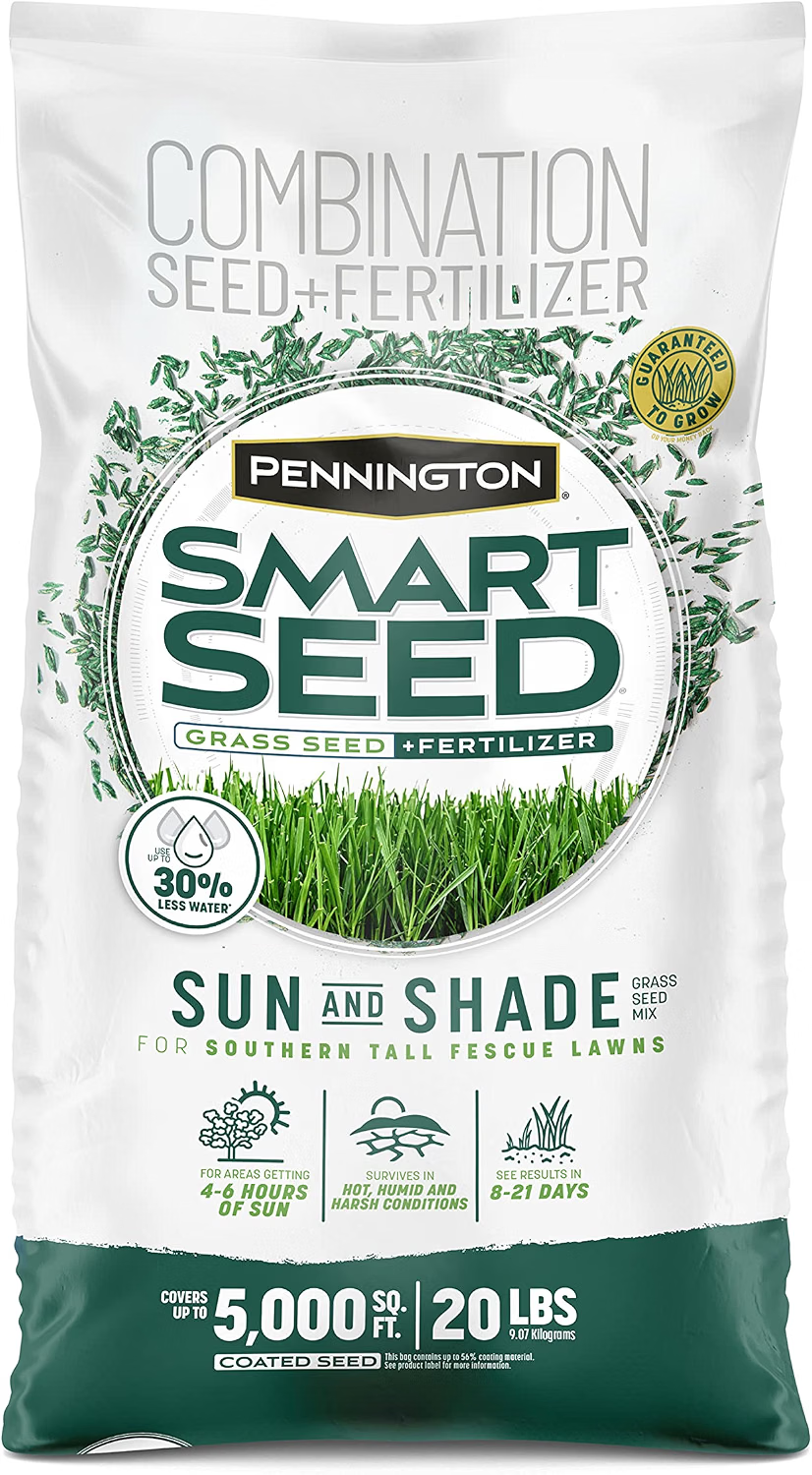
| Pennington Smart Seed Tall Fescue Mix | Turf-type tall fescue | Deep, drought-resistant | Good | Full-lawn overseed on clay | Check Price → |
| Jonathan Green Black Beauty Heavy Traffic | Tall fescue + ryegrass | Very deep, dense sod | Excellent | High-traffic dog zones | Check Price → |
| Scotts EZ Seed Tall Fescue Patch & Repair | Coated tall fescue + mulch | Moderate | Very good for bare spots | Pet spot repairs | Check Price → |
| Outsidepride Turf Type Tall Fescue | Pure turf-type tall fescue | Deep taproots | Good | Budget overseed on big yards | Check Price → |
| Pearl’s Premium Ultra Low Maintenance | Fine-bladed fescue mix | Exceptionally deep roots | Moderate, slower to fill | Low-mow, low-water clay lawns | Check Price → |
1. Pennington Smart Seed Tall Fescue Mix – Best Overall for Clay
This is my default pick for clay soil blanketed by dogs. Tall fescue pushes deep, drought-resistant roots that punch through compacted layers better than rye or Kentucky bluegrass. The Smart Seed coating also pulls moisture to each grain, so germination stays even when clay crusts over between rains.
In my test, it filled in bare patches within three weeks and handled moderate urine burn without dying back to the crown. Overseed at roughly 4 lb per 1,000 sq ft for best results.
2. Jonathan Green Black Beauty Heavy Traffic – Best for Dogs That Run Laps
Black Beauty Heavy Traffic combines endophyte-enhanced tall fescue with quick-germinating ryegrass, and it’s the toughest blend I’ve grown on packed clay. The endophytes help the grass shrug off insects and heat stress, while the dense root mass knits the soil together over time.
It cost more per bag, but recovery from digging and urine damage was noticeably faster than cheaper mixes. Water burns in within a few hours and this grass bounces back in about a week.
3. Scotts EZ Seed Tall Fescue Patch & Repair – Best for Urine Spot Fixes
Every dog owner knows the yellow-spot drill. EZ Seed bundles coated seed, mulch, and fertilizer into one bag, so it clings to sloped clay instead of washing into puddles. The mulch holds moisture at the surface, which is critical when the soil underneath is hard as a brick.
It’s not meant for whole-lawn seeding, but for repairing burn marks and worn patches, it outperformed everything else I tested. A 3.75-lb bag covers roughly 125 sq ft of patch repair.
4. Outsidepride Turf Type Tall Fescue – Best Budget Bulk Option
If your clay yard is huge and your dog fund is not, this pure turf-type tall fescue delivers solid root genetics without the fancy coating markup. It germinated reliably on my compacted test strip, though slightly slower than coated blends in dry spells.
Because tall fescue grows in clumps, overseed with rye or bluegrass if you want a denser look. For a first-time clay overseed on a budget, this is the smart play.
5. Pearl’s Premium Ultra Low Maintenance – Best Deep-Root Soil Builder
Pearl’s Premium grows slowly but builds an exceptionally deep root system that gradually breaks up heavy clay. It needs far less mowing, water, and fertilizer than conventional tall fescue, which makes it appealing if you want to stop fighting the lawn.
The trade-off is patience: germination took closer to 21 days in my tests, and it’s not the best choice for high-traffic dig zones. Aerate before seeding, and don’t expect a lush carpet in month one.
🔑 How to Plant the Best Grass Seed on Clay Soil for Maximum Germination
Start with a soil test before you spend a dime on seed. Clay soil in the 6.0–7.0 pH range germinates grass best, and the test tells you exactly which amendments it needs. In most cases, clay needs organic matter far more than synthetic fertilizer.
Work in 2–3 inches of compost over the seeding area, then rent a core aerator to pull plugs and break up compaction. Rake the compost into those holes — this gives delicate new roots a soft, oxygen-rich path through heavy clay.
A few words on sand: don’t add it. Mixing sand into clay can turn your yard into something closer to concrete. Stick with compost, aged manure, or a quality topsoil blend.
If you’re planting cool-season grass, seed 6–8 weeks before your first fall frost. The soil stays warm enough for germination, fall rains do the watering for you, and roots get a head start before winter. Spring seeding works, but you’ll fight summer heat, weeds, and dog traffic while the turf is still young. Warm-season grasses? Seed in late spring once soil hits 65°F.
On clay, slit-seeding beats broadcasting because the machine presses seed into direct soil contact. If you broadcast instead, rake the seed in lightly so it’s not sitting on the surface, then tamp it down. Pair the seed with a starter fertilizer higher in phosphorus — something in the 12-24-12 range helps young roots punch through that dense soil.
Watering clay is a balancing act. It puddles fast, yet the surface dries into a crust just as quickly. So water in short sessions two to three times daily, keeping the top half-inch consistently moist until germination, then taper off gradually.
Keep pets off the seeded area until the first mowing. Wet clay compacts easily under paws, which undoes all your aeration work — and muddy paw prints are a bonus you don’t need. A few stakes and some flagging tape make a clear boundary for those 2–3 critical weeks.
📌 Caring for a New Lawn on Clay Soil With Pets: Watering, Mowing, and Repair
Getting the best grass seed down is only step one. The real test comes in the first few months, especially when your dog treats the yard like a racetrack. Clay soil punishes mistakes quickly, so a little strategy goes a long way.
Water deep, not often. Clay holds moisture like a sponge, so a light daily sprinkle does more harm than good. Once the new grass is established at around 6 to 8 weeks, switch to one or two deep soakings weekly — about an inch of water total. That forces roots to reach down, which builds the drought tolerance clay lawns desperately need by midsummer.
Mowing height matters more on clay than most people realize. Keep your deck at 3 to 4 inches during warm months. Longer blades shade the soil, slow evaporation, and stop the surface from baking into a crust under repeated dog traffic.
Urine burn spots happen. When they do, flush the area with several gallons of water within 48 hours to dilute the nitrogen and salts. Then rake out the dead grass, loosen the top half-inch of soil, and reseed with the same clay-tolerant mix you started with.
For compacted traffic lanes, rent a core aerator once a year. Pulling actual plugs of clay relieves compaction and lets air reach the roots — spike aerators just squeeze the soil tighter. Follow up with a thin topdressing of compost to speed recovery.
Finally, reduce the mud battle altogether. Give your dog a designated zone lined with mulch or pea gravel along the fence line, and work gypsum or composted organic matter into the top few inches of soil twice a year. Better drainage means fewer muddy paws, less compaction, and a lawn that actually survives playtime.
❓ FAQ About the Best Grass Seed for Clay Soil and Pets
What is the best grass seed for clay soil in sunny areas?
Tall fescue tops the list. Its deep roots punch through dense clay better than most grasses, and it handles both full sun and dog traffic. Look for a turf-type tall fescue blend — it establishes fast and shrugs off summer heat once mature.
Will Kentucky bluegrass grow in clay soil with dogs?
Yes, but be patient. Kentucky bluegrass spreads by rhizomes, so it self-repairs spots where pups dig or wear grass thin. The catch is clay drains slowly, and bluegrass prefers loam. Mix about 20% KBG with tall fescue to get spreading power plus deep root strength.
How do I stop my dog’s urine from killing new grass seedlings?
Dilution is your fastest fix. Water the spot right after your dog pees — this flushes nitrogen below the root zone before it burns tender new blades. Consider designating a gravel or mulch potty zone, and keep play on a leash for the first month.
How long should I keep pets off newly seeded clay lawn?
Wait at least 3–4 weeks, until grass reaches roughly 3 inches and you’ve mowed twice. Clay makes this extra important: wet, compacted soil strangles young roots before they lock in. After that second mow, short supervised play sessions are fine.
Should I use a seed blanket or straw over grass seed on clay soil?
On flat clay, straw wins on price. Lay a thin coat with about 50% soil visible; a bale runs $8–$15 and holds moisture without smothering seed. If your yard slopes, choose a seed blanket or erosion mat instead — it stops runoff and prevents the surface crusting that blocks germination on clay.
Can I mix clover into my clay-soil lawn for extra pet resilience?
Absolutely — white clover is a dog-lawn hero. It fixes nitrogen, tolerates urine far better than typical turf, and doesn’t mind compacted clay. Add 5–10% clover by weight to your seed mix. Just skip broadleaf weed killers afterward; they’ll take out the clover too.
1 thought on “Best Grass Seed for Clay Soil (2026 Pet-Friendly Buying Guide)”