
If your backyard turns into sticky, shoe-sucking mud after every rain and a cracked brick by August, you already know the problem. Clay soil drains poorly, compacts fast, and suffocates the roots of most lawn grasses. Add a running, digging, urine-marking dog to that mix, and the grass never stands a chance. Finding the best grass for clay soil and dogs starts with understanding what the ground and your dog will put it through.
Choosing the best grass for clay soil isn’t about fancy packaging or the greenest bag on the shelf. It’s about deep roots, dense blades, and honest recovery power under heavy paws.
I’ve renovated lawns on heavy red clay for years, with two rescue dogs who treat the yard like a racetrack. This guide covers the seed varieties that survive both compacted ground and enthusiastic zoomies — plus how to prep the dirt so your grass actually grabs hold.
🐾 Why Clay Soil Is Tough on Lawns (Especially With Pets)
Clay particles are microscopic, and they pack together like a crowd at a dog show. Water pools on top instead of sinking in, and when the sun hits hard, the surface crusts over like ceramic. New shoots literally can’t push through that shell.
Pets double the damage. Urine adds concentrated nitrogen salts that burn shallow-rooted grass. Digging dogs churn clay into a crumbly mess, and constant running compacts the soil even further. Most standard grass blends simply give up under that combination.
The fix starts with variety selection. You need grass bred for heavy soil — tall fescue above all — and then you need to manage the ground underneath it.
🔍 Best Grass for Clay Soil and Dogs: What to Look For
Not all grass seed is created equal, and the label tells you more than the picture on the front. Here’s what actually matters when clay soil and dogs are both in the picture.
- Deep root system — Tall fescue roots can reach 2–3 feet, punching through compacted clay layers and finding water deeper down.
- Wear tolerance — Look for dense, coarse-bladed varieties that shrug off paw traffic instead of thinning out.
- Drought and heat resistance — Clay dries into concrete, so the grass needs to survive dry spells without going crispy.
- Recovery ability — Rhizome-spreading grasses like Kentucky bluegrass fill in bare patches, but they’re slower to establish.
- Seed purity — Check for pure live seed above 85%, weed seed below 0.5%, and no annual ryegrass masquerading as a permanent lawn.
How did I pick the five below? I compared root depth, germination speed, traffic recovery, and real feedback from dog owners on heavy soil. Price-per-pound mattered too, since overseeding clay lawns is an annual fall habit, not a one-time event.
🌱 Best Grass for Clay Soil: Top 5 Seed Picks for Active Dogs
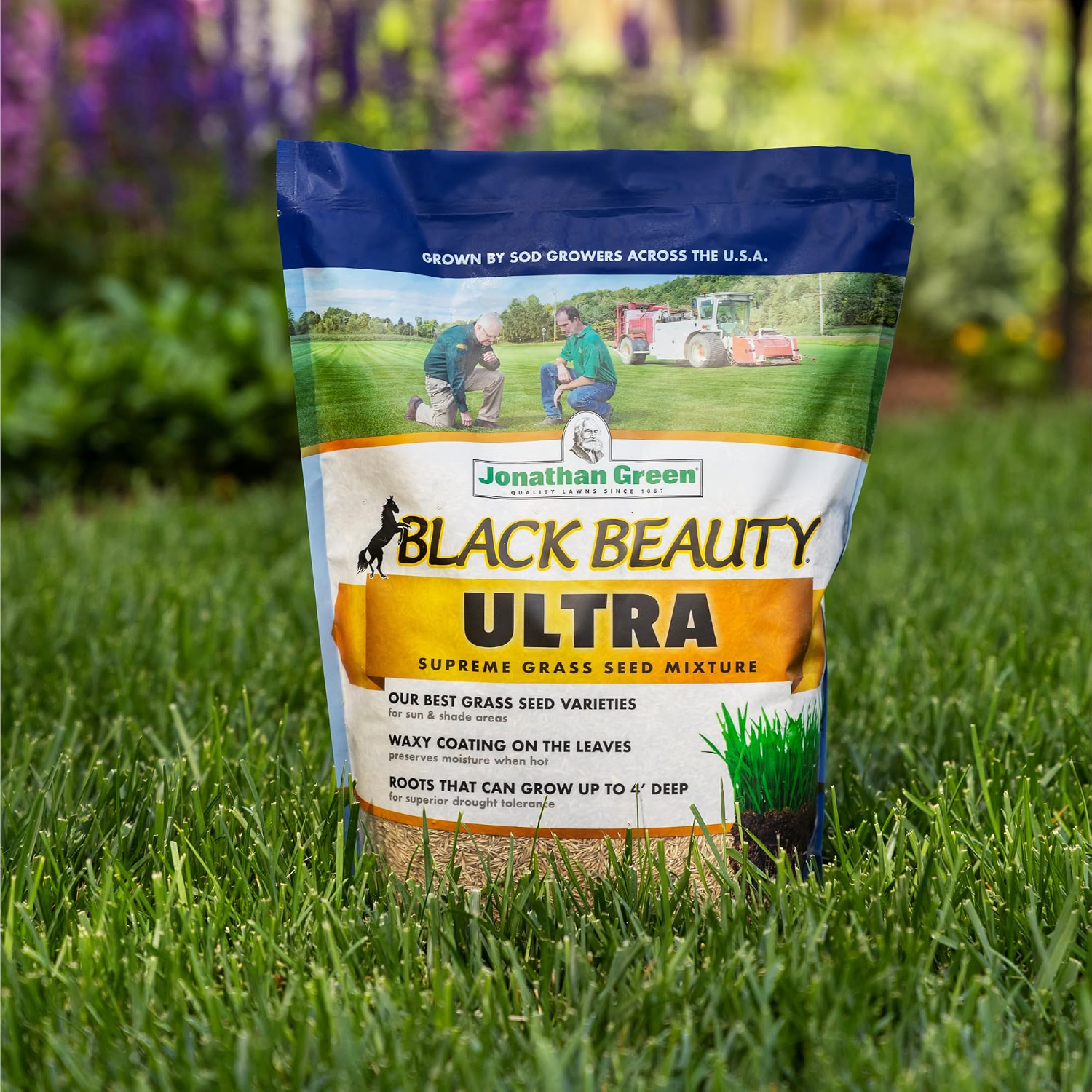
1. Jonathan Green Black Beauty Ultra — Best Overall Tall Fescue
The Black Beauty Ultra line is 100% tall fescue, bred specifically for deep roots and heat tolerance. That root system is exactly what clay soil needs — it cracks through compaction over time and pulls moisture from deeper layers.
In my experience, it also handles dog urine better than shallow-rooted ryegrass because the roots dilute the burn across a larger soil volume. Expect germination in roughly 10–14 days with consistent moisture.
- Deep roots break up heavy clay naturally
- Excellent drought tolerance once established
- Dense growth crowds out weeds
- Holds up well to dog traffic
- Premium price per pound
- Needs mowing at 3.5–4 inches to stay healthy
- Slower to green up in early spring than ryegrass
2. Scotts Turf Builder Tall Fescue Mix — Best Value for Renovation
Scotts Turf Builder Tall Fescue Mix blends tall fescue with a bit of perennial ryegrass for faster coverage. The WaterSmart PLUS coating holds moisture around each seed, which helps on clay that dries out unevenly.
For large bare areas or a full front-lawn renovation, this is the most economical way to get fescue down without emptying your wallet. It’s not as refined as the Jonathan Green genetics, but it performs well for the price.
- Budget-friendly for big yards
- Moisture-holding coating helps germination
- Widely available in big-box stores
- Good sun and light shade tolerance
- Includes ryegrass that may thin out after a year
- Coating adds weight without adding seed
- Needs consistent watering to germinate evenly
3. Pennington One Step Complete Sun & Shade — Best All-in-One Patch Repair
This isn’t just seed. One Step Complete combines seed, a slow-release fertilizer, and a fine mulch layer that holds moisture and protects seedlings from crusting clay and scavenging birds.
It’s my go-to for repairing the muddy bald spot by the back gate. You spread it, rake lightly, water, and skip the separate compost or straw step. For small to medium patches, that convenience saves real time.
- Seed, fertilizer, and mulch in one bag
- Mulch prevents soil crusting on clay
- Less runoff on sloped, compacted areas
- Handy resealable bag for spot repairs
- Expensive per square foot compared to plain seed
- Not practical for a full-yard renovation
- Mulch clumps if applied too thickly
4. Scotts EZ Seed Sun & Shade — Best for Dog-Spot Recovery
When your dog turns a urine patch into a straw-colored crater, EZ Seed is the fastest cosmetic fix I’ve tested. The blend leans on quick-germinating ryegrass, so you see green within days rather than weeks.
Keep expectations honest, though. The fast seed is a temporary fix on clay. Pair it with core aeration and a fall overseeding of tall fescue, or you’ll be re-patching the same spot next season.
- Fast germination for quick bare-spot repair
- Includes tackifier to hold seed on slopes
- Built-in fertilizer pushes early growth
- Protects seed from washing and birds
- Ryegrass may not persist long-term on clay
- Small bags cover limited area
- Costly if you use it for large zones
5. Pennington Smart Seed Bermudagrass — Best Warm-Season Pick for the South
If you live in the transition zone or the deep South, bermudagrass shrugs off summer heat, drought, and dog traffic better than any cool-season grass. It spreads aggressively through stolons and rhizomes, which means it recovers quickly from worn patches.
The catch is timing. Bermuda needs soil temperatures above 65°F to germinate, so you’ll seed in late spring, not fall. And it turns straw-brown over winter while tall fescue lawns stay green.
- Extreme heat and drought tolerance
- Self-repairs from pet damage
- Thrives in full sun and heavy traffic
- Deep rhizomes help anchor clay slopes
- Goes dormant and browns in winter
- Invasive into flower beds and paths
- Poor shade tolerance
- Tough to establish on compacted clay without aeration
⚡ Comparing Grass Seed Products: Pros, Cons, and Pet Tolerance
Here’s the quick-reference table I wish I’d had before my first clay-lawn renovation. It sums up which product fits which situation.
| Product | Best For | Grass Type | Pet Tolerance | Check Price |
|---|---|---|---|---|
| Jonathan Green Black Beauty Ultra | Full lawn on clay | 100% tall fescue | Excellent | Check Price → |
| Scotts Turf Builder Tall Fescue Mix | Budget renovation | Fescue + ryegrass | Very good | Check Price → |
| Pennington One Step Complete | Patch repair, slopes | Fescue + ryegrass blend | Good | Check Price → |
| Scotts EZ Seed | Fast dog-spot fixes | Fast ryegrass blend | Fair short-term | Check Price → |
| Pennington Smart Seed Bermuda | Warm-climate yards | Bermudagrass | Excellent in summer | Check Price → |
One more honest note about pet tolerance: no grass is truly urine-proof. Tall fescue survives dog urine better because its roots go deep and dilute the salts. But if one spot gets hit daily, even fescue will scorch. That’s a watering problem, not a seed problem — flush the area occasionally to move the salts down.
Annual ryegrass is the one variety I’d steer you away from for clay, even though it’s cheap and germinates fast. Its roots are shallow and fibrous, exactly the wrong profile for compacted soil. Use it only for winter overseeding in the South, never as a permanent fix.
🔑 How to Prep Clay Soil for the Best Grass and a Durable Pet Lawn
Seed selection gets you halfway. The other half is giving that seed a fighting chance in soil that wants to fight back. Clay rewards patience and punishes shortcuts.
Step 1: Test your soil. Grab a cheap pH test kit from Amazon or your local extension office. Grass grows best between 6.0 and 7.0. If your clay reads acidic, add lime in the fall; if it’s alkaline, sulfur can help bring it down.
Step 2: Aerate before you seed. Core aeration pulls out plugs of compacted clay and gives roots an escape route. Run the aerator once in early fall and once in spring if your dogs really hammer the yard. Top-dress with a half-inch of compost after aerating — it feeds the soil and improves drainage over time.
Step 3: Consider gypsum for structure. Gypsum (calcium sulfate) helps flake tight clay particles apart without changing pH. Apply at the rate on the bag — typically around 40 pounds per 1,000 square feet — and water it in. It’s not a fertilizer, but it makes clay noticeably more workable after a couple of seasons.
Step 4: Time your seeding right. For cool-season fescue, seed in early fall when soil temperatures sit between 50°F and 65°F. The seed germinates, and the young grass gets a full cool season to establish roots before summer stress. Warm-season bermuda flips the calendar — seed it in late spring once soil warms past 65°F.
Step 5: Water smart, not frantic. New seed needs light watering two or three times a day to stay moist. Once established, switch to deep, infrequent soakings of about 1 to 1.5 inches per week. Deep water pushes roots deeper, which is your ultimate weapon against both clay and dog damage.
Step 6: Mow tall and keep dogs off the tender stuff. Fescue wants 3.5 to 4 inches of blade height — taller grass shades the soil, slows evaporation, and develops stronger roots. And yes, keep your dog off freshly seeded areas for at least three to four weeks. I use temporary fencing and a designated potty patch until the new grass can handle the traffic.
❓ FAQ: Best Grass for Clay Soil
What is the best grass for clay soil?
For cool-season regions, tall fescue is the clear winner because its deep taproots break through compacted clay. For warm-season regions in the South, bermudagrass or zoysia handle the heat and recover faster from dog traffic.
Can I grow grass on hard clay without tilling?
Yes, but you’ll want core aeration and a compost top-dressing first. Tilling actually damages clay structure over time by breaking up the soil aggregates. No-till seeding with aeration is gentler and produces a stronger root system — it just takes a bit longer to fill in.
How long before dogs can safely run on new grass?
Wait until the grass is well rooted — usually three to four weeks after germination, or until mowing the new lawn for the second time. Light foot traffic before that will pull young seedlings right out of soft clay.
Is grass seed safe if my dog eats it?
Plain grass seed is generally not toxic, but coated seed with fertilizer can cause stomach upset if eaten in quantity. Keep dogs off freshly seeded areas until the seed is worked in and watered — it protects both your lawn and your pup’s stomach.
Is spring too late to seed a clay lawn in the North?
Spring seeding works, but it’s riskier. Young fescue seedlings often hit summer heat before their roots go deep, and clay holds that heat. If you must seed in spring, do it early, water diligently, and plan a fall overseeding to thicken the stand.
Here’s my bottom line: if you live in a cool-season zone with clay soil and an active dog, buy a quality tall fescue blend like Jonathan Green Black Beauty Ultra and plan to overseed every fall. If you’re in the warm South, bermudagrass will outlast and out-recover almost anything else.
The seed is only half the battle. Aerate, add compost, keep your mower deck high, and give fresh seed a month of peace from paw traffic. Do that, and clay soil stops being your enemy — it becomes one of the most nutrient-rich growing mediums you’ll ever own.
📌 Signs Your Lawn Is Fighting Clay Soil and Dog Traffic
If your yard turns into a mud pit each spring and a rock-hard slab each summer, clay is probably the culprit. Clay particles are microscopic and pack tightly together, leaving almost no room for air or water to move. Roots suffocate, puddles linger for hours, and even the toughest seed struggles to establish.
Here’s how you can tell clay is the problem:
- Water pools on the surface long after rain stops.
- Soil cracks and turns concrete-hard in summer.
- Grass roots stay shallow, so the lawn dies in random patches.
Now add a dog to that picture, and it gets worse fast. Heavy paws compact wet clay like a tamper, squeezing out the oxygen pockets roots depend on. Dog urine adds concentrated nitrogen burn to grass that’s already fighting to breathe, while digging exposes bare clay to bake in the sun.
The good news? Some grass varieties genuinely thrive in clay if they’re deep-rooted and quick to recover. That’s why I focused this guide on proven picks like tall fescue and bermudagrass — types that push through dense soil and bounce back from pet traffic.
Before you buy seed, do the squeeze test: wet a handful of soil, roll it into a ball, and press it flat. If the ribbon holds together without crumbling, you’ve got clay — and choosing the right grass seed matters more than any fertilizer.
📌 Grass Traits That Matter on Heavy Clay
If your yard is heavy clay and your dog owns it, you need grass built to take a beating. I look for four traits before anything else: deep roots, drought tolerance, rapid recovery, and wear resistance.
- Deep root systems — These punch through compacted clay and pull moisture from deeper soil layers.
- Drought tolerance — Clay bakes rock-hard in summer, so grass that fades fast will stress you out.
- Rapid recovery — You want turf that regrows quickly after paws tear through it.
- Wear resistance — It has to survive the zoomie track along your fence line.
Urine tolerance is the hidden factor most people forget. Dog urine burns grass with concentrated nitrogen and salts, and no turf is fully immune. But tall fescue and perennial ryegrass recover from urine spots far faster than Kentucky bluegrass, which turns brown in patches and stays ugly for weeks.
Climate decides which species belong in your yard. In the North and transition zone, cool-season grasses like tall fescue are the clay champions — their roots go deep and they stay green into fall. In the South, warm-season Bermuda or zoysia handles clay drainage better, but both go dormant and turn brown over winter.
One more thing: buy a blend, not a single species. Seed blends with two or three compatible varieties outperform monocultures because each grass fills a different role — one handles shade, another shrugs off drought, a third bounces back from urine spots. If one variety struggles in a corner of your yard, the others fill the gaps.
For most of the country, a tall fescue and perennial ryegrass blend is the safest starting point. It checks every box on this list without asking you to baby it.
📌 Best Grass for Clay Soil: Species Compared for Dog Wear
I’ve seeded more clay-heavy yards than I can count, and the turf that survives is the one that tolerates both packed soil and paws. For active dogs, you need deep roots, quick recovery, and a variety that fills back in after daily zoomies. These five grasses earned my trust on real clay.
Tall Fescue is my top recommendation for clay. Its roots drive 2–3 feet deep, which breaks up compacted soil and handles constant dog traffic without thinning. Perennial Ryegrass germinates in 5–10 days, patching bare spots fast — but it clumps and needs overseeding every fall.
Kentucky Bluegrass spreads by rhizomes, so it slowly self-repairs urine spots on clay. The trade-off: it establishes slowly from seed. Bermudagrass shrugs off heat and heavy wear in warm climates, though it goes dormant (brown) in winter and hates shade. Fine Fescue handles shady clay spots well, but won’t survive constant roughhousing.
| Grass Variety | Best For | Top Seed Pick | Check Price |
|---|---|---|---|
| Tall Fescue | Deep clay, heavy dog traffic | Pennington Kentucky 31 Tall Fescue | Check Price → |
| Perennial Ryegrass | Fast patch repair | Scotts Turf Builder Perennial Ryegrass | Check Price → |
| Kentucky Bluegrass | Self-repairing lawn | Jonathan Green Midnight Bluegrass | Check Price → |
| Bermudagrass | Warm-climate wear | Scotts Turf Builder Bermudagrass Seed | Check Price → |
| Fine Fescue | Shaded clay areas | Outsidepride Creeping Red Fescue | Check Price → |
For most clay yards with dogs, a tall fescue blend or a bluegrass-fescue mix gives the best balance of durability and self-repair. If you’re in the South, go Bermudagrass. In cooler zones, tall fescue alone is the safest, most paw-proof pick.
📌 Blend Types Compared: Establishment, Clay Adaptability, and Traffic
Most clay-soil lawns aren’t planted with a single pure species. You’ll buy a blend, and the ratio matters more than the pretty bag art. Here’s how the three main blend families perform on heavy soil with dogs in the picture.
| Blend Type | Establishment | Clay Adaptability | Urine Resistance | Foot Traffic | Shade Tolerance | Check Price |
|---|---|---|---|---|---|---|
| Tall Fescue Blend e.g., Scotts Turf Builder Tall Fescue Mix | 14–21 days | Excellent | Good | Excellent | Moderate | Check Price → |
| Perennial Ryegrass Mix e.g., Jonathan Green Black Beauty Ultra | 5–10 days | Fair | Fair | Good | Fair | Check Price → |
| Bermudagrass Blend e.g., Scotts EZ Seed Bermudagrass | 10–30 days (needs warmth) | Good once rooted | Good | Excellent | Poor | Check Price → |
Best overall for clay plus dogs: a tall fescue blend. Its deep root system punches through compacted clay, handles urine burn better than ryegrass, and recovers fast from daily zoomies.
Best budget pick: a perennial ryegrass mix. It sprouts in about a week and costs less upfront, but you’ll likely overseed every spring to keep it thick.
Best for heavy traffic: Bermudagrass blends in warm southern zones. Just know they go dormant and turn brown in winter, and they’ll fight for sunlight in shaded yards.
🔑 Clay Soil Prep Checklist: Aeration, Seeding, Watering, and Repair
Clay dictates everything. Toss seed on unimproved clay and you’ll get patchy germination, puddles, and mud holes where dogs run. Prep right, and the payoff is a lawn that bounces back from traffic — paws or not.
Step 1: Aerate, Compost, and Test pH
Core aerate in early fall when the soil is slightly moist, pulling half-inch plugs. Spread 1 to 2 inches of compost over the top and let rain work it into the holes. That single step improves drainage more than any bagged additive.
Spend the $15 on a soil test before adding anything else. Clay often runs acidic, so apply lime if pH dips below 6.0. Gypsum helps break up heavy clay at roughly 40 to 50 pounds per 1,000 square feet — but skip it if your test already shows ample calcium.
Step 2: Level and Seed for Firm Contact
Fill low spots with a 50/50 topsoil-compost blend so water stops pooling. Rake the surface smooth, broadcast seed, then drag the back of a rake across it. Seed that doesn’t touch soil simply won’t germinate.
For thin lawns, a slit seeder plants at a consistent quarter-inch depth in one pass. For bare patches, press seed in with a board or a lightweight lawn roller.
Step 3: Water Deep, Mow High, Feed in Fall
Water deeply twice a week — roughly 1 inch total — so roots punch down instead of hovering near the surface. Daily sprinkles grow shallow, weak turf that dogs tear up in days.
Mow at 3.5 to 4 inches. Taller blades shade the soil and build deeper roots that break up clay naturally. In fall, feed slow-release nitrogen and overseed thin areas while the soil is still warm enough to germinate.
Step 4: Fix Urine Spots and Compacted Paths
Urine burns show up as yellow circles ringed in green. Flush the spot with water right away to dilute the nitrogen. Once the weather cools, rake out dead grass, top it with compost, and reseed.
Fence-line paths need the same core aeration, a compost top-dress, and a traffic-tolerant seed blend. I still overseed those lanes every spring — but with deeper roots, the rest of the lawn recovers quickly.
❓ Quick Answers: Best Grass for Clay Soil
❓ FAQ: Clay Soil and Dog Lawn Questions
What is the best grass seed for clay soil and dogs?
Tall fescue is my top pick every time. Its deep root system punches through heavy clay, and it shrugs off dog traffic far better than finer-bladed grasses. Look for a blend with at least 80% tall fescue plus a little perennial ryegrass for faster establishment.
Can I grow grass on clay soil without tilling?
Yes, absolutely. If you’re overseeding an existing lawn, core aeration plus a thin compost top-dressing usually does the job. Tilling heavy clay often brings up more subsoil and dormant weed seeds, which creates a bigger headache than it solves.
How do I improve clay soil before planting grass with pets around?
Add organic matter rather than sand. Compost and aged manure lighten clay, improve drainage, and won’t harm your dog once worked in. Spread about 1 inch of compost over the area and rake it into the top 4 to 6 inches before seeding.
Is tall fescue or Kentucky bluegrass better for clay soil and dog urine?
For clay and urine tolerance, tall fescue takes the win. Its coarse blades and deep roots recover faster from brown patches, and it needs less nitrogen overall. Kentucky bluegrass looks softer but struggles in compacted clay, even though it can self-repair from rhizomes over time.
How often should I water new grass seed on clay soil?
Lightly, and more often than you’d expect — about 2 to 3 times daily for the first two weeks. Clay holds moisture well but forms a crust that blocks sprouts, so keep the top inch consistently damp. Short 5- to 10-minute sessions work better than one deep soak that just pools on the surface.
What is the best time of year to plant grass in clay soil?
Early fall, hands down. Soil temperatures sit around 55–65°F, weeds slow down, and seedlings get cool weather to establish deep roots before winter. A spring planting works in a pinch, but summer heat regularly takes out shallow-rooted grass in clay.