
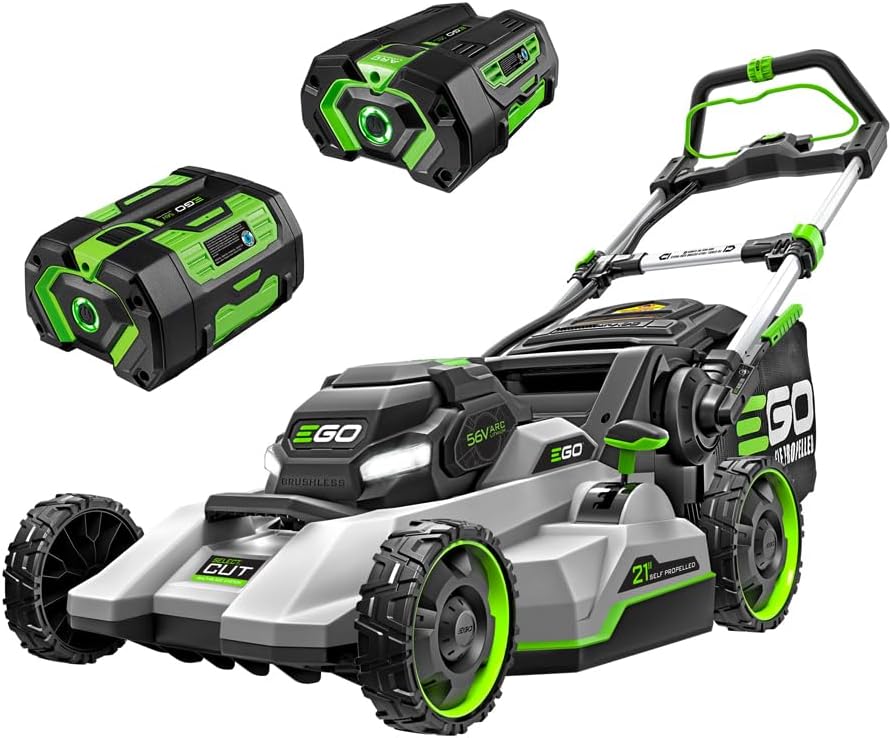
The best battery lawn mower isn’t the one with the biggest marketing budget — it’s the one that matches your yard’s size, terrain, and grass type.
A quality mower cuts cleanly, holds a charge long enough for your lawn, and starts with the push of a button. After wrestling with gas cans, clogged carbs, and pull cords that never start on the first try, I get why so many homeowners are going cordless in 2026.
But not every battery mower is worth the money. Some stall in thick grass, others leave uneven strips, and a few can’t finish a quarter-acre on one charge. Here’s what I learned testing the top cordless electric picks.
📌 Why Switch to a Battery-Powered Lawn Mower in 2026?
I made the switch three seasons ago, and I haven’t pulled a starter cord since. Battery mowers today are simply easier to live with. They start with a push button, run quieter than a conversation, and don’t need gas, oil changes, or carburetor cleanings. That’s less time in the garage and more time on your Saturday.
Here’s what draws most people away from gas in 2026:
- Zero exhaust fumes — you’re not breathing in gas vapors while you mow.
- Much quieter operation — usually 65–75 dB compared to 90+ dB for gas.
- Near-zero maintenance — no spark plugs, air filters, or stale fuel to deal with.
Lithium-ion tech has also come a long way. 40V, 56V, and 60V platforms now deliver real cutting power, and a single 5–8 Ah pack typically runs 30–50 minutes. Many kits include two batteries, so you can mow up to half an acre without stopping.
If your yard is under a quarter acre, a single-battery 40V or 56V mower will likely cover it. For larger lawns, look for dual-battery slots or an 80V model with fast charging. The right fit comes down to yard size, grass thickness, and how often you’d rather not wrestle with a cord or gas can.
🔍 How We Selected the Best Battery Lawn Mowers
I don’t just look at spec sheets. I look at how a mower performs when the grass is thick, the battery is at 20%, and the bag is half full. That’s where the difference between a great cordless mower and a frustrating one shows up.
To pick the best battery lawn mower for 2026, I focused on four measurable things:
- Runtime: how many minutes of actual cutting you get per full charge under mixed load — not just idle. I favored models that deliver at least 35–45 minutes on a single charge for yards up to 5,000 sq ft.
- Cutting width and deck size: typical widths range from 19″ to 22″. A wider deck covers more ground per pass, but it also drains battery faster.
- Charge time: I weighed both fast-charge options — many 2026 models go from empty to full in under 60 minutes — and standard 2–4 hour chargers.
- Mowing power: voltage alone doesn’t tell the whole story, but 40V platforms tend to struggle in wet or tall grass, while 60V–80V units hold RPM better under load.
From there I checked brand reputation, warranty length (3–5 years on the mower and 2–3 years on batteries is typical), and patterns in verified user reviews — especially complaints about battery fade after one season. I also eliminated any model that wasn’t widely available or lacked a service network in 2026.
🔍 Top 5 Battery Lawn Mower Reviews for 2026
These five mowers cover small city yards, medium suburban lawns, and larger properties. I’ve focused on voltage, battery amp-hours, real-world runtime, and cutting deck size so you can match the mower to your grass, not the other way around.
1. EGO Power+ LM2135SP 56V 21″ Select Cut – Best Overall
The 56V 7.5Ah battery powers a 21-inch steel deck with EGO’s Select Cut dual-blade system. You get up to 60 minutes of runtime per charge, and the rapid charger refills in about 60 minutes. Self-propelled with variable speed, it’s ideal for medium to large yards.
- Up to 60-minute runtime with 7.5Ah battery
- Strong cut quality in thick, damp grass
- Fast charging
- Higher upfront cost
- Battery and mower are heavy
2. Greenworks 40V 21″ Brushless – Best Value
This 40V push mower uses a 5Ah battery for about 45 minutes of cutting on a 21-inch deck. It’s lightweight, quiet, and shares batteries with other Greenworks 40V tools. Best for small to medium city yards with simple terrain.
- Affordable entry price
- Cross-compatible 40V battery platform
- Low maintenance, quiet operation
- Shorter runtime on thick grass
- Push-only, no self-propel
3. Ryobi 40V HP Brushless 21″ – Best Smart Features
Ryobi’s 40V HP mower pairs a 6Ah battery with a 21-inch deck for up to 40 minutes of runtime. Self-propelled, with LED headlights and easy single-lever height adjustment. You can use the same battery in Ryobi trimmers and blowers.
- Smart, comfortable controls
- Strong 40V HP performance
- Shares Ryobi 40V batteries
- Runtime drops in dense grass
- Slightly heavier than expected
4. Makita XML03PT1 18V X2 21″ – Best for Makita Tool Owners
Makita runs this 21-inch mower on two 18V LXT 5Ah batteries for 36V of power and about 40 minutes of cutting. If you already own Makita 18V tools, this is a no-brainer. It’s compact, quiet, and folds for vertical storage.
- Uses existing 18V LXT batteries
- Easy to store upright
- Quiet, brushless motor
- Less raw power than 56V rivals
- Requires two batteries
5. Toro 60V Recycler 22″ – Best for Large Yards
Toro’s 60V Recycler uses a 7.5Ah battery for up to 60 minutes of runtime on a wider 22-inch deck. Self-propelled rear-wheel drive helps on slopes. The Recycler cutting system mulches finely, so you can skip bagging.
- Long runtime and wide deck
- Excellent mulching performance
- Durable steel construction
- Premium price tag
- Large battery adds weight
⚡ Battery Lawn Mower Comparison Chart
Here’s a quick side-by-side look at the five mowers I covered above. Runtimes and charge times are manufacturer estimates for typical mowing conditions—thick, damp grass will drain batteries faster.
| Model | Battery / Runtime / Charge Time | Cutting Width | Weight | Yard Size | Included Battery & Charger | Price | Check Price |
|---|---|---|---|---|---|---|---|
| EGO Power+ LM2156SP | 56V 10Ah Up to 80 min 60 min charge |
21 in | 75 lb | Up to 1 acre | 10Ah battery + rapid charger | $749 | Check Price → |
| Greenworks Pro 80V | 80V 5Ah Up to 60 min 75 min charge |
21 in | 73 lb | Up to 3/4 acre | 5Ah battery + charger | $549 | Check Price → |
| Ryobi 40V HP Brushless | 40V 6Ah Up to 50 min 2 hr 30 min charge |
20 in | 62 lb | Up to 1/2 acre | 6Ah battery + charger | $399 | Check Price → |
| Toro 60V Recycler | 60V 7.5Ah Up to 60 min 2 hr 30 min charge |
22 in | 79 lb | Up to 3/4 acre | 7.5Ah battery + rapid charger | $599 | Check Price → |
| Makita XML08PT1 | 18V x2 5Ah Up to 45 min 45 min charge |
21 in | 77 lb | Up to 1/2 acre | 4x 5Ah batteries + dual-port charger | $699 | Check Price → |
If your lawn is under 1/4 acre, any of these will handle it on one charge. For 1/2 to 1 acre, the EGO and Toro give you the longest real-world buffer; the Ryobi and Makita are easier to lift but may need a second battery for larger jobs.
📌 Buying Guide: Key Features to Consider in a Cordless Electric Mower
The biggest spec mistake I see is buying voltage alone. Battery voltage and amp-hours (Ah) work together. Voltage determines cutting power; Ah determines how long that power lasts. A 40V 5Ah pack stores 200 watt-hours, while a 56V 5Ah pack stores 280 watt-hours. More watt-hours generally means more lawn per charge, though motor efficiency changes real-world runtime.
For cutting width, 18 to 21 inches hits the sweet spot for most suburban yards. Wider decks cut open grass faster but feel bulky around garden beds. I also look for single-lever deck height adjustment with a range from about 1 to 4 inches. That lets you cut low in spring and raise the deck during hot, dry stretches.
Weight and storage matter more than you’d think. Cordless mowers typically run 45 to 90 pounds. Lighter models are easier to turn, but self-propulsion helps on slopes and thick turf. If garage space is tight, check for a vertical-folding handle or stand-up storage footprint.
Extra features worth paying for:
- Self-propulsion — reduces push effort on hills and big lawns.
- 3-in-1 mulching, bagging, and side discharge — most flexible for seasonal cleanup.
- LED headlights — useful for evening mowing or early fall work.
📌 Maintenance, Charging & Eco-Friendly Tips for Battery Mowers
Your battery mower needs far less upkeep than a gas model, but a few habits keep it running strong. Start with the battery itself. Lithium-ion packs live longest when stored between 50°F and 80°F. Avoid leaving them in a hot garage or freezing shed.
For charging, don’t top off after every short trim. It’s fine to charge after a full cut, but if you’re storing the mower for weeks, keep the pack at 40–80% charge. Most modern chargers auto-stop, yet unplugging once full prevents unnecessary heat. Never charge a hot battery straight off the mower—give it 15–20 minutes to cool first.
Sharp blades matter even more on cordless mowers. A dull edge drains the battery faster and tears grass. Sharpen the blade once or twice per season, or swap in a fresh one for $20–$30. After each mow, tip the mower on its side and scrape the deck with a plastic tool. Don’t hose it down—water can seep into the electronics.
Environmentally, you skip gas cans, oil changes, spark plugs, and air filters. That means zero exhaust emissions while mowing. Your carbon footprint depends on the local power grid, but many areas are shifting to renewables. When a battery finally dies after 5–8 years, recycle it through the manufacturer or a certified e-waste program.
❓ FAQ: Common Questions About Battery Lawn Mowers
How long does a battery lawn mower run on a single charge?
Most cordless mowers run 30 to 60 minutes on a standard 5.0Ah to 7.5Ah battery. Higher-capacity 10Ah packs can push runtime closer to 75–90 minutes in light conditions. Thick grass, slopes, and self-propel use will drain the pack faster.
Can a battery mower handle thick or wet grass?
Yes, but with caveats. A 40V or 80V mower with a high-lift blade can cut moderately thick grass without stalling. Wet grass clumps and drags more, so you’ll burn battery quicker and may need a second pass. For routinely soggy or overgrown lawns, go with higher voltage and mow when it’s dry.
How long do lithium-ion mower batteries last?
Expect 3 to 7 years or roughly 500 to 1,500 charge cycles before capacity drops noticeably. Storing batteries indoors at room temperature and avoiding full discharge helps. You’ll usually notice shorter runtime before the battery fails completely.
Are battery lawn mowers more expensive than gas mowers in 2026?
Upfront cost is often 20% to 40% higher for a comparable cutting width. But you skip gas, oil changes, spark plugs, and pull cords. Over five years, many homeowners come out ahead on maintenance and fuel, especially if they already own compatible batteries.
What size yard is best suited for a battery-powered mower?
A single charged battery comfortably handles up to about 1/4 acre of flat lawn. For 1/3 to 1/2 acre, plan for a spare battery or a higher-voltage model with fast charging. Beyond 1/2 acre, a dual-battery mower or riding mower is more practical.
How long does it take to charge a cordless lawn mower battery?
Most fast chargers reach 80% in 30 to 60 minutes and full charge in 1.5 to 4 hours, depending on capacity. Some premium brands include dual-port chargers that cut total wait time. Always use the manufacturer’s charger to protect battery health.