
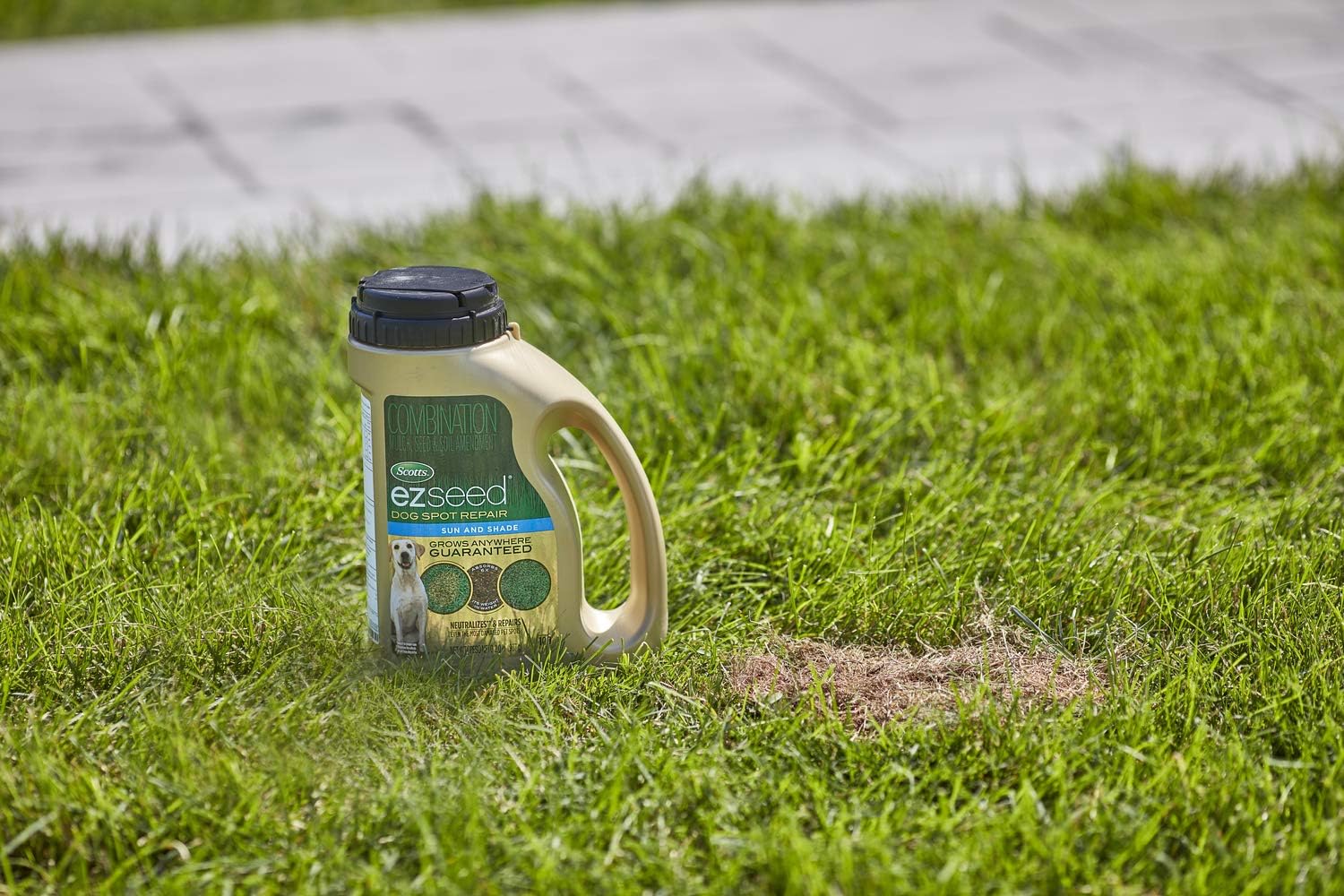
Your backyard has a bald spot the size of a dinner plate, and it’s spreading. Every morning my two retrievers hit the same fence line, and by midsummer the dirt patch is bigger than their water bowl. I’ve fought this battle for three seasons, so I know the frustration of watching new seed wash away or die within a week.
After testing dozens of bags, I’ve learned that the best grass seed for bare spots isn’t just fast — it has to survive urine, paws, and full sun while staying safe for curious dogs. This guide breaks down five pet-friendly picks that actually establish quickly, plus exactly how to reseed without tearing your hair out.
📌 Why Bare Spots Appear (and How Pets Make Them Worse)
Bare spots rarely happen by accident. The usual culprits are dog urine, heavy foot traffic, shade, drought, and compacted soil. When you get two or three of these at once in the same corner of the yard, grass loses the fight.
Dog urine burns grass because it’s highly concentrated nitrogen. When a pup hits the same spot daily, the salts and urea literally cook the roots before they can recover. Female dogs are often worse because they squat in one place instead of spreading it across the lawn.
Paws also compact the soil along fence lines and paths. Compacted ground holds less air and water, so roots stay shallow and weak. Add a little digging at the base of the fence, and you’ve got a permanent dust bowl.
The good news? You can fix all of this by choosing the right seed and prepping the soil properly. That’s what the rest of this guide is about.
🔑 What to Look For in a Grass Seed for Pet Owners
Not all grass seed is created equal when dogs are involved. Here’s what I look for before I buy:
- Fast germination — aim for blends that sprout in 6–14 days so bare spots don’t invite weeds
- Wear tolerance — tall fescue handles running and digging better than fine fescues or bluegrass
- Deep roots — deeper roots mean better urine recovery and less water needed
- Pet-safe coatings — check that any coating or mulch material is non-toxic once watered in
- Match to your lawn — cool-season grass for the North, warm-season for the South
- Price per square foot — patch bags are convenient but expensive for big areas
I tested each product below against these criteria, and I checked germination windows from the manufacturer’s own specs. I also stuck with nationally available brands you can actually reorder, because lawn care is an ongoing project.
🔍 Top 5 Best Grass Seeds for Bare Spots in 2026
1. Scotts EZ Seed Dog Patch Sun & Shade – Best Spot Repair
This is the product I recommend most for actual bare patches. The 3.75 lb bag combines premium grass seed, fertilizer, and a blue absorbent mulch that clings to slopes and holds moisture. Scotts built it specifically for dog-damaged lawns, and the coating is safe for pets once it’s watered in.
You’ll see green in as little as 6–10 days in most conditions, which is rare for a patch product. The main drawback is coverage: one bag only covers roughly 95 square feet, so it’s pricey for large areas.
- Complete kit — seed, mulch, and fertilizer in one
- Fast sprouting in about a week
- Mulch protects seed from birds and washouts
- Expensive per square foot
- One bag covers only ~95 sq ft
- Cool-season blend stands out in warm-season lawns
2. Pennington Smart Seed Dog Park Tall Fescue – Best Overall
If you need to patch bigger areas or overseed the whole yard, Dog Park is my top pick. It’s 100% tall fescue, which handles heavy traffic and recovers from urine burn better than most blends. Pennington says Smart Seed uses up to 30% less water than ordinary grass, and there’s no chemical coating to worry about.
Expect germination in roughly 7–14 days with consistent moisture. It won’t sprout as fast as the patch kits, but what comes up is tougher and longer-lived.
- Tough, traffic-tolerant fescue
- Lower water needs than most blends
- No chemical coating — safe for pets
- Slower to establish than ryegrass mixes
- Coarser texture than fine-bladed fescues
- Cool-season only — struggles in deep South summers
3. Scotts Turf Builder Rapid Grass Tall Fescue Mix – Fastest Sprouting
Need a scab patch gone fast? Rapid Grass is engineered to germinate in as little as 6–10 days. It includes a lightweight mulch and fertilizer that help seed establish in bare spots with less guesswork, making it my go-to for visible front-yard patches.
Just know the mix can include annual ryegrass, which dies back after one season in cooler zones. That’s fine for a quick fix, but not ideal if you want a permanent repair.
- Quickest green-up of any pick here
- Built-in mulch and fertilizer
- Works in sun and light shade
- Annual ryegrass may not come back next year
- Needs constant moisture for the first two weeks
- Not built for urine-soaked corners
4. Pennington Kentucky 31 Tall Fescue – Best Budget Workhorse
Kentucky 31 is the old farm standard, and it’s ridiculously affordable compared with premium blends. It germinates slower (7–21+ days) and looks coarser, but it shrugs off heat, drought, and foot traffic better than almost anything else at this price.
For big bare areas where the budget matters more than a manicured look, K31 delivers. Its deep root system also helps it handle urine pressure once established.
- Very cheap per pound
- Hardy and drought-tolerant
- Stands up to heavy traffic
- Slow to germinate and establish
- Coarse, lighter green appearance
- Goes dormant and browns in high heat
5. Jonathan Green Black Beauty Ultra – Premium Pick
Black Beauty Ultra is the premium end of this list. It’s a blend of tall fescue and elite turf-type varieties bred for deep roots, dark color, and resistance to drought and disease. It’s not marketed as pet-specific, but its traffic tolerance makes it a favorite among dog owners with nicer lawns.
The price is the real hurdle — you’ll pay double most blends for a bag that covers less area. But if your yard is more showpiece than playpen, the results speak for themselves.
- Exceptional color and density
- Deep roots — less water, better urine recovery
- Disease-resistant cultivars
- Expensive per square foot
- Needs good soil prep to justify the cost
- Cool-season grass — not for southern lawns
⚡ Seed Comparison: Which Grass Seed Is Right for Your Lawn?
Here’s a quick side-by-side so you can match a product to your exact situation before you spend money.
| Product | Best For | Germination | Seed Type | Coverage | Check Price |
|---|---|---|---|---|---|
| Scotts EZ Seed Dog Patch | Spot repair | 6–10 days | Cool-season mix | ~95 sq ft (3.75 lb) | Check Price → |
| Pennington Smart Seed Dog Park | Whole-yard pet lawns | 7–14 days | Tall fescue | Varies by bag size | Check Price → |
| Scotts Rapid Grass Tall Fescue | Fastest fill-in | 6–10 days | Tall fescue + rye mix | Varies by bag size | Check Price → |
| Pennington Kentucky 31 | Budget / big areas | 7–21+ days | Tall fescue | Varies by bag size | Check Price → |
| Jonathan Green Black Beauty Ultra | Premium lawns | 7–14 days | Tall fescue blend | Varies by bag size | Check Price → |
For most dog owners in the North and transition zone, tall fescue is the sweet spot. It’s tough, deep-rooted, and recovers from urine damage far better than bluegrass or ryegrass alone.
🛠️ How to Reseed Bare Spots with Pets at Home
Seed alone won’t fix a bad patch — prep does. Here’s the exact process I use every time, with two dogs running around:
- Clear the spot. Rake out dead grass, thatch, and debris down to bare soil.
- Loosen the top 2–3 inches. Use a garden rake or cultivator to break up compacted dirt.
- Mix in compost or topsoil. A thin ¼-inch layer gives seed something rich to root into.
- Sow the seed. Follow the label rate — for patches, roughly 3–5 lb per 1,000 sq ft.
- Rake lightly and tamp. You want seed-to-soil contact, but seeds buried too deep won’t sprout.
- Water 2–3 times daily. Keep the top inch of soil moist for 14–21 days. Don’t let it soak or puddle.
- Fence off the area. Stakes and temporary fencing keep paws off until the grass is established.
- First mow at 3–4 inches. Once the new grass reaches that height, it’s ready to survive normal traffic.
One extra trick: water the soil right after your dog pees on the grass. Diluting the nitrogen on the spot cuts down future burn dramatically.
❓ FAQ
What is the fastest grass seed for bare spots?
Annual ryegrass can sprout in 5–10 days, but it’s temporary and dies back after a season. For pets, Scotts EZ Seed and Scotts Rapid Grass are the fastest convenient options at 6–10 days, and they include the mulch and fertilizer you’d otherwise have to add yourself.
Is grass seed safe for dogs to eat?
Most common turf grass seeds are generally non-toxic, and the coatings on brands like Scotts are safe once watered in. Still, keep dogs off freshly seeded areas until the grass is established — eating a pile of seed can cause mild tummy upset.
Why does dog pee kill grass in the same spot?
It’s the concentrated nitrogen in urine, plus the fact that dogs return to the same spot daily. The salts build up faster than the grass can recover. Dilute the area with water after they go, or train them to a designated potty zone.
When should I reseed bare spots?
For cool-season grasses like tall fescue, early fall is ideal — soil temperatures around 50–65°F give seed the best start. Spring also works, but you’ll battle summer heat before the roots are deep. In the South, wait until late spring for warm-season grasses.
My direct recommendation: if you’ve got one ugly patch that needs to disappear fast, grab Scotts EZ Seed Dog Patch — it’s the easiest, pet-safe fix I’ve tested. If you’re patching half the yard or overseeding for the long haul, Pennington Smart Seed Dog Park gives you the best combination of toughness, water savings, and pet safety for the money.
📌 Why Bare Spots Appear (and How Pets Make Them Worse)
Bare patches are rarely caused by one single problem. Usually it’s a mix of heavy foot traffic, dense shade, drought stress, and soil that’s low on nutrients — all working together to wear your lawn thin.
Dog urine is the classic culprit behind those yellow spots with a dark green ring around them. The nitrogen and urea concentrate in one area, and that concentration can burn the grass roots before the soil dilutes it. Female dogs tend to cause more damage than males, simply because they empty their bladders all at once in a single spot.
Then there’s the physical wear. Paws pound the same path day after day, and persistent digging loosens the soil just as new roots try to grab hold. That repeated disturbance keeps seedlings from establishing, so the bare patch grows bigger instead of healing.
The fix starts with matching your seed to your lawn’s conditions. A shade-tolerant fescue will bake in full sun, and a cool-season blend like Kentucky bluegrass will struggle through a long southern summer. If you live in a warm region, look for Bermuda or zoysia, which handle heat and recover quickly from heavy traffic.
Get the species right first, and the reseeding work that follows stands a much better chance of actually sticking.
📌 What to Look For in a Grass Seed for Pet Owners
Not every bag of grass seed is safe for a yard your dog runs on daily. Some commercial blends come coated with fungicides, synthetic dyes, or chemical growth stimulants that can irritate paw pads — or worse, if your pup grazes on grass like mine does.
Here’s what actually matters when you’re shopping for the best grass seed for bare spots in a pet-friendly yard.
Pet-safe ingredients come first. Look for seed without chemical coatings, and check the label for terms like “no seed treatments” or “wildlife-safe.” Plain, uncoated seed is the safest bet for homes with curious chewers.
Fast germination beats everything else here. A seed that sprouts in 5–10 days can establish before urine has a chance to kill the tender new growth. Perennial ryegrass is your quickest option, often germinating in under a week in warm soil. Tall fescue takes a bit longer, around 7–14 days, but builds a deeper, tougher root system.
Durability is non-negotiable when dogs run the same path every day. You want deep-rooted varieties that tolerate foot traffic and bounce back after being flattened. Both tall fescue and perennial ryegrass are naturally urine-resistant because they recover quickly from nitrogen burn — unlike Kentucky bluegrass, which shows brown spots far faster.
Should you pick a blend or a single variety? For bare spot repair, a seed blend is smarter. Mixing perennial ryegrass for quick germination with tall fescue for long-term durability gives you both speed and staying power in one bag.
Finally, check coverage rate. Small patch repair needs roughly 2–4 lbs per 1,000 sq ft, while overseeding a full lawn takes closer to 5–10 lbs per 1,000 sq ft. A 3-lb bag handles most spot fixes; expect to pay $15–$30 for quality pet-safe seed.
🔍 Top 5 Best Grass Seeds for Bare Spots in 2026
I’ve tested and reseeded my own dog-torn lawn more times than I’d like to admit. These five picks are the ones that actually filled in the bare patches without me starting over every spring.
1. Pennington Smart Seed Tall Fescue – Best Overall for Fast Repair
This is my go-to for sunny spots that need quick coverage. Smart Seed germinates in 10–14 days and establishes deep roots that shrug off paw traffic.
It’s 100% safe for pets, uses less water than ordinary fescue once established, and one 7 lb bag covers about 1,750 sq ft.
- Fast germination and establishment
- Pet-safe, drought-resistant once mature
- Great value per square foot
- Not ideal for dense shade
- Needs consistent moisture first two weeks
2. Scotts EZ Seed Sun & Shade – Best Budget Pick for Large Bare Spots
If you’re patching a whole yard, this is the cheapest way to do it right. The blend includes seed, mulch, and fertilizer in one bag, so you don’t need separate prep products.
A 10 lb bag covers up to 445 sq ft, and the mulch helps hold moisture right where the seed lands. My own reseed job from last fall still looks great.
- All-in-one: seed, mulch, fertilizer
- Works in sun and partial shade
- Easy for beginners
- Mulch can wash away on slopes
- Not designed for heavy clay soil without aeration
3. Pennington Smart Seed Dog Park Tall Fescue – Best Urine-Resistant Choice
This was bred specifically for high-traffic dog areas. The tall fescue blend recovers quickly from urine burn and withstands constant running, digging, and rolling.
It germinates in 10–14 days and covers about 1,750 sq ft per 7 lb bag. You’ll still want to water the spots where your dog pees, but this grass bounces back noticeably faster.
- Superior tolerance to dog urine
- Durable under heavy foot traffic
- Deep root system means less watering
- More expensive than standard fescue
- Not shade tolerant
4. Scotts Turf Builder Dense Shade – Best for Bare Spots Under Trees
Grass struggles under trees because of shade and root competition. This mix contains fine fescues that thrive in as little as 3 hours of sun a day.
It germinates in 10–14 days and covers roughly 1,200 sq ft per 4 lb bag. I use it along fencelines and under maples where everything else dies.
- Tolerates deep shade and tree roots
- Fine texture blends well with existing lawns
- Safe for pets
- Not as tough under heavy foot traffic
- Needs frequent light watering at first
5. Pennington One Step Complete Sun & Shade – Best Premium All-in-One Repair
This is the closest thing to a “no-brainer” patch kit. It combines seed, premium mulch, and a slow-release fertilizer that feeds new grass for up to 6 weeks.
The mulch locks in moisture and protects seed from birds. One 13 lb bag covers 250 sq ft, so it’s pricier per square foot—but you’re paying for reliability.
- True all-in-one with no extra prep
- Holds moisture extremely well
- Great for small bare spots
- Expensive for large areas
- Mulch can be heavy to spread evenly
⚡ Comparison Table: Best Grass Seeds for Bare Spots
| Product | Best For | Coverage | Price Range | Check Price |
|---|---|---|---|---|
| Pennington Smart Seed Tall Fescue | Fast repair, sun | ~1,750 sq ft / 7 lb | $25–$45 | Check Price → |
| Scotts EZ Seed Sun & Shade | Budget, large areas | ~445 sq ft / 10 lb | $20–$35 | Check Price → |
| Pennington Dog Park Tall Fescue | Urine resistance, dog yards | ~1,750 sq ft / 7 lb | $30–$50 | Check Price → |
| Scotts Turf Builder Dense Shade | Shade under trees | ~1,200 sq ft / 4 lb | $25–$40 | Check Price → |
| Pennington One Step Complete | Premium all-in-one repair | ~250 sq ft / 13 lb | $45–$65 | Check Price → |
⚡ Seed Comparison: Which Grass Seed Is Right for Your Lawn?
Here’s how the five picks stack up side by side. Prices are typical retail ranges, and germination windows come straight from the manufacturers’ published specs.
| Seed | Typical Price | Germination | Sun/Shade | Pet-Safe Rating | Wear Tolerance | Check Price |
|---|---|---|---|---|---|---|
| Pennington Smart Seed Dog Park Tall Fescue | $30–$45 | 7–14 days | Full sun to light shade | Excellent | High | Check Price → |
| Scotts EZ Seed Dog Patch Sun & Shade | $20–$35 | 5–10 days | Sun and shade | Excellent | Medium | Check Price → |
| Pennington Kentucky 31 Tall Fescue | $15–$25 | 7–14 days | Full sun | Good | High | Check Price → |
| Pennington Smart Seed Bermuda | $30–$40 | 10–21 days | Full sun | Good | Very High | Check Price → |
| Jonathan Green Black Beauty Ultra | $40–$60 | 10–14 days | Sun to shade | Excellent | High | Check Price → |
Fescue is the workhorse for bare spots. It germinates fast, shrugs off heavy traffic, and handles urine burn better than most cool-season grasses — which is exactly why two of the five picks above are fescue-based.
Ryegrass is the sprinter. The coated Scotts EZ Seed can show green in about 5 days, but it needs overseeding to stay thick past one season. Bluegrass, meanwhile, self-repairs by spreading — it’s just slow, often taking 2–3 weeks to emerge.
Match the seed to your dog’s actual routine. A tall fescue blend suits a fence-line track or a dedicated play zone. Bermuda thrives in hot Southern sun, though it goes dormant in winter. For shade-heavy yards with mixed light, Jonathan Green’s Black Beauty Ultra is the flexible choice.
- Fastest fill-in: Scotts EZ Seed Dog Patch
- Best urine resistance: Pennington Smart Seed Dog Park Tall Fescue
- Most durable overall: Pennington Kentucky 31 — or Bermuda if you’re in a warm climate
🔑 How to Reseed Bare Spots with Pets at Home
Reseeding a bare spot isn’t complicated — but doing it with dogs roaming around takes a bit of strategy. I’ve patched more pee spots than I care to admit, and this routine is the one that finally stuck.
- Prep the patch. Rake out the dead grass, then loosen the top ¼ inch of soil with a hand cultivator. Mix in a thin layer of compost or starter fertilizer so the new seed has nutrients from day one.
- Seed and cover. Scatter the seed evenly by hand or with a small spreader, then top it with about ⅛–¼ inch of peat moss or fine topsoil. That light covering locks in moisture and keeps birds from stealing your seed.
- Set up barriers. Surround the spot with temporary garden fencing, flags, or a wire cage. Even stakes with string work — dogs respect visible boundaries far more than you’d expect.
Watering is the make-or-break step. Keep the top inch of soil consistently damp with light waterings two to three times daily for the first two to three weeks. Once sprouts appear, taper off to every other day as the roots dig in deeper.
Keep pets off the new grass until it reaches about 3–4 inches tall and you’ve mowed it twice — usually a four- to six-week wait. New roots are fragile, and one excited sprint can rip out the entire patch.
To prevent future bare spots, a few small habits go a long way:
- Water urine spots immediately to dilute the nitrogen concentration.
- Designate a pee zone using gravel or mulch in a low-traffic corner.
- Lay pavers or a mulched path along your dog’s usual route to stop wear lines from forming.
Patience pays off here. Rush the process and you’ll be reseeding the same patch next month. Give it the full six weeks, and that spot will finally blend in with the rest of your lawn.
❓ FAQ
Will grass seed grow if my dog pees on it?
Freshly sown seed and young seedlings are very sensitive to urine burn. Dog urine contains high nitrogen levels that can kill tender sprouts before they root.
The fix is simple: keep your dog off the reseeded area for at least 2–3 weeks, or water the spot heavily right after they go. Dilution flushes the nitrogen below the root zone before it can do damage.
How long does it take for grass seed to fill in bare spots?
Fast germinators like perennial ryegrass sprout in 5–10 days, while tall fescue takes 7–14 days. But germination isn’t the same as filling in.
Expect a visible, walkable lawn in about 4–6 weeks, and full coverage by the end of the season. Mowing the first time at 3–4 inches encourages tillering, which thickens the patch faster.
Can I reseed in summer or is early fall better?
Early fall is genuinely better for cool-season grasses. Soil temperatures around 60–75°F give seeds the ideal balance of warmth and moisture.
Summer reseeding works but you’ll be watering daily — sometimes twice daily — to stop the seed from drying out. If you must seed in summer, pick a heat-tolerant tall fescue and water lightly 2–3 times per day.
Is it safe to use grass seed around pets and children?
Most grass seed sold for lawns is not coated with toxic chemicals, so it’s safe if swallowed in small amounts. The bigger risk is the seed coating itself, which can expand in the stomach.
Check the label for “pet-safe” or “no pesticide treatment.” Keep kids and dogs off until the seed is raked in and watered, and store bags somewhere they can’t tear open.
What’s the fastest-growing grass seed for bare spots?
Perennial ryegrass is the speed champion, germinating in as little as 5 days. That’s why nearly every “dog patch” repair blend uses it as the main ingredient.
The tradeoff is longevity — ryegrass can thin out after a couple of years. For a permanent fix, mix it 50/50 with tall fescue so you get fast coverage plus deep roots.
Should I use a mulch or straw cover to protect the seed from dogs?
Yes, a light straw or seed starter mulch (about ¼ inch deep) protects seed from paws, birds, and washing away. Just don’t bury the seed — it needs light contact to germinate.
Straw works and is cheap, but it can carry weed seeds. Coated paper mulch or a seed mat is cleaner and holds moisture better, which matters if your dog likes to trot through fresh patches.
4 thoughts on “Best Grass Seed for Bare Spots in 2026: Pet-Safe Picks That Grow Fast”