
Finding the best fertilizer for sandy soil lawn is trickier than most pet owners expect. Sandy soil drains fast, so nutrients wash right through before grass roots can absorb them. That means you’re often tempted to apply more fertilizer — but more product raises the risk for your dog or cat who rolls, digs, and licks the lawn daily.
I’ve tested slow-release granules, organic blends, and liquid feeds on sandy yards with pets underfoot. This 2026 guide covers what actually works, what’s genuinely pet-safe, and how to apply fertilizer without turning your backyard into a chemical hazard.
📌 Why Sandy Soil Needs a Specialized Fertilizer
Sandy soil drains fast — sometimes too fast. Water moves through it quickly, and with that water go soluble nutrients like nitrogen and potassium. These nutrients are mobile in soil, so they can slip below the root zone within days after a heavy rain or a few irrigation cycles. Your grass roots never get a chance to grab them.
Standard lawn fertilizers aren’t useless, but many of them wash away before shallow, sandy-soil roots can absorb the nutrients. Granular fast-release nitrogen often disappears after just a few waterings. You’ll see a quick green-up, then fading, patchy growth. Sandy lawns typically need slower-release nitrogen and lighter, more frequent feeding rather than one heavy application.
Common nutrient deficiencies in sandy lawns show up in predictable ways:
- Nitrogen deficiency: older leaves turn pale green or yellow while new growth stays small and weak.
- Potassium deficiency: grass blades develop brown, scorched edges, and roots become less drought-tolerant.
- Magnesium or iron deficiency: yellowing between leaf veins, especially in high-pH sandy soils.
If your turf looks thin, pale, or heat-stressed even with regular watering, sandy soil is likely flushing nutrients out faster than the grass can use them. That’s why a fertilizer designed for sandy conditions makes a real difference.
📌 Key Features of a Pet-Safe Lawn Fertilizer for Sandy Yards
With sandy soil, water and dissolved nutrients move through fast. That’s why slow-release nitrogen matters more here than on heavier ground. Look for sulfur-coated urea, polymer-coated urea, or methylene urea. These release nitrogen gradually over 6–12 weeks, so your grass gets steady feeding and fewer nutrients wash straight past the root zone.
Organic vs. synthetic isn’t automatically a safety call. Many organic blends rely on bone meal, blood meal, or fish emulsion, which can smell irresistible to dogs. Ingesting bone meal may cause vomiting, pancreatitis, or even a bowel obstruction. A well-formulated synthetic fertilizer can be safer if it’s low-odor and avoids toxic iron levels. Always judge the ingredient list, not the label.
For a pet-safe sandy-lawn fertilizer, I avoid these ingredients:
- Cocoa mulch or cocoa meal — contains theobromine, the same compound that makes chocolate toxic to dogs and cats.
- Bone meal — highly palatable but risky; eating a significant amount can lead to GI blockages or pancreatitis.
- High-dose iron — iron is a micronutrient, but fertilizer-grade iron at concentrated levels can cause iron toxicity if a pet eats granules.
Even with safe ingredients, sweep excess off walkways and water the lawn after application. Keep pets off until the granules dissolve and the grass is dry.
📌 Top 5 Pet-Friendly Fertilizers for Sandy Soil Lawns
I screened these five fertilizers for slow-release nitrogen, phosphorus levels appropriate for sandy soil, and clear pet-safe ingredient policies. None contain synthetic herbicides or pesticides. A quick soil test will help you skip phosphorus if your lawn already has plenty.
| Product & NPK | Pet-Safe Notes | ✅ Pros | ❌ Cons | Best For | Check Price |
|---|---|---|---|---|---|
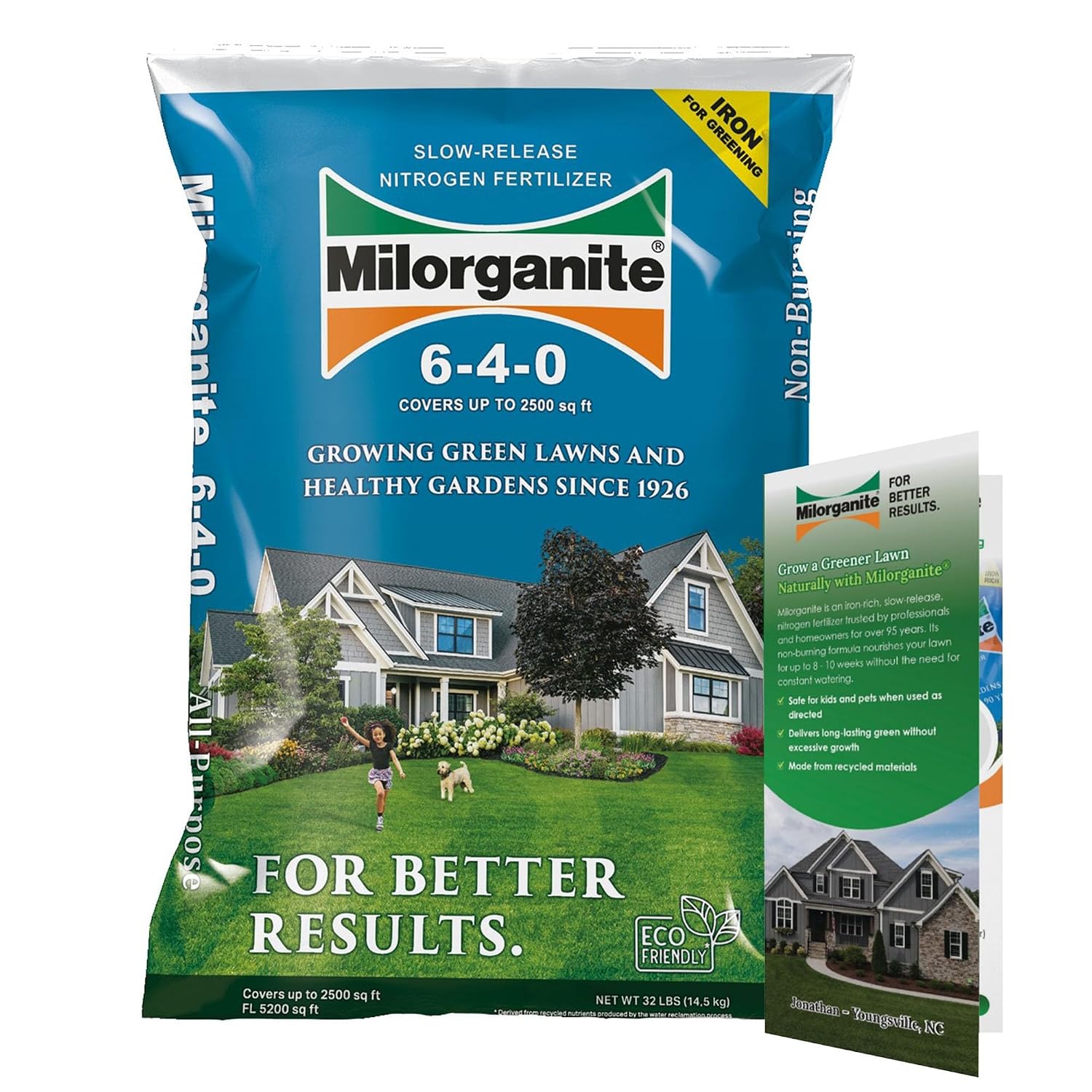
| Milorganite 6-4-0 | Heat-dried microbes; safe after watering; non-burning | Slow-release N, adds iron, improves sandy soil biology | No potassium; slight odor for a day | Steady green-up on established sandy lawns | Check Price → |
| Scotts Natural Lawn Food 11-2-2 | Feather, blood, and bone meal base; safe once watered in | Higher N for quick green-up; low phosphorus | Dogs may dig at it before watering; mild food smell | Fast but safe color on sandy lawns | Check Price → |
| Safer Brand Ringer Lawn Restore 10-0-6 | OMRI listed; soy protein based; no manure | Zero phosphorus to reduce runoff; slow-release N and K | Slower visible results; pricier per bag | Sandy lawns near lakes, ponds, or high-P soil | Check Price → |
| Jonathan Green Organic Lawn Food 10-0-1 | OMRI listed; feather and soybean meal blend | No phosphorus; gentle on sandy soil microbes | Low potassium may not help drought stress | Maintaining mature sandy lawns with adequate K | Check Price → |
| Dr. Earth Super Natural Lawn Fertilizer 9-3-5 | OMRI listed; fish bone meal, alfalfa, and potassium sulfate | Balanced NPK; adds organic matter; feeds soil life | Noticeable fish odor for a few days; higher cost | Sandy lawns needing balanced feeding and microbial activity | Check Price → |
🔑 How to Apply Fertilizer to Sandy Soil Without Endangering Pets
On sandy lawns, timing and water control matter more than the product itself. I apply in early spring, once soil temperatures reach about 55°F, and again in early fall, roughly six to eight weeks before the first hard frost. Summer feedings on sand just leach past the roots.
Here’s the pet-safe process I follow:
- Apply in early spring and early fall—never during summer heat or before heavy rain.
- Water lightly right after spreading: 1/4 to 1/2 inch of water, no puddles or runoff.
- Keep dogs and cats off the lawn until granules have dissolved or the turf is completely dry.
For application rates, target 1 pound of actual nitrogen per 1,000 square feet. That means about 10 pounds of a 10-10-10 fertilizer or 25 pounds of a slow-release 4-1-2 blend per 1,000 square feet. Look for a 16-4-8 or 15-0-15 with at least half slow-release nitrogen; this feeds sand without a sudden growth flush that tempts pets to chew grass.
Granular products usually need 24 to 48 hours after that light watering before the lawn is safe for paws. Liquid fertilizers dry faster—often 2 to 4 hours on a sunny day. If you can still see granules or the grass feels damp, wait a little longer.
Split the total amount in half: half in spring, half in fall. Sandy soil can’t store nutrients, so smaller, more frequent feedings reduce waste and keep your pet’s paws cleaner.
📌 Common Mistakes to Avoid When Fertilizing Sandy Lawns with Pets
Most lawn damage in sandy yards isn’t from choosing the wrong brand—it’s from how the fertilizer is applied. Sandy soil has large pore spaces, so water and dissolved nutrients move through fast. That changes which mistakes cost you the most.
- Over-fertilizing. More isn’t better. Excess nitrogen and phosphorus can wash below the root zone and into storm drains or nearby waterways. Split the total seasonal nitrogen into smaller, more frequent feedings instead of one heavy dose.
- Using fast-release fertilizer. Quick-release nitrogen can spike salt levels in the soil, causing leaf tip burn and potentially irritating your dog’s paws after application. Slow-release or coated nitrogen is gentler and less likely to puddle in sandy soil after rain.
- Skipping a soil test. Sandy lawns often run low in potassium and organic matter but high in phosphorus, which isn’t obvious without testing. Applying a balanced 10-10-10 blindly can make phosphorus buildup worse. A basic soil test every 2–3 years prevents guessing.
- Assuming organic means pet-safe. Labels like “natural” or “organic” don’t guarantee safety. Bone meal and blood meal can attract dogs—and eating them may cause digestive upset. Composted manure can carry bacteria if not fully composted. Always check the actual ingredients and keep pets off until the product is watered in and dry.
❓ FAQ
What is the safest fertilizer for dogs and cats on sandy lawns?
The safest picks are slow-release granular fertilizers made from plant-based ingredients like soybean meal, alfalfa meal, and compost. Avoid blood meal, bone meal, and fish emulsion—they smell strong and can cause stomach upset if pets eat them. Always check the label for pet-safety wording.
How often should I fertilize a sandy soil lawn?
Sandy soil drains fast, so nutrients wash out quickly. I recommend four light applications per growing season, roughly every 6–8 weeks from spring through early fall. This keeps grass fed without overwhelming the soil or your pets.
Can I use liquid fertilizer on sandy soil with pets?
You can, but granular slow-release is a safer bet. Liquid feeds soak in fast but leach even quicker in sandy ground, and puddles can tempt pets to drink. If you use liquid, apply it early, water it in fully, and keep animals off until the lawn is completely dry.
Is organic fertilizer better for sandy lawns?
Usually, yes. Organic matter like compost or humates helps sandy soil hold water and nutrients longer, so you’re not fertilizing as often. It’s also gentler on paws and less likely to burn grass. The tradeoff is it may green up slower than synthetic options.
How long after fertilizing should I keep pets off the lawn?
Follow the product label, but a good rule is 24–48 hours after applying granules and watering them in. For liquid fertilizer, wait until the turf is bone dry—usually a couple of hours—but 24 hours is the conservative, pet-safe choice.
1 thought on “Best Fertilizer for Sandy Soil Lawn: 2026 Pet-Safe Buying Guide”