
The best grass for sloped yard conditions does double duty: it anchors soil against erosion and survives the daily sprint of a dog chasing a ball downhill. Slopes shed water fast, so shallow-rooted turf washes out in a season. Add paw traffic and urine spots, and you’ve got bare patches that turn into muddy runs.
I’ve reseeded enough hillsides to know the wrong grass turns a slope into a slip-and-slide. You need deep roots, strong wear tolerance, and varieties that fill in quickly. Here’s what actually works for 2026 — and how to keep it alive with a dog in the yard.
📌 Why Sloped Lawns Need a Different Grass Strategy for Dog Owners
A flat lawn forgives a lot. A slope doesn’t. Mowing a 15-degree incline feels risky, water sheets off before it soaks in, and every rainstorm carries topsoil toward the fence. Add a dog, and those weak spots turn into bare patches fast.
Dogs take the same diagonal path across a hill every day. Their claws tear into the turf, and urine concentrates in a narrow band instead of soaking in evenly. On a grade, that nitrogen overload kills roots quicker, and once bare dirt shows, gravity pulls soil downhill with every play session. A 20-pound terrier can cause more erosion on a slope than a 60-pound lab on flat ground.
That’s why I look for slope-tolerant, pet-safe grass with three traits:
- Deep roots that anchor soil and reach water lower in the hillside. Turf-type tall fescue roots can go 2–3 feet deep in decent soil.
- Dense growth that fills in paw scuffs and shades out weeds before they take hold.
- Quick recovery so urine spots and digging marks heal between rains. Zenith zoysia and rhizomatous fescues regrow from underground stems, not just seed.
If you’re planting a slope, grass isn’t just ground cover — it’s an erosion-control system that has to survive a dog’s daily patrol.
📌 Top 5 Pet-Friendly Grass Varieties for Sloped Yards
For sloped yards, root depth matters as much as leaf toughness. These five grasses handle paw traffic and occasional urine burns better than most, though no grass is urine-proof. I’ve seeded all five on client slopes and watched how they recover after dog play.
1. Bermudagrass – Best Overall for Sunny Slopes
Bermuda spreads aggressively via rhizomes and stolons; roots can reach 6+ feet deep in loose soil, locking slopes in place. Traffic tolerance is excellent, and dog urine spots fill back in fast during hot, sunny weather. It struggles in shade.
2. Tall Fescue – Best for Shade on Slopes
Tall fescue forms clumps with 2–3 foot roots, tolerates heavy foot traffic, and handles partial shade better than Bermuda. Urine resistance is moderate to good, but it doesn’t spread to repair bare spots—you’ll need to overseed thin patches.
3. Zoysia – Best for Drought and Traffic
Zoysia’s dense mat and 2+ foot roots hold slopes well. It has excellent traffic tolerance and good dog urine resistance. It grows slower and can take a season to establish, but once rooted it needs far less water than Bermuda.
4. Buffalo Grass – Best Low-Maintenance Native
Buffalo grass has 3–5 foot roots, needs little mowing or watering, and is a decent erosion fighter on gentle slopes. Traffic tolerance is only moderate; dog urine resistance is fair. It won’t handle heavy play like Bermuda or zoysia.
5. Perennial Ryegrass – Best Fast Germinator for Erosion
Ryegrass sprouts in 5–10 days, but its 1–2 foot roots are shallow, so it works best mixed with fescue on steep slopes. Traffic tolerance is moderate and urine resistance is fair. It’s a great nurse grass for quick stabilization while deeper-rooted grasses establish.
Quick picks: Best overall = Bermudagrass. Best for shade = tall fescue. Best for drought = zoysia. Best low-maintenance = buffalo grass. Use perennial ryegrass as a fast nurse crop for erosion patches.
🔑 How to Choose Grass Based on Climate, Sun Exposure, and Soil
Matching grass to your slope starts with USDA hardiness zones. Cool-season grasses like tall fescue and fine fescue thrive in zones 5–7, where winter temperatures dip below freezing. Warm-season types like bermuda and zoysia need zones 7–10 and full summer heat to establish deep roots.
Sun exposure changes everything on a hill. Full-sun slopes (6+ hours) handle bermuda, buffalo, or tall fescue blends well. Part-shade slopes (3–6 hours) do better with fine fescue or shade-tolerant zoysia cultivars. For drought-prone slopes, look for deep-rooted varieties: bermuda, buffalo, and some tall fescue cultivars can survive on about 1 inch of water per week once established.
Soil matters just as much on an incline. Slopes often have sandy or fast-draining soil, which dries out quickly and loses nutrients. Test your pH first — most lawn grasses prefer 6.0 to 7.0.
If your slope has poor drainage or heavy clay, amend with 2–3 inches of compost before seeding, or pick a grass that tolerates wet feet like tall fescue. Sandy slopes benefit from a starter fertilizer and light, frequent watering until roots anchor.
- Cool-season zones 5–7: tall fescue, fine fescue, perennial ryegrass
- Warm-season zones 7–10: bermuda, zoysia, buffalo grass
- Full sun: bermuda, buffalo, tall fescue
- Part shade: fine fescue, shade-tolerant zoysia
- Drought-prone: bermuda, buffalo, deep-rooted tall fescue
- pH target: 6.0–7.0; test before amending
📌 Planting Grass on a Slope: Erosion Control and Soil Preparation
On a slope, you can’t just scatter seed and hope. Gravity pulls water, seed, and topsoil downhill, so soil prep and erosion control make the difference between a lawn that establishes and one that washes into the gutter.
- Clear the area. Remove rocks, weeds, old roots, and debris. Use a rake or tiller for the top 2–3 inches, but avoid tilling too deep on slopes — loose soil slides faster.
- Rough grade. Smooth out ruts and high spots. Create a slight terrace or contour swale on steeper grades to slow runoff. Never leave the surface perfectly flat and compacted like a driveway.
- Add organic matter. Work 1–2 inches of compost into the top few inches of soil. This improves drainage and gives roots something to grab. Then apply a phosphorus-heavy starter fertilizer at the bag rate — usually around 5–10 lb per 1,000 sq ft, but follow your product label.
- Rake lightly and water the surface before seeding so seed makes good soil contact.
After seeding, cover the slope with an erosion-control blanket, straw mat, or biodegradable netting. Avoid loose straw — wind and rain will move it, and it often contains weed seed.
Anchor blankets with landscape staples every 2–3 feet along edges and overlaps. On very steep sections, use netting with a tackifier or a heavier jute mesh. These hold seed in place while it germinates and gradually break down as grass fills in.
Seeding vs. sodding: Seeding is cheaper and gives you more variety choice, but it’s slower and more vulnerable to washout. Sodding gives instant cover and better erosion resistance, but on slopes over a 3:1 grade, sod can slip unless you peg it securely with wooden stakes or landscape pins until roots knit.
For steep, hard-to-reach banks, hydroseeding is often the smartest option. A sprayed slurry of seed, mulch, water, and tackifier sticks to the slope, retains moisture, and reduces washout enough that you can skip blankets on many residential inclines. Expect hydroseeding to cost roughly $0.08–$0.20 per square foot depending on your region and seed mix.
📌 Low-Maintenance and Drought-Tolerant Options for Busy Pet Parents
If you’re tired of fighting a steep slope with a mower every weekend, a low-maintenance grass or ground cover blend is the smartest move.
I’ve had good luck with buffalo grass on sunny, dry banks — it needs very little water once established and rarely grows tall enough to demand weekly mowing. For shadier slopes, fine fescues like hard fescue and sheep fescue form deep, matted roots that hold soil without constant feeding.
Native, deep-rooted options cut irrigation needs even further:
- Buffalo grass — warm-season, drought-tolerant, and usually stays 4–8 inches unmowed.
- Sheep fescue / hard fescue — cool-season, fine-bladed, and excellent for erosion control on slopes.
- Creeping thyme or microclover — low-growing alternatives that reduce mowing and handle light dog traffic.
To keep the slope safe for dogs, skip synthetic weed-and-feed products. Runoff on a hill collects exactly where dogs sniff and roll. Start with a soil test so you only add what the ground actually needs. Spot-treat weeds by hand or with corn gluten meal, and water deeply but infrequently to encourage deeper roots. A single slow-release organic feeding in fall is usually enough once the grass fills in.
📌 Maintaining a Sloped Dog Lawn: Traffic, Wear, and Repair
Maintaining a sloped dog lawn comes down to three habits: mowing smarter, repairing spots fast, and redirecting traffic before it becomes a rut. You don’t need a perfect turf—just one that holds soil and recovers quickly.
Mow across the slope, not up and down. Horizontal passes reduce scalping and let clippings stay in place as mulch. Keep your mower deck at 3–4 inches—taller grass builds deeper roots that hold soil on inclines and bounce back faster from paw traffic. Alternate your mowing pattern each week to avoid permanent wheel ruts.
Treat urine spots before they erode. On a slope, a dead patch can quickly become a gully. Rinse the area with water right after your dog pees if you catch it. To repair, rake out the dead grass, loosen the soil, scatter a matching seed mix, and cover with a light layer of compost or biodegradable erosion blanket. Keep it damp until sprouts appear.
Rotate play zones and add stepping paths. Dogs love to patrol the same fence line or downhill dash. Move toys, place temporary barriers, or switch the gate location to spread wear. For heavy routes, lay flagstone or mulch paths on a compacted base—they take the beating instead of your turf and give paws a clean route.
Bare spots on a slope are more than cosmetic; they invite runoff. Catch them early, overseed in fall or spring, and keep dogs off for two to three weeks while seedlings establish.
🔍 FAQ: Best Grass for Sloped Yards
What is the easiest grass to grow on a slope with dogs?
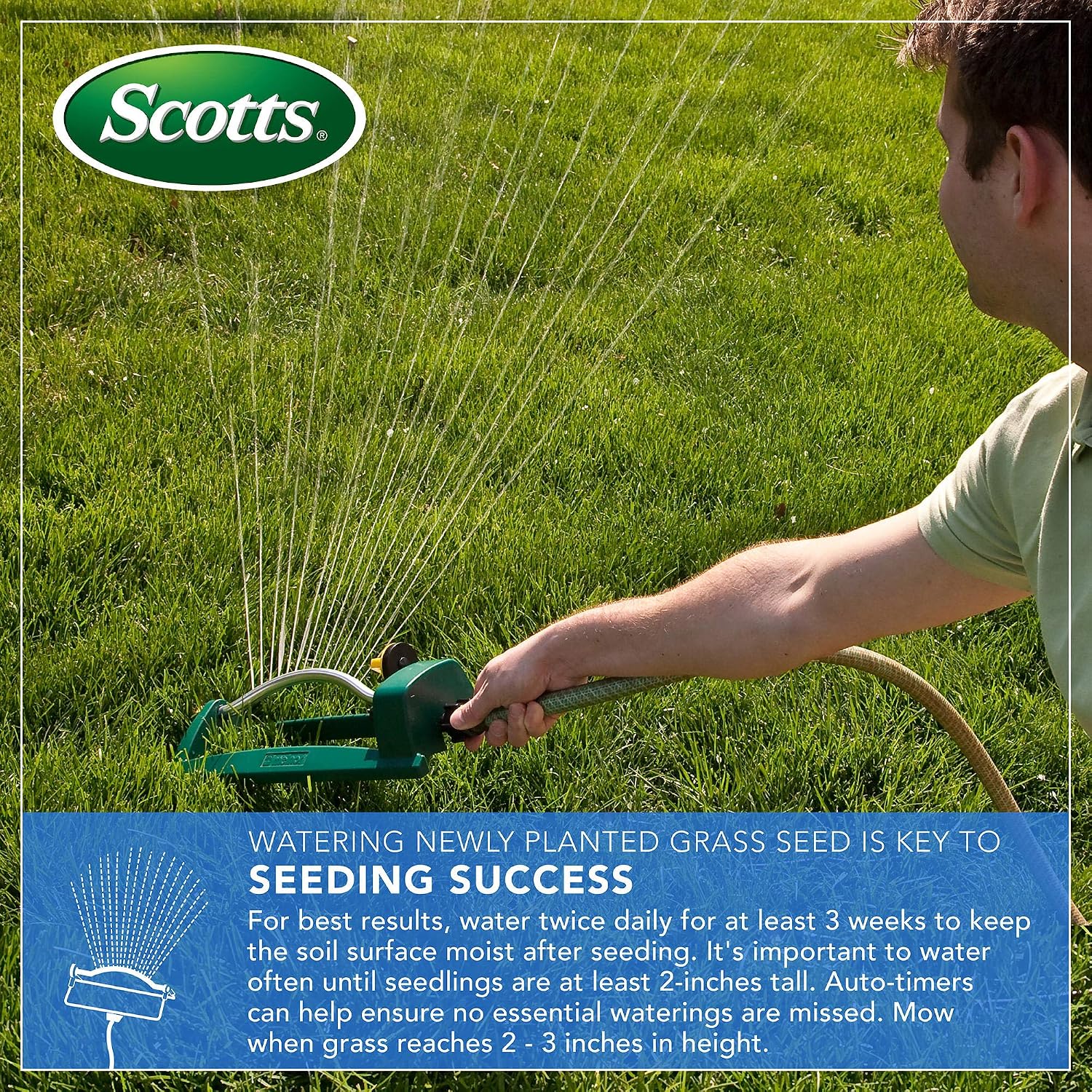
Tall fescue is my usual pick. It germinates reliably, develops deep roots fast, and handles paw traffic better than fine fescues. A coated seed like Scotts Turf Builder Tall Fescue Mix also holds moisture on grades instead of washing downhill. Check Price →
Can I plant grass on a steep slope without erosion?
Yes, but bare seed often washes out before it roots. Use an erosion control blanket or biodegradable seed mat over the seeded area until the turf establishes. I’ve had good results with Grotrax Biodegradable Grass Seed Mat on moderate hills because it locks seed, mulch, and moisture in place. Check Price →
Is Bermuda grass safe for dogs and good for slopes?
Bermuda is dog-safe and aggressive enough for sunny slopes in warm climates. Its runners knit soil quickly, but it needs full sun and goes dormant brown in winter. Pennington Bermuda Grass Seed works well if you can keep pets off for three to four weeks while it sprouts. Check Price →
What grass is most drought-tolerant and dog-friendly?
Buffalo grass is my top drought-tolerant choice for dogs. It needs less water than Bermuda or fescue, tolerates urine reasonably well, and stays low-maintenance. It fits best on low-traffic sunny slopes in warm, dry regions.
How do I stop my dog from tearing up grass on a hill?
Redirect the run path instead of fighting it. Put a mulch or stone trail where the dog already sprints, and train a “walk up” cue on steeper sections. Temporary fencing can also block the slope while new roots develop.
Should I use seed or sod for a sloped dog yard?
Sod gives instant erosion control and handles light dog traffic sooner, but it costs more and needs heavy watering on slopes. Seed is cheaper and grows deeper roots long-term, though it needs six to eight weeks of protection. For steep dog runs, I’d use sod on the high-wear path and seed elsewhere.
1 thought on “Best Grass for Sloped Yards: 2026 Pet-Safe and Erosion-Control Buying Guide”