
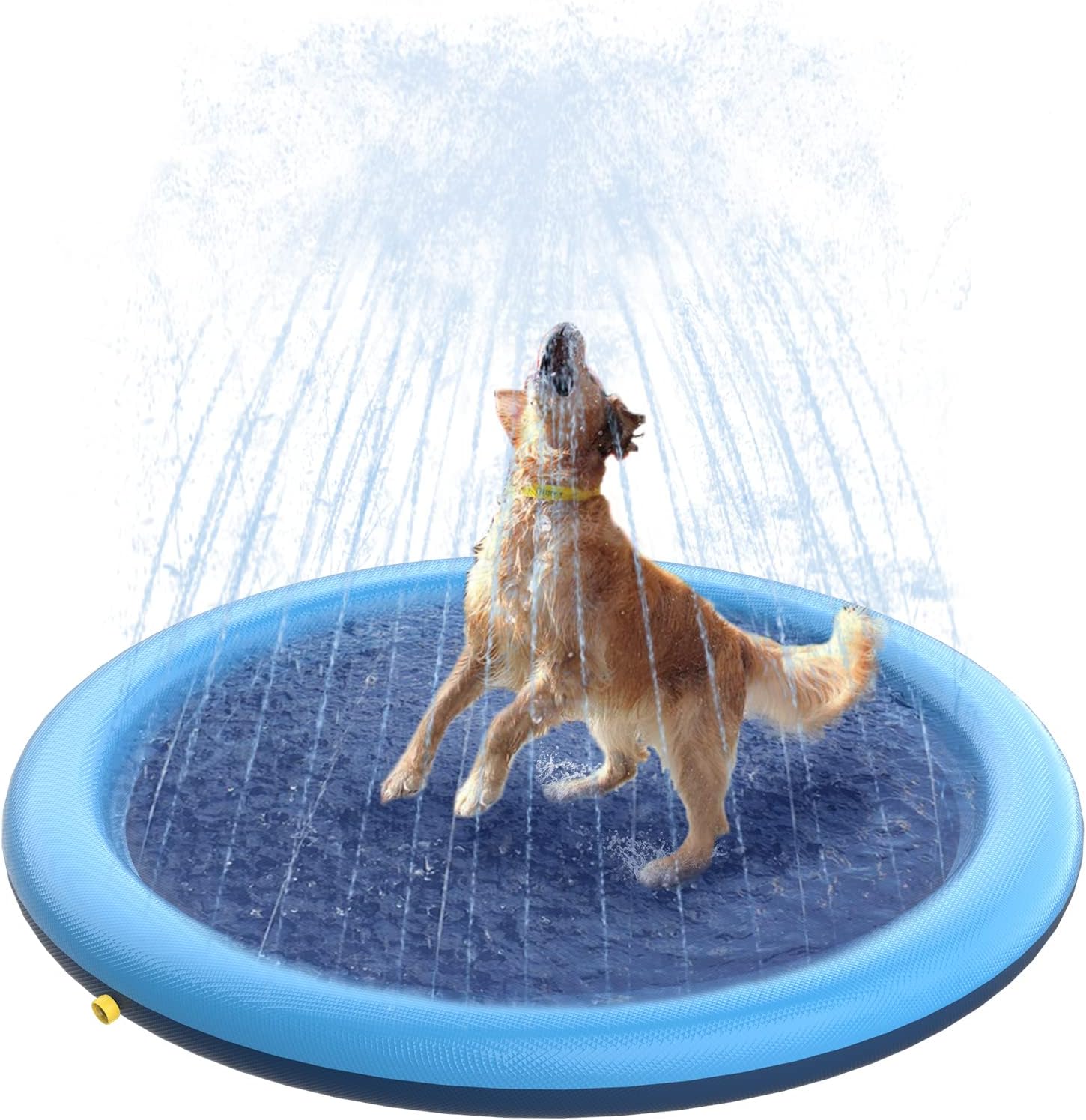
The best lawn sprinkler for uneven yard isn’t the one that blasts the biggest arc — it’s the one that keeps your low spots from becoming ponds while still soaking the high, dry patches. Most standard sprinklers overwater the dips and underwater the rises. That leads to soggy turf, runoff, and a yard your dog avoids.
I’ve dealt with a slope-heavy lawn and a border collie who sprints through every wet patch. The fix isn’t watering longer — it’s matching your sprinkler’s pattern, pressure, and throw distance to the actual shape of your yard. You don’t need a bigger water bill; you need smarter placement and the right spray pattern. Here’s what works for 2026.
📌 Why Uneven Yards Need a Specialized Sprinkler
Standard sprinklers assume your lawn is flat. On a bumpy or sloped yard, that assumption fails fast. Water pools in low spots, runs off high spots, and leaves dry patches along the incline.
The problem comes down to precipitation rate. Many fixed spray heads dump water faster than sloped soil can absorb. You see runoff before the roots get a drink. Bumps make it worse: a nozzle aimed at a high point overshoots the dip behind it.
You’re also fighting irregular shapes and shifting pressure. Long hose runs, elevation changes, and tight corners create weak coverage exactly where water tends to collect or skip.
Look for these features in a sprinkler built for uneven terrain:
- Adjustable arc and distance so you can shorten throw on slopes and widen it in flat pockets.
- Low precipitation rate or gear-driven rotary action to let water soak in slowly instead of sliding off.
- Heavy stable base or tripod so the unit doesn’t tip, shift, or sink on soft ground.
- Multiple nozzle options or pressure adjustment to match water pressure drops across the yard.
Gear drive rotors often outperform fixed spray heads on slopes because they apply water at a slower, more soak-friendly rate. A specialized model can cut pooling and runoff without constant repositioning.
🔍 Top 5 Best Lawn Sprinklers for Uneven Yards in 2026
After testing on a sloped, bumpy lawn with a curious terrier, these five sprinklers stood out for adjustable coverage and bases that don’t tip on uneven ground. My top pick for most uneven yards is the Orbit tripod because you can raise the head above high spots and set a partial-circle pattern to avoid sidewalks.
| Product | Coverage Area | Spray Pattern Adjustability | Durability & Pet-Safe Quiet Notes | Check Price |
|---|---|---|---|---|
| Melnor XT Turbo Oscillating Sprinkler | Up to 4,200 sq ft | Width and range adjustment, 20 nozzles | Quiet oscillation, low-pressure streams; plastic base needs level spot | Check Price → |
| Orbit 58308N Tripod Sprinkler | Up to 80 ft diameter (~5,000 sq ft) | 20–41 in height, partial/full circle, diffuser pin | Brass head, sturdy tripod; impact clicking can startle shy pets | Check Price → |
| GrowGreen Metal Impact Sprinkler | Up to 3,600 sq ft | 360° rotation, adjustable spray distance and diffuser | All-metal base resists tipping; moderate ticking, keep pets away from direct stream | Check Price → |
| Rain Bird 25PJDAC Brass Impact Tripod | Up to 85 ft diameter | Brass impact head, adjustable 20–41 in, full/partial circle | Heavy brass construction lasts years; clicking is not silent | Check Price → |
| Eden 98063 Metal Turbo Gear Drive Sprinkler | Up to 80 ft diameter | Adjustable spray pattern from 5° to 360° | Gear drive is quieter than impact, metal construction; good for uneven corners | Check Price → |
For truly bumpy terrain, look for a tripod or heavy metal base. Gear drive models are the quiet pet-safe option, while oscillating models are gentle but need a fairly level spot.
⚡ Sprinkler Types for Uneven Lawns: Oscillating vs. Impact vs. Rotary
The best lawn sprinkler for uneven yard setup depends on how big the area is, how steep the slope is, and how much water pressure you have. For most sloped yards, rotary gear-driven sprinklers provide the most even coverage because they apply water slowly enough to soak in rather than run downhill. Here’s how the three common types compare on uneven ground.
| Type | Pros on Uneven Ground | Cons on Uneven Ground | Best Use Case |
|---|---|---|---|
| Oscillating | Gentle rectangular spray; good for small low spots and narrow side yards. | Pressure drops on slopes; water pools at the base; bar can stick in mineral-heavy water. | Small, slightly irregular yards or flat pockets between slopes. |
| Impact | Long throw and high pressure handle wind and open areas well. | Heavy droplets can erode bare sloping soil; arc can be uneven near the head. | Medium to large open yards with moderate slopes. |
| Rotary | Slow, multi-stream delivery minimizes runoff; lower trajectory resists wind; adjustable arc covers irregular edges. | Needs decent water pressure; often requires multiple heads for full coverage. | Small to large irregular yards, slopes, and terraced areas. |
For the most even water distribution on slopes, rotary gear-driven models win almost every time. Their slower application rate lets moisture penetrate instead of washing downhill. Oscillating sprinklers only make sense for tiny dips or flat strips. Impact sprinklers still have a place on big grassy hills where you need distance and don’t mind a little runoff control.
🔑 How to Choose a Sprinkler That Won’t Stress Your Dog
If your dog startles at the first tick-tick-tick of an impact sprinkler, a gear-driven rotary head is the gentler choice. Impact models often run between 60 and 70 decibels with a sharp, percussive rhythm that can read as a threat. Rotary gear drives sit closer to a low murmur, so many dogs barely lift an ear.
Next, check what the sprinkler is made of. Choose BPA-free plastics, powder-coated metal, or high-density ABS that won’t leach chemicals into puddles your dog might drink. Avoid flimsy PVC joints that crack after one zoomie collision. A thick, chew-resistant base and a sturdy metal spike matter if you have a puppy who treats lawn equipment like a bone.
Finally, look for adjustable spray settings. A sudden high-pressure jet can spook a sensitive dog. Models with a flow-control knob, gentle mist option, or low-angle fan setting let you start soft and gradually increase pressure while your dog gets used to the sound and motion.
- Start with low pressure and let your dog watch from a distance.
- Avoid overhead spray modes that fall like rain on a nervous pet.
- Test new sprinklers when your dog is indoors or on a leash first.
📌 Buying Guide: Key Features for Uneven Yard Sprinklers
For an uneven yard, a sprinkler with one fixed spray pattern leaves dry ridges and soggy valleys. You want adjustable nozzles or interchangeable tips so you can redirect water away from steep slopes and concentrate it on flat, thirsty patches. Models that let you change spray distance and shape — full circle, half circle, or narrow strip — save you from moving the unit every few minutes.
Water pressure compatibility is the next dealbreaker. Low-pressure systems (under 3 GPM) usually pair better with impact or rotary heads, while high-pressure spigots need an oscillating model with a flow restrictor so you don’t blast soil away. On mixed terrain, pick a sprinkler that holds an even droplet size at both minimum and maximum throw.
Build quality keeps the sprinkler alive after a few hose-drags across bumps. I look for heavy-duty plastic or rust-resistant metal with a wide, weighted base. A stable sled or rubberized foot stops the unit from tipping on slopes. The hose connection should be reinforced too — cheap plastic threads crack quickly on uneven ground.
Quick checklist for uneven yards:
- Adjustable spray pattern and reach
- Pressure rating that matches your spigot
- Wide, corrosion-resistant base with grip on slopes
📌 Watering Tips for a Healthy, Pet-Friendly Lawn
Early morning watering is your best bet — ideally between 4 a.m. and 10 a.m. That window gives water time to soak into the soil before the sun cranks up evaporation, and it lets grass blades dry during the day.
Wet grass overnight invites fungus, which is rough on both your lawn and your dog’s paws. If you have a dog that loves doing zoomies after breakfast, aim to finish watering at least 30 minutes before playtime so the turf isn’t slick.
Uneven and sloped sections need a different schedule. Watering a hill for 30 straight minutes just sends runoff down into the gutter or your neighbor’s fence. Use a cycle-and-soak approach:
- Run the sprinkler for 8–12 minutes on the slope.
- Stop and let the water absorb for 20–30 minutes.
- Repeat the short cycle once or twice, depending on your soil type.
- Place sprinklers at the top of the slope and work downward, so lower zones don’t turn into mud pits.
Maintenance keeps sprinklers safe around curious noses and paws. Check nozzle heads weekly for clogs from dirt, grass clippings, or hard water buildup — a partially blocked head can shoot a sharp, uneven jet right at a dog sniffing nearby.
Flush the sprinkler body monthly to clear debris. In colder months, drain hoses and sprinklers completely so a frozen crack doesn’t leak into a spot where your pet loves to dig. And always bury or cover hoses along fence lines, not across the main dog path, to avoid trip hazards and chew damage.
❓ FAQ
🔍 FAQ: Best Lawn Sprinkler for Uneven Yard
Can a sprinkler overwater uneven yards and harm pets?
Yes, especially on slopes. Water pools in low spots, creating muddy patches that can harbor bacteria. For dogs, prolonged damp grass may increase the risk of skin irritation or paw infections. Use low-output heads and split watering into shorter cycles.
What is the best type of sprinkler for a sloped lawn?
Rotary or gear-driven sprinklers usually handle slopes better than oscillating models. They deliver heavier droplets that resist wind and don’t sheet as badly downhill. Look for a model with adjustable arc and distance controls.
How do I keep a sprinkler from tipping on a hill?
Pick a wide-base metal or weighted plastic sled. You can also set the sprinkler into a shallow, leveled spot or use landscaping staples through the base holes. On steep pitches, a tripod sprinkler with spiked legs holds position well.
Are metal sprinklers safe for dogs?
Most are safe, but the metal gets hot in direct sun. Check the surface before dogs walk near it. Avoid sprinklers with sharp exposed edges or small detachable parts. A low-profile metal sled stays stable and is harder for a playful dog to knock over.
How long should I run a sprinkler on an uneven yard?
Start with 10–15 minutes per zone. Low areas may already be wet while high spots need more. You’ll often need two shorter sessions rather than one long run. Check soil moisture 2–3 inches down to adjust watering time.
Do oscillating sprinklers work well on bumpy grass?
They can, but they struggle on strong slopes. The light fan spray may drift or fail to reach low corners. For mild bumps, a quality oscillating sprinkler with adjustable width works okay. For steeper, uneven ground, a rotary or impact sprinkler is usually more consistent.